Category: Business

  • Finance Ministry agrees to IT minister’s suggestion regarding Google payments

    Finance Ministry agrees to IT minister’s suggestion regarding Google payments

    Following the Ministry of Finance’s decision to allow blocked payments to international service providers, including Google, on the advise of IT Minister Aminul Haque, Pakistan averted the suspension of paid Google Play mobile apps on Thursday.

    A $34 million payment suspension by the State Bank of Pakistan (SBP) to foreign service providers might have prevented inward mobile users from downloading paid Google Play Store services using their cell balance as a source of payment starting on December 1, 2022.

    After the SBP stopped using the direct carrier billing (DCB) mechanism, a $34 million payment to foreign service providers like Google, Amazon, and Meta was put on hold.

    Using their mobile phone carrier bill as a form of payment, users of the DCB online mobile payment system can make purchases.

    According to Geo, customers of telecommunications firms can buy these products using airtime and send money abroad to pay for IT-related services.

    However, Tariq Bajwa, the Special Assistant to the Prime Minister (SAPM) on Finance, got in touch with Haque and expressed his thoughts on the payments that had been halted.

    The Finance Ministry agreed to distribute the payments on schedule, the IT minister later confirmed.

    Insisting that “paid Google Play apps will not be suspended in Pakistan,” he said that the Finance Ministry had instructed the SBP to postpone for one month the implementation of the policy that had blocked payments.

    He stated that the payment method must be implemented by telecom companies within a month.

    According to the IT minister, the ministry has written to the finance minister, Ishaq Dar, requesting a timeline for the implementation of the telecom operators’ request for help from the government. Haque commended Dar and Bajwa for their prompt judgement.
  • OGRA hikes LPG price by Rs11.79 per kg for December

    OGRA hikes LPG price by Rs11.79 per kg for December

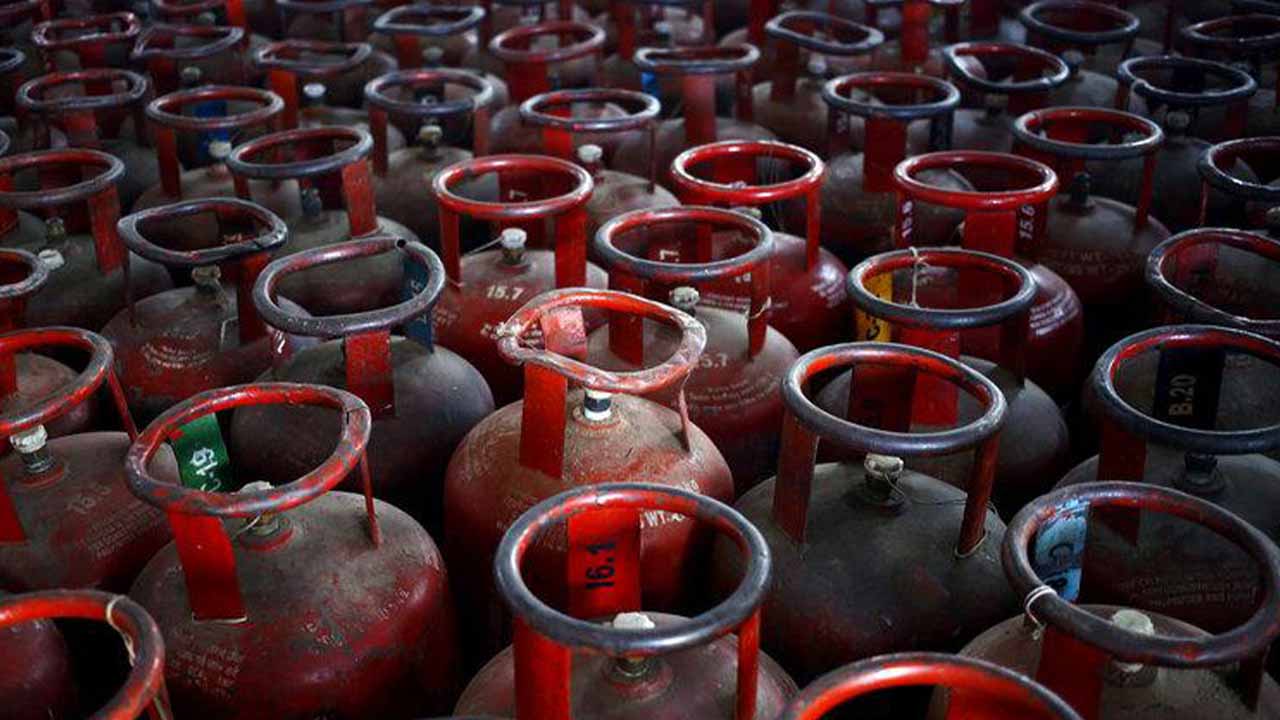
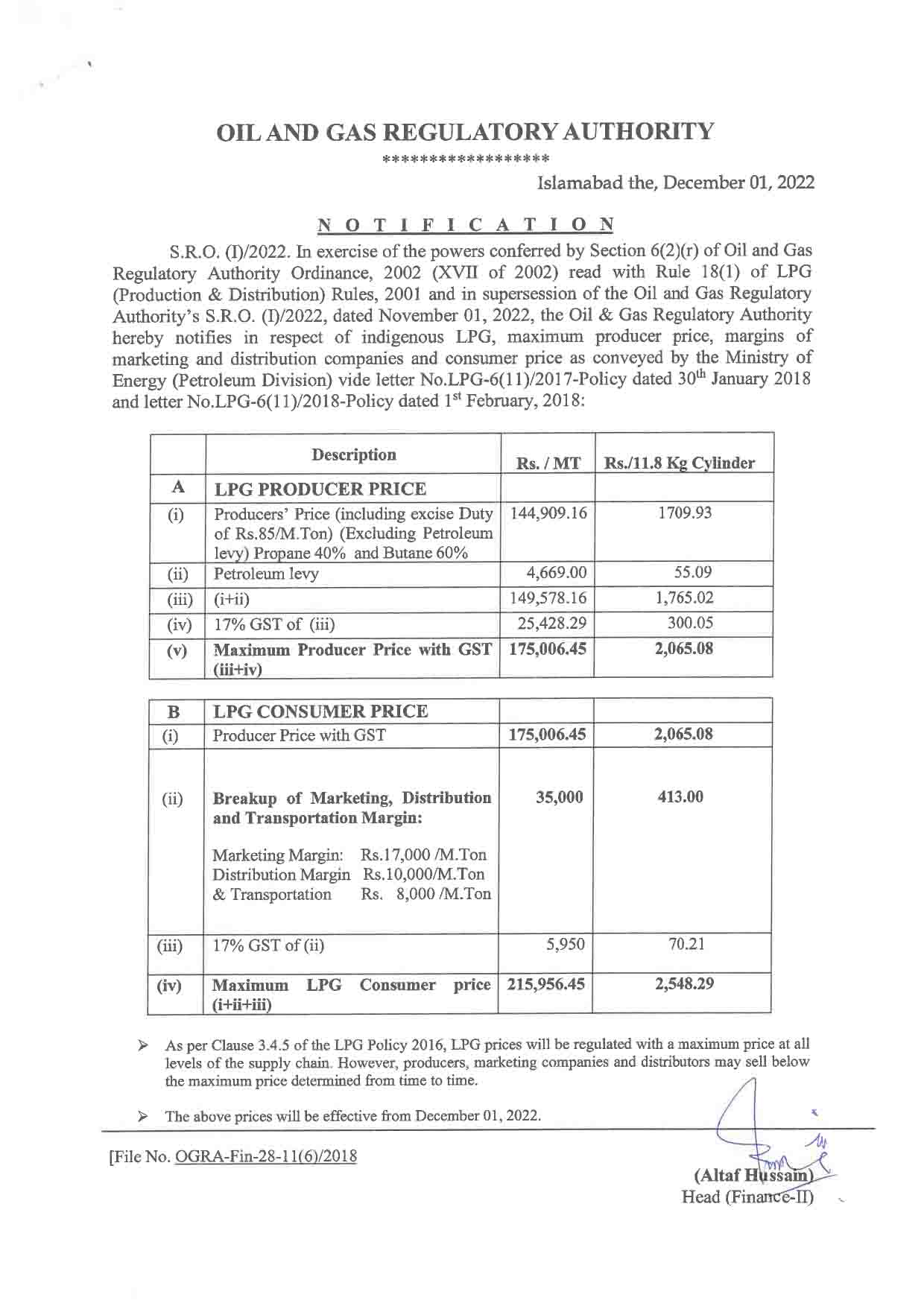
    The Oil and Gas Regulatory Authority (OGRA) has increased the prices of Liquefied petroleum gas (LPG) by Rs11.79 per kilogramme for this month.

    The price of a domestic cylinder (11.8 Kg) has gone up by Rs139 while the price of a commercial cylinder increased by Rs535, according to a notification from OGRA.

    As per the new pricing, the domestic cylinder will now be available at Rs2,548 and the commercial cylinder will be available at Rs9,804.

    LPG Prices OGRA

    The federal government earlier announced to keep the prices of petrol and diesel unchanged for the next 15 days, despite a global reduction in oil prices.

    Finance Minister Ishaq Dar announced to keep the prices of petrol and high-speed diesel unchanged for the next 15 days.

    However, Dar announced a reduction of Rs10 per litre in the price of kerosene oil and Rs7 per litre in light diesel.

  • Russia refuses to give Pakistan 30–40% discount on crude oil

    Russia refuses to give Pakistan 30–40% discount on crude oil

    It appears that talks with Russia came to an end without any conclusion since Moscow has refused to offer Pakistan a 30–40 per cent discount on crude oil, claiming that all volumes were committed.

    During the negotiations, the Pakistani group, which included State Minister for Petroleum Musadik Malik, the joint secretary, and representatives of the Pakistani Embassy in Moscow, sought a reduction.

    However, Russia has pledged to take Pakistan’s request into consideration and to later communicate its opinion through diplomatic channels.

    Nevertheless, according to sources, Russia can provide oil at the rates it is currently offering to its major client countries, which are stable and solid economies, at an appropriate time. All quantities are currently contracted with significant purchasers, they claimed.

    The Russian side urged Pakistan to start by keeping its word over the Pakistan Stream Gas Pipeline, which will be built from Karachi to Lahore, Punjab.

    During the negotiations, the Pakistani side expressed a desire to alter the PSGP project’s model. The Russian side claimed that only a few provisions of the shareholding agreement needed to be finalised and that the model of the project under the GtG arrangement had already been established.

    According to Geo, the official delegation from Pakistan travelled to Moscow on November 29 for a three-day meeting with Russian officials to discuss the possibility of importing crude oil at a reduced price, as well as the mode of payment and shipping costs.

    Russian crude oil may be processed in Pakistan’s refineries, and one private refinery has previously used Russian crude oil to provide completed goods, according to sources in the industry ministry.

  • Petrol, diesel prices to remain unchanged for the next 15 days

    Petrol, diesel prices to remain unchanged for the next 15 days

    Despite a global decrease in oil prices, the federal government has decided to maintain the existing prices of petrol and diesel for the next 15 days.

    Finance Minister Ishaq Dar announced to keep the prices of petrol and high-speed diesel unchanged for the next 15 days. However, he announced a reduction of Rs10 per litre in the prices of kerosene oil and Rs7 on light diesel oil.

    The current prices for petrol are Rs224.80 per litre and Rs235.30 for High-Speed Diesel (HSD).

    Furthermore, Dar also announced a 15-day extension in the filing of income tax returns.

    On November 15, the finance minister announced to keep the prices of petrol, diesel, and other petroleum products unchanged. He said that the prices of petrol, diesel, light diesel and kerosene oil will remain unchanged till November 30 as per the federal government’s decision.

  • Toyota IMC announces another price hike for Corolla Altis X

    Toyota IMC announces another price hike for Corolla Altis X

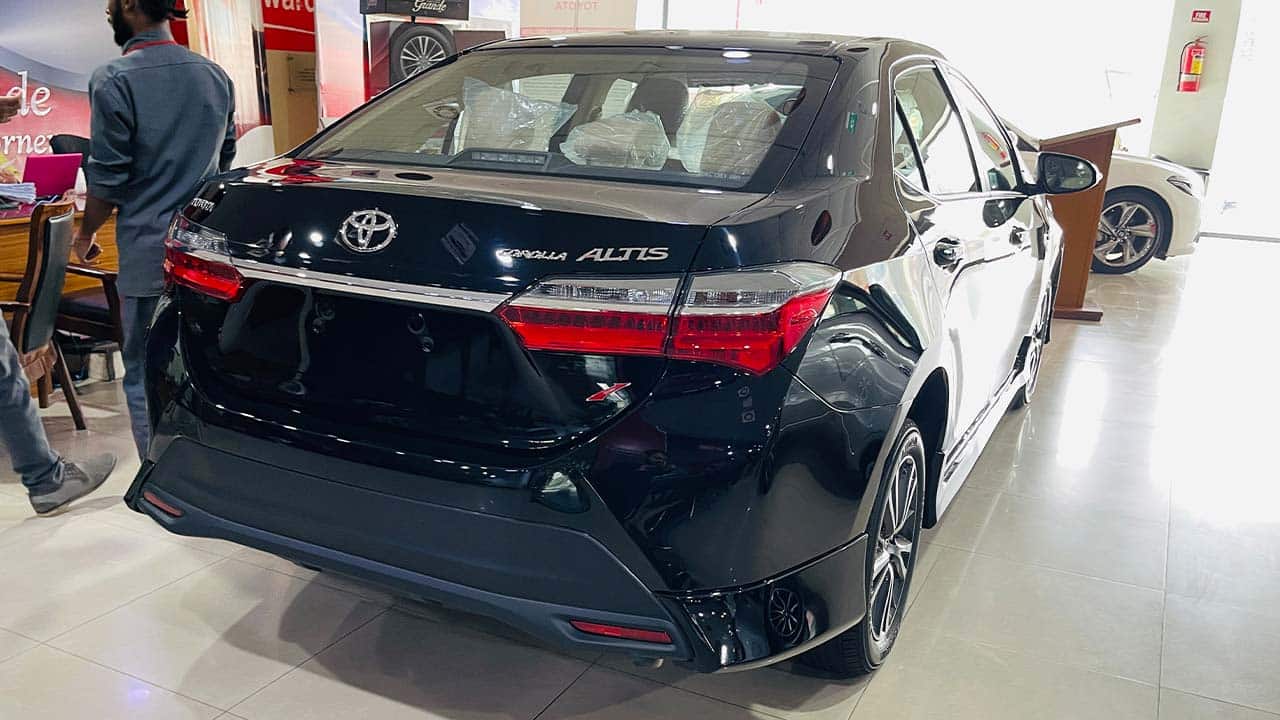
    Toyota Indus Motor Company has announced a hefty price hike for the Toyota Corolla Altis 1.8 CVT variant. The popular sedan from the automaker has witnessed a price increase of Rs370,000 from its earlier price tag of Rs5,269,000.

    The Altis 1.8 CVT now has a new price tag of Rs5,639,000. Earlier, the automaker also increased the price of the Altis 1.6 variants.

    The company has cited the depreciation of the local currency and ongoing economic instability as reasons for the latest price increase.

    An official statement from the automaker reads:

    The volatile situation of Forex, increase in utilities and overheads have also impacted the cost of manufacturing for IMC. Thus, this situation has made it extremely difficult for IMC to hold the current retail selling prices, and therefore, we are compelled to pass on some impact to the market.

    It is worth noting that Toyota IMC has raised car prices by up to 37 per cent since the beginning of 2022 for its cars across the board. This new price hike on top of that comes as a big surprise for Toyota lovers.

  • Govt expected to increase petroleum levy on diesel

    Govt expected to increase petroleum levy on diesel

    The government is expected to raise the petroleum levy beginning tomorrow, implying that diesel customers are unlikely to receive any relief. 

    Finance Minister Ishaq Dar is also anticipated to maintain the oil prices for the first two weeks of December.

    The government now has the flexibility to raise the rate of PL on diesel, a crucial good that is extensively utilised in the transportation and agricultural sectors, thanks to the recent rise in PL on gasoline and High-Octane Blending Component (HOBC) to the budgeted level of Rs50 per litre.

    However, this change will directly affect how the majority of people live. High-speed diesel (HSD) is currently priced per litre at Rs12.59. However, according to sources, the price of diesel had decreased by Rs11.95 per litre during the past two weeks. Diesel prices could decrease to Rs223.35 per litre from Rs235.3 per litre if the government decides to pass along the savings.

    Despite the rupee losing Rs1.81 to reach Rs223.62, the cost of diesel, kerosene, and light diesel oil (LDO) fell significantly. The current rate of PL and GST is the basis for the variation in oil prices.

    The Inland Freight Equalization Margin has been set at Rs1.90 for HSD and Rs6.69 for gasoline per litre. The exchange loss for Pakistan State Oil was Rs3.01 for gasoline and Rs2.10 for HSD per litre.

    PSO imports goods, therefore it may experience exchange gains or losses depending on how much the local currency is worth. Kerosene oil prices also decreased by Rs9.91 per litre, and LDO prices decreased by Rs13.39 per litre.

    In isolated locations without access to LPG, kerosene oil is used for cooking. Kerosene oil’s price could decrease from Rs191.83 to Rs181.92 per litre and LDO’s price from Rs186.50 to Rs173.11 per litre if the government grants relief.

    Petrol prices have increased by Rs2.62 per litre, with a potential increase to Rs227.42 per litre from the current level of Rs224.80 per litre.

  • PKR remains largely stable after Pakistan receives $500 million

    PKR remains largely stable after Pakistan receives $500 million

    Strangely, the Pakistani rupee (PKR) did not increase or decrease at the time of closing on Tuesday. The PKR’s closing rate was Rs223.95 and showed no change from its previous closing rate of Rs223.95.

    The local currency only declined by one paisa on Monday.

    After falling for four straight days, the rupee’s slide against the US dollar came to an end today. The market confidence was bolstered by the Finance Division’s earlier confirmation of receiving $500 million from the Asian Infrastructure Investment Bank (AIIB).

    What do Pakistanis think of the current dollar exchange rate?

    Some Twitter users claim that the government is controlling exchange rates, which will harm the economy in the long run since exporters are reluctant to accept payments made through banking channels and question why they should sell dollars to banks for less when the open market price is more than Rs250.

    The daily dollar rate announcement from SBP, according to a Twitter user, has lost all relevance because “the rate is controlled and not determined by market forces. The hefty difference between the interbank rate and the open market rate proves the point.”

  • Pakistan receives $500 million from Asian Infrastructure Investment Bank

    Pakistan receives $500 million from Asian Infrastructure Investment Bank

    The government of Pakistan on Tuesday received $500 million from Asian Infrastructure Investment Bank (AIIB), the Ministry of Finance announced on Tuesday.

    “Government of Pakistan has today received $500 million from AIIB. The funds are deposited with the State Bank of Pakistan (SBP) and will augment our reserves,” the ministry said.

    The funds by AIIB are crucial for the cash-strapped country, which has seen its foreign exchange reserves dwindle in recent months. The country’s reserves stood at $7.8 billion as of November 18.

    “During the week ended on November 18, 2022, SBP’s reserves decreased by $134 million to $7,825.7 million due to external debt repayment,” said the SBP on Friday.

    It is important to note that on October 26, 2022, the SBP got $1.5 billion from ADB as a loan disbursement for the government of Pakistan.

    An agreement between the ADB and Pakistan was inked last month to offer a $1.5 billion loan for budgetary support as well as assistance with flood-related repair and reconstruction efforts.

    The government’s $2.3 billion countercyclical development spending programme, created to lessen the effects of external shocks like the Russian invasion of Ukraine, was funded in part by a loan issued under the BRACE Program.

  • IMF asks Pakistan to reduce expenses before loan talks

    IMF asks Pakistan to reduce expenses before loan talks

    The International Monetary Fund (IMF) has asked Pakistan to reduce expenses before talks on the ninth review of a $7 billion loan programme.

    Discussions between Pakistan and the IMF are still underway, but no party has reached a broad agreement on a revised macroeconomic framework for the current fiscal year.

    According to The News, the ninth review’s conclusion and the distribution of the $1 billion tranche might not happen until the following calendar year 2023 as a result of the ongoing negotiations.

    The discussions went on for weeks, but the two parties were unable to agree to begin policy-level discussions to wrap up the approaching ninth review by the end of November.

    Although both Pakistan and the international lender are keeping quiet and refusing to make any public statements, rumours in the background indicate that the talks broke down due to disagreements over the revised macroeconomic and fiscal framework that Islamabad had prepared and shared with the IMF.

    Pakistan must now put in a lot of effort to finish the review by the first week of December 2022. If the negotiations are successful next month, the IMF will ultimately release the next tranche in January 2023 because the Christmas and New Year holidays start after that date. The Executive Board of the multilateral lender will meet the following year to approve Pakistan’s next tranche.

    The News had approached both IMF and Finance Ministry officials to inquire about the exact schedule for the conclusion of the pending review. One close aide of Minister for Finance Ishaq Dar stated that “discussions were going on Zoom. Insha Allah soon (the review will be concluded).”

    The new macroeconomic and fiscal framework for 2022–23 is being contested by the IMF because it thinks the goals are unattainable and at odds with actual conditions.

    The government anticipated nominal growth in the range of 25 per cent, with real GDP growth of 2 per cent and an average inflation rate of 23 per cent, however, the other numbers did not line up with the revised nominal growth estimates.

    The government has not revised the $7.47 trillion yearly objective set by the Federal Board of Revenue (FBR). The IMF, however, thinks that the reduction of imports may result in a shortfall for the tax collector. Second, assuming FBR met its goal, the tax-to-GDP ratio would decline even lower because it did not equal the nominal growth statistics of 25 per cent. Third, the aim of Rs2 trillion in non-tax revenue also might not be met.

    The government had set a target of Rs855 billion before the next budget, therefore the IMF highlighted that the petroleum development levy may not completely materialise. Because the government was unable to impose a fee of Rs50 per litre on diesel and because the consumption of petroleum products fell by 21 per cent, the levy target may now be reduced downward to Rs500 billion.

    Another obstacle to reaching agreement was the government’s failure to pass legislation and reforms to the energy industry.

    Given that the State Bank of Pakistan’s (SBP) reserves currently stand at $7.8 billion, the delay in finalising the IMF agreement could exacerbate the economic problems already plaguing the nation.

  • Pakistani delegation leaves for Russia to hold discussions on cheaper oil

    Pakistani delegation leaves for Russia to hold discussions on cheaper oil

    Minister of State for Petroleum Dr Musadik Malik and the petroleum secretary have flown to Russia to hold talks over oil and gas, a source with knowledge of the situation said on Monday on the condition of anonymity.

    The trip comes as the country struggles to meet domestic gas supply demands as winter approaches while battling to contain a current account deficit swelled by energy payments, mostly for oil.

    Ishaq Dar, the federal minister of finance, had already stated that the delegation will discuss an oil contract with Moscow.

    “We should pray the visit is successful and the government manages to secure a deal on favourable terms and conditions,” Dar said during an interview.

    Given the sharp rise in the cost of energy commodities in recent months, buying Russian oil at lower prices has gained popularity. This has been difficult, especially for emerging economies like Pakistan, whose energy requirements are mostly met by imports of petroleum.

    The State Bank of Pakistan (SBP) said that during the first four months of the current fiscal year, Pakistan imported petroleum products worth $7.547 billion.

    Dar had earlier stated, speaking to a crowd in Dubai on November 13, that Islamabad hoped to clinch an import pact with Moscow on conditions comparable to those of New Delhi. He said that Pakistan could purchase oil from Russia since India was doing the same, and the US had been informed of this.