Category: Business

  • Pakistanis buying 47% fewer cars due to rising prices

    Pakistanis buying 47% fewer cars due to rising prices

    Despite an increase from month to month in October, the total number of cars sold fell by 47 per cent to 39,700 units in 4MFY23 from 74,952 units as a result of increased prices, restrictions on auto financing and part imports, and high interest rates.

    However, the number of cars sold in October increased to 11,129 from 9,213 in September, a significant decrease from the 17,413 sold in October 2021.

    Assemblers have been allowed to hand over automobiles after the release of auto parts from the port as a result of the State Bank’s decision to increase the import quota, which led to a recovery in car sales as well as production in October.

    Honda Civic/City sales decreased to 6,416 units in 4MFY23 from 10,444 units during the same period in FY22, while Toyota Corolla and Yaris sales significantly decreased to 8,253 units from 19,214 units. Sales of the Suzuki Cultus and WagonR decreased from 11,454 to 6,779 units to 2,952 and 2,181 respectively. Sales of the Suzuki Bolan and Alto were unchanged at 1,469 and 13,464 units, compared to 4,012 and 20,773 units in 4MFY22.

    Jeep and pickup sales decreased by 45 percent, from 14,969 units in the same period last fiscal year to 8,234 units in July-October FY23.

    Additionally, the total number of tractors sold decreased by 47 per cent, from 17,386 units to 9,258 units, indicating a decline in agricultural activity.

    Compared to 2,011 and 184 units sold in 4MFY22, trucks and buses showed sales of 1,109 and 210 units, respectively.

    Sales of two and three-wheelers in the country fell dramatically, from 629,212 units in the same period last year to 412,111 units in the first four months of the current fiscal year.

  • PSX surpasses 43,000-mark on hopes of inflows from friendly countries

    PSX surpasses 43,000-mark on hopes of inflows from friendly countries

    The news that the country will get a financial package from friendly countries led to another bullish session at the Pakistan Stock Exchange on Friday.

    The benchmark index started the pre-Friday prayer session in the green, according to Arif Habib Ltd, but lacklustre activity caused the index to drop 96.39 points at the end of the session.

    However, as trading started again, the benchmark recovered. Following Finance Minister Ishaq Dar’s announcement of a $13 billion package from China and Saudi Arabia, investors started looking for equities. While significant activity was seen in the oil and exploration sector, volumes overall remained stable.

    The KSE-100 index settled at 43,092.95 points, up 191.68 points or 0.45 per cent from the preceding session.

    The trading volume decre­ased 20.8 per cent to 232.8m shares while the traded value went down 25.4 per cent to $34.4m on a day-on-day basis.

    Stocks contributing significantly to the traded volume included Cnergyico PK Ltd (21.1m shares), WorldCall Telecom Ltd (17.9m shares), TPL Properties Ltd (15.1m shares), Pakistan Refinery Ltd (14.8m shares) and Oil and Gas Development Company Ltd (12.5m shares).

    Sectors that contributed to the index performance were exploration and production (129.3 points), technology and communication (98.4 points), oil marketing (22.8 points), tobacco (13.1 points) and food and personal care products (12.8 points).

  • Domestic users to experience 16-hour gas load shedding during winter

    Domestic users to experience 16-hour gas load shedding during winter

    Due to the requirement for a $37 per mmbtu subsidy, the federal government is unable to guarantee that domestic customers of both Sui Northern Gas Pipeline Limited (SNGPL) and Sui Southern Gas Company (SSGC) will have uninterrupted access to eight hours of gas per day during cooking hours in the upcoming winters.

    A parliamentary panel was informed on Thursday by Captain Muhammad Mahmood (retired), Additional Secretary (Incharge) for the Ministry of Energy’s Petroleum Division, that neither the government nor the gas firms had the resources to severely subsidise the domestic gas consumers. The secretary said, “We can’t supply gas at $3 per MMBtu against a current purchase of $40 per MMBtu.”

    He made it clear that every effort will be taken to guarantee household gas supply for three hours in the morning, two hours in the afternoon, and three hours in the evening.

    In response to a query, he stated that the Sindh gas load-shedding was a result of the allocation of gas between home and industrial uses. He claimed that in Sindh, 60 per cent of gas was delivered to industry and the remaining 40 per cent to homes and other sectors, in contrast to KP where 80 per cent of gas was supplied to domestic users.

    Imran Maniar, the managing director (MD) of SSGC, informed the committee that Balochistan contributed 110 mmcfd while Sindh produced 740 mmcfd.

    He claimed that due to the 10 per cent annual depletion of domestic gas reserves and the 100 per cent dependency on imported gas in ten years, there will be no gas in the upcoming winter.

    He stated that it was anticipated that in three to four years, LNG prices would decline significantly and the government would be able to finish building the new LNG facilities as planned.

    Due to the high expense of security and the country’s continued political unrest, new corporations were not expressing interest in oil and gas exploration. “The investors are waiting as they would not invest when new general election will be held next year,” he said.

    He added that due to sanctions, the anticipated import of gas from Russia or Iran was not feasible.

    In response to a question, the secretary stated that the cost of storing gas in the nation was high and that industrialised nations lacked such facilities; nonetheless, during recent gas crises, Germany and England began developing gas storage facilities.

    The previous administration authorised a draught of a new Pakistan Upstream Regulatory Authority to separate policy from regulation, according to Director General (DG) PC, Petroleum Division Kashif Ahmed.

    Provinces disagreed with a few of the proposed regulatory authority’s provisions, though. He stated that the authority would have four members from four different provinces and one vice chairman. “After getting approval from the competent forum, it will take three to four years for the establishment of the regulator for the upstream sector,” he added.

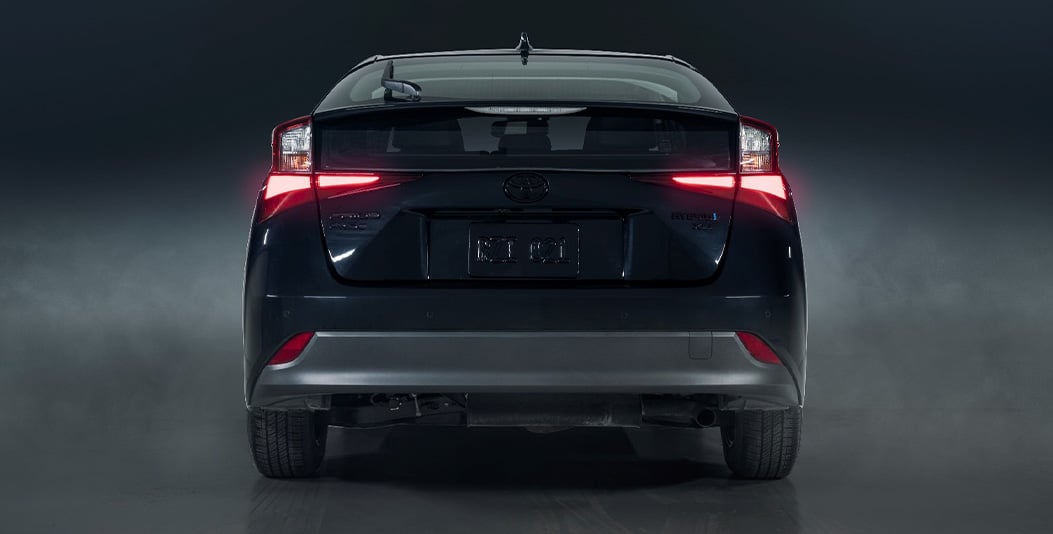
  • Toyota to reveal all-new 5th generation Prius next week

    Toyota to reveal all-new 5th generation Prius next week

    The next generation of the hybrid hatchback will be revealed at the Los Angeles auto show next week, and these teasers give a glimpse at its styling.

    If the brand-new Toyota teaser images are any indication, the Prius hybrid is about to undergo a significant overhaul.

    The images were posted on Toyota’s Japanese social media accounts and feature the words “Hybrid Reborn,” which could refer to the company’s first hybrid hatchback. The images also confirm a reveal date of November 16 for the new model.

    The fifth generation of the Prius will soon be released, and its outline is pretty obvious. But the recognised form, which aids in the vehicle’s aerodynamic profile, might get some fresh details. The headlamp in one of the teaser images resembles the design language on numerous Toyota concept cars, including some of the brand’s most recent EV concepts and the Toyota Crown compact crossover, also known as the Sport-type in Japan.

    Although we are unsure of what to expect from the new hybrid Prius powertrain, we can be confident that it will aim for better fuel economy than the present model, which can get up to 56 mpg combined according to the EPA. In comparison to the outgoing car’s 25-mile range on a fully charged battery, the Prius Prime plug-in hybrid is set to make a comeback and should have a larger battery pack.

    Next week will bring further details as Toyota gets ready to unveil the redesigned 2023 Prius in Los Angeles auto show.

  • ‘We do not comment on rumours,’ Telenor Pakistan responds to reports suggesting that the company is being sold for $1 billion

    ‘We do not comment on rumours,’ Telenor Pakistan responds to reports suggesting that the company is being sold for $1 billion

    Multiple online news outlets reported that Telenor, a telecom operator, intended to sell its business in Pakistan for $1 billion, which ignited a debate on social media.

    There is a lot of uncertainty about the authenticity of this news since a few Telenor employees have also denied the reports and asserted that they are fake.

    The company has yet to make an official announcement in this regard, with the exception of responding to a Twitter user’s question who asked whether these reports are legit. “We do not comment on speculations and rumours,” Telenor replied. 

    According to Bloomberg, Telenor is moving forward with plans to sell its business in Pakistan, which might be worth $1 billion, according to people familiar with the situation.

    The Norwegian telecommunications operator is working with Citigroup Inc. and will welcome first-round bids for the firm later this month, according to insiders.

    Telenor announced in July that it would conduct a strategic assessment of its Pakistan unit after incurring a 2.5 billion-krone ($244 million) loss on operations in the growing market.

    The people predict that strategic customers with operations in Pakistan from the Middle East and Asia will express interest. They stated that there is no assurance that the ongoing discussions would result in a transaction. Telenor and Citigroup representatives declined to comment.

    Telenor’s stock increased as much as 2.4 per cent on Wednesday. The company’s market worth increased to $13 billion as the stock rose 1.8 per cent in Oslo.

    In October, Telenor said that the third quarter’s underlying profitability in Pakistan decreased by 22 per cent, in part as a result of the nation’s growing energy costs. This had a negative effect, but it was partially offset by a gain from Pakistan’s repeal of a SIM tax.

    One of Telenor’s four Asian countries, Pakistan, saw a gain of 600 million crowns ($57.79 million), which was related to a court ruling on the applicability of tax on SIM cards for mobile phones from 2014 to 2020.

    In recent years, Telenor, which serves 175 million users across eight countries in the Nordic region and Asia, has worked to reduce expenses and increase cash flow in order to fund greater dividends and 5G expenditures. The company’s greatest efforts to date have involved attempts to consolidate markets in South-East Asia, including a $8.6 billion acquisition in Thailand and a $15 billion merger to create a telecoms leader in Malaysia.

    Telenor Asia, which also manages the company’s operations in Pakistan and Bangladesh, is in charge of both units.

    During the first three quarters of 2022, Telenor Pakistan’s income decreased by about 8 per cent in Norwegian Kroner terms but increased by 4 per cent in Pakistani Rupee terms, staying at NOK 3.390 billion (Rs82.57 billion) as opposed to NOK 4.270 billion (Rs79.36 billion) during the same period of 2021.

    In comparison to NKO 1.425 billion (Rs26.68 billion) during the same period last year, or in 2021, Telenor Pakistan reported total revenues of NOK 1.320 billion (Rs29.53 billion) during the third quarter of 2022. This represents a 7.5 per cent decline in NOK terms and a 10 per cent increase in rupee.

    Intense floods throughout the quarter had a negative impact on the Group’s business in Pakistan. Consumers’ purchasing power was impacted by the circumstance, which also resulted in network failures and raised prices.


  • SBP reduces cash-carrying limits by 50% for international travel

    SBP reduces cash-carrying limits by 50% for international travel

    The State Bank of Pakistan (SBP) said in a statement that the cash-carrying limitations on foreign currency for international travel have been cut in half to $5,000 (or equivalent in other foreign currencies) each visit and $30,000 per year for individuals aged 18 and over.

    Under-18s (minors) will be subject to a 50 per cent reduction in both ceilings, or $2,500 per visit and $15,000 per year.

    The cap on withdrawing foreign currency in cash, however, will continue to be $1,000 per visit and $6,000 per year for visitors to Afghanistan.

    Now, overseas debit and credit card transactions are also subject to the same annual cap ($30,000).

    To curb speculation and the grey market, the SBP and the Federal Investigation Agency (FIA) have independently decided to work together against illegal foreign exchange businesses.

    The yearly trip cash limits, according to the central bank, won’t take effect until January 1, 2023, but the per-visit limits will be effective right away.

    A $30,000 yearly restriction on overseas transactions was also imposed by the SBP after it discovered that debit and credit cards were being used for transactions that “are not linked with the profile of the individual or are meant for commercial purpose.”

    SBP advised banks to “ensure that the use of debit and credit cards for international transactions was aligned with the profile of cardholders and for their personal needs only”.

    “It is emphasised that the purpose of debit/credit cards is to facilitate individuals in making payments for transactions that are of personal nature. The limits on these cards as well as payments through them, both domestic and international, should therefore be aligned with the profile of the cardholder,” it said.

    It continued by stating that it was the customer’s duty to make sure that their annual quota was never exceeded. However, banks are required to track these caps for every person on a combined basis.

  • Pakistan has sufficient petrol and diesel to meet domestic demand: Petroleum Division

    Pakistan has sufficient petrol and diesel to meet domestic demand: Petroleum Division

    The Petroleum Division said on Tuesday that the country has sufficient petrol and High-Speed Diesel (HSD) in stock to meet domestic demand after allowing Oil Marketing Companies (OMCs) to recover Rs10 per litre on HSD for the next two months (November-December 2022) by raising the premium limit to $15 per barrel.

    The OCAC had cautioned the federal government about a likely shortage of petrol and HSD in the coming days due to limited imports and limited local availability.

    According to the OCAC’s letter to the Oil and Gas Regulatory Authority (Ogra), the gap is due to limited supply and excessive premiums on fuel stocks on the international market.

    The Economic Coordination Committee (ECC), led by Finance Minister Ishaq Dar, approved the summary proposed by the Ministry of Energy on Friday (Petroleum Division).

    The ministry aimed to secure sustainable HSD imports for November-December 2022 by loading the country’s risk factors of $6 bbl, with an upper limit premium of $15 to the OMCs for pricing computation.

  • Ghareeb Mulk? Punjab govt spending nearly Rs100 crore on luxury cars for bureaucrats

    Ghareeb Mulk? Punjab govt spending nearly Rs100 crore on luxury cars for bureaucrats

    Several social media posts suggested that the Punjab government had approved the procurement of luxury cars worth approximately Rs100 crore for bureaucrats, but the story remained a rumour until it was validated by Geo Fact Check.

    According to a Twitter user, the Punjab government is spending Rs989 million to buy 93 vehicles from Toyota Indus Motor Company, including more than 40 Toyota Fortuner SUVs. “It is an organised crime with a very high sense of entitlement,” the user further added, sharing an alleged notification from the revenue department Punjab.

    The Board of Revenue’s headquarters in Lahore provided Geo with a copy of the official notification.

    According to the document, the Punjab assembly’s standing committee of cabinet on finance and development has instructed that Rs989 million be spent on the purchase of 93 luxury cars for provincial bureaucrats.

    40 Toyota Fortuner SUVs will be purchased for Deputy Commissioners in Punjab at a cost of Rs533,600,000.

    While 12 Corolla X vehicles will be acquired for members of the revenue board and 41 Hilux 4×4 vehicles will be distributed to extra deputy commissioners (revenue). The total cost of all 93 vehicles will be Rs989,116,000.

    The notification was sent to Indus Motors in Lahore “through Toyota Gujrat Motors,” it said.

  • Elon Musk fires more than 90% of Twitter India staff

    Elon Musk fires more than 90% of Twitter India staff

    Twitter Inc. terminated more than 90 per cent of its employees in India over the weekend, “severely depleting its engineering and product team in a prospective growth area.”

    The firing frenzy is part of global reductions by new owner Elon Musk.

    .According to persons familiar with the situation who spoke to Bloomberg on the condition of anonymity due to the sensitivity of the subject, Twitter’s India offices employed just over 200 people before the cuts, leaving it with only about a dozen employees. The offices are in Bengaluru, Mumbai, and New Delhi.

    Due to its sizable potential pool of new online users, India is a crucial growth engine for international internet companies like Twitter, Meta Platforms Inc., and Google, a division of Alphabet Inc.

    The businesses must comply with “increasingly strict regulations” intended to rein in giant digital enterprises in the country.

    According to one of the employees who spoke with Bloomberg, the product and engineering teams in India that worked on a worldwide mandate accounted for roughly 70 per cent of the jobs that were eliminated.

  • After Twitter, Meta reportedly planning ‘large-scale’ layoffs this week

    After Twitter, Meta reportedly planning ‘large-scale’ layoffs this week

    With plans to layoff thousands of employees this week, Facebook parent company Meta will join a growing list of digital companies that are reducing their workforces.

    As of September 30, Meta has over 87,000 people working for it across its various platforms, which include the social media sites Facebook and Instagram as well as the messaging service WhatsApp. According to WSJ, the social media business had reduced its ambitions to hire engineers by at least 30 per cent in June, and Mark Zuckerberg had advised staff to prepare for a slowdown in the economy.

    In his announcement of Meta’s dismal third-quarter results, CEO Mark Zuckerberg stated that the company’s headcount will not rise by the end of 2023 and might even decline significantly.

    “In 2023, we’re going to focus our investments on a small number of high-priority growth areas. So that means some teams will grow meaningfully, but most other teams will stay flat or shrink over the next year. In aggregate, we expect to end 2023 as either roughly the same size or even a slightly smaller organization than we are today,” Zuckerberg said on the last earnings call in late October.

    Profits for Meta dropped to $4.4 billion in the third quarter, a 52 percent year-over-year decline. The poor findings had a significant negative impact on Meta’s stock price, which dropped by 25 per cent in one day.

    Over the past year, the company’s market value has decreased to $600 billion.

    In a previous open letter to Mark Zuckerberg, Meta’s shareholder Altimeter Capital Management stated that the company needed to streamline by eliminating positions and capital expenditures. They also stated that investors had lost faith in Meta as a result of its increased spending and pivot to the metaverse.

    Owing to increased interest rates, rising inflation, and a European energy crisis, several technological businesses, including Microsoft Corp., Twitter Inc., and Snap Inc., have reduced workforce in recent months.