Category: Business

  • CPI inflation in Pakistan increases to 26.6% in October

    CPI inflation in Pakistan increases to 26.6% in October

    In Pakistan, Consumer Price Index (CPI)-based inflation rose sharply in October, surging by 26.6 per cent year over year (YoY). On the other hand, it climbed 4.7 per cent month over month (MoM), indicating a decline of 1.2 per cent from September.

    “CPI inflation General, increased to 26.6 per cent on YoY basis in Oct 2022 as compared to an increase of 23.2 per cent in the previous month and 9.2 per cent in Oct 2021,” said the PBS.

    According to APP, inflation reached a YoY high of 27.3 per cent in August 2022, which was over a 47-year high in the inflation measurement in June 2022 after it had crossed the 20 per cent threshold.

    The inflation reading matches what the market had predicted.

    According to the PBS, year-over-year CPI inflation in urban areas reached 24.6 per cent in October 2022 as opposed to an increase of 21.2 per cent in the previous month and 9.6 per cent in October 2021.

    In October 2022, it grew to 4.5 per cent month over month, up from 1.7 per cent in October 2021 and a decline of 2.1 per cent the month before.

    In addition, year-over-year CPI inflation in rural regions reached 29.5 per cent in October 2022 as opposed to increases of 26.1 per cent in the previous month and 8.7 per cent in October 2021.

    When compared to the previous month’s gain of 0.2 per cent and the increase of 2.2 per cent in October 2021, it increased by 5.0 per cent in October 2022 on a monthly basis.

    Rising inflation has become a major worry for Pakistan’s economy, which is already experiencing a loss of foreign exchange reserves.

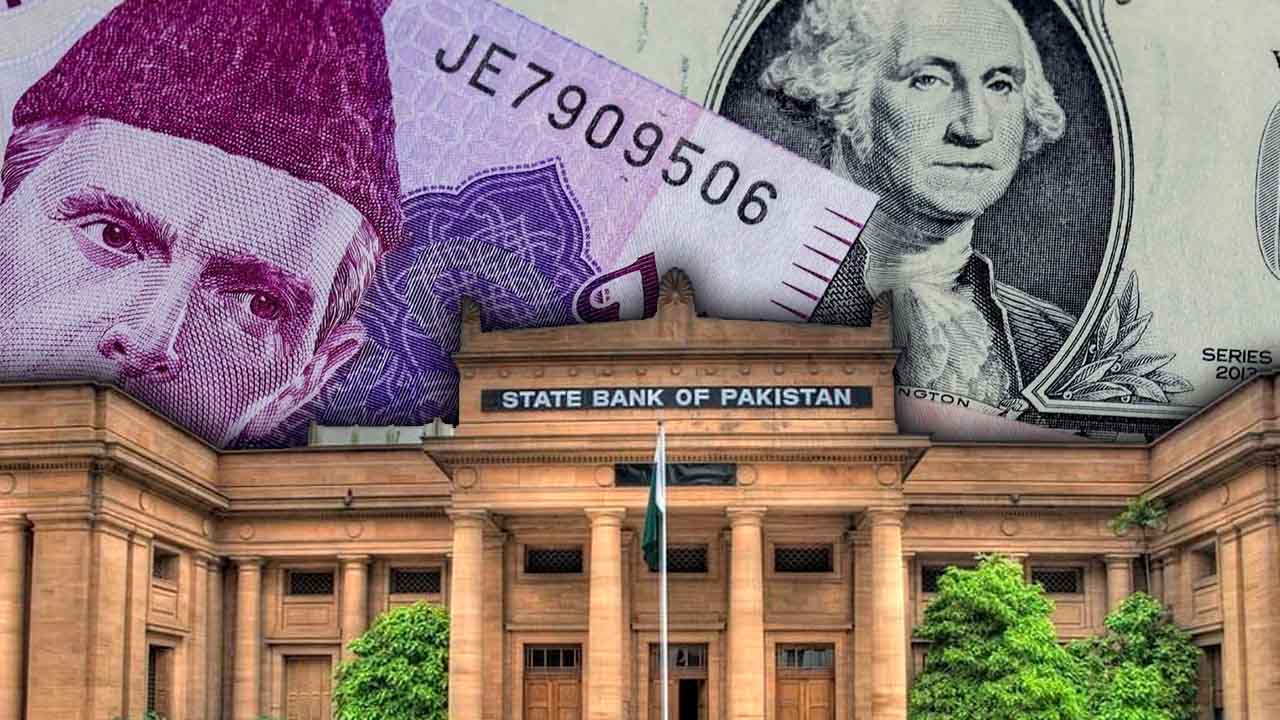
    The State Bank of Pakistan (SBP) maintained the policy rate at 15 per cent in October at the recommendation of its Monetary Policy Committee (MPC), believing that the current monetary policy stance achieves the right mix between controlling inflation and sustaining growth in the wake of the floods.

    “On the one hand, inflation could be higher and more persistent due to the supply shock to food prices, and it is important to ensure that this additional impetus does not spill over into broader prices in the economy. On the other, growth prospects have weakened, which should reduce demand-side pressures and suppress underlying inflation,” MPC said then.

    However, the government on Monday night announced that the price of petroleum products will remain the same for the ensuing 15 days.

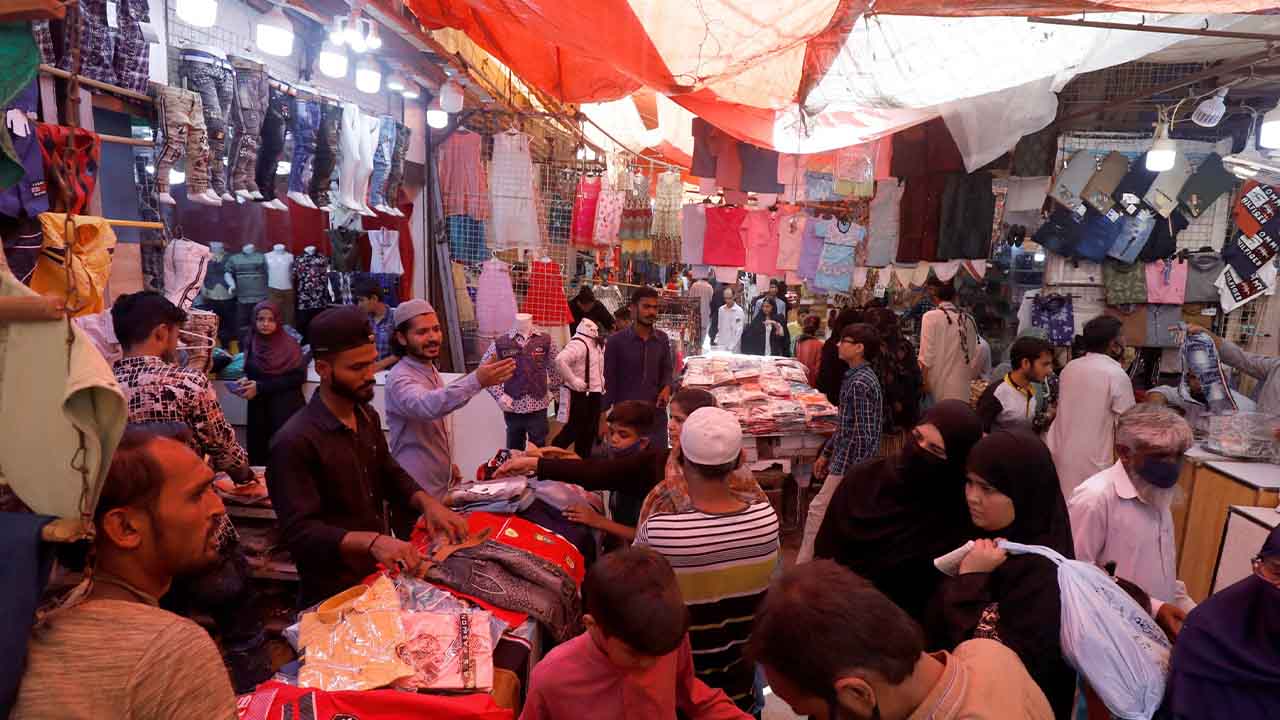
    According to PBS data, the inflation rates that were highest in October were in the transportation, food, housing, and restaurant and hotel groupings.

    Items that witnessed an increase in prices

    Food

    The food commodities that witnessed increase in prices on a YoY basis included tomatoes (219.34 per cent), onions (165.66 per cent), gram whole (69.80 per cent), pulse gram (65.08 per cent), besan (62.25 per cent), mustard oil (61.14 per cent), pulse masoor (61.07 per cent), fresh vegetables (58.87 per cent), cooking oil (58.06 per cent), pulse mash (55.33 per cent), vegetable ghee (52.5 per cent), pulse moong (49.84 per cent), wheat (45.77 per cent), tea (41.89 per cent), rice (40.76 per cent), wheat flour (37.38 per cent), milk fresh (29.61 per cent), meat (25.34 per cent), potatoes (20.65 per cent), fish (15.4 per cent), chicken (12.22 per cent) and gur (0.39 per cent).

    Non-food items

    The non-food commodities that witnessed increase on a YoY basis included motor fuel (64.81 per cent), stationery (44.5 per cent), washing soap/detergents/match box (41.49 per cent), transport services (41.27 per cent), motor vehicles (34.29 per cent), construction input items (32.03 per cent), motor vehicle accessories (31.31 per cent), electricity charges (24.95 per cent), cotton cloth (24.16 per cent), household equipment (21.4 per cent), solid fuel (20.88 per cent) and construction wage rates (12.72 per cent).
  • Poor performance forces govt to extend income tax return filing deadline to November 30

    Poor performance forces govt to extend income tax return filing deadline to November 30

    The Federal Board of Revenue (FBR) has managed to reach its four-month target of Rs2.14 trillion despite poor performance in increasing the tax base because of a 34 per cent decrease in income tax returns filed.

    Ishaq Dar, the finance minister, was forced to once again push the deadline for filing returns due to the dismal results in increasing the tax base. The new deadline is November 30; within this time, FBR must receive an additional Rs1.3 million in returns only to match the amount from the previous year.

    The FBR collected Rs2.148 trillion in taxes, as opposed to the objective of Rs2.143 trillion set for the period of July to October, according to FBR officials. Tax revenue increased by 16 per cent, or Rs305 billion, as compared to the same period in the previous fiscal year.

    This increase was slower than the 23 per cent inflation rate that was in effect at the time. but adequate for the first four months of the fiscal year to keep the tax department on pace.

    According to Express Tribune, the FBR had taken in Rs1.84 trillion in tax revenue during the first four months of the previous fiscal year. The economy’s slowdown, however, makes it appear as though the FBR may fall short of its tax goals for the upcoming months.

    A decrease in imports was the main reason the FBR could not meet its monthly tax goal of Rs 534 billion, which it missed by Rs 22 billion. Although there was a 15 per cent increase in revenue over the Rs445 billion collected in October of last year, the monthly goal was not met.

    The Inland Revenue Service (IRS) exceeded its July–October goal, largely mitigating the effects of the Customs Department’s low collection rate.

    As long as less than 2.5 million people file income tax returns, the tax system will not be able to increase the tax base, which has shrunk by 34 per cent during the previous tax year. Up to Rs3.8 million worth of returns have been submitted for the 2021 tax year.

    By extending the tax base to include traders, Pakistan had promised the International Monetary Fund (IMF) that it would increase the tax base by a minimum of 700,000. Instead, it is approximately Rs1.3 million below the total from the prior year. The FBR’s base really falls two million short of its own conservative goal.

  • Petroleum prices to remain unchanged for next fortnight

    Petroleum prices to remain unchanged for next fortnight

    For the upcoming two weeks, the government has decided to keep petroleum product prices unchanged.

    Ishaq Dar, the finance minister, made the announcement during a press conference.

    This means that the price of petrol will remain unchanged at Rs224.80 per liter, high-speed diesel (HSD) at Rs235.30, light diesel oil (LDO) Rs186.50, while kerosene will be sold at Rs191.83.

    It is important to note that the administration did not change the prices during the most recent fortnightly review. The government refused to lower the price of gasoline for the general population by raising the petroleum development levy (PDL) by Rs14.84.

    Dar also stated that the government will clear the outstanding letters of credit (LCs) after speaking with the State Bank of Pakistan (SBP), with the cap increasing to $100,000 from the existing $50,000 as of November 1.

    Despite the relief, locals are forced to buy petrol for their daily commute at outrageously high costs. Contrarily, it is anticipated that CNG stations in Punjab and Sindh may be closed for longer than four months, which has made the issues of the populace much worse.

  • Pakistani rupee reverses losses against greenback

    Pakistani rupee reverses losses against greenback

    After strengthening against the US dollar on Monday, the Pakistani rupee started the new week positively.

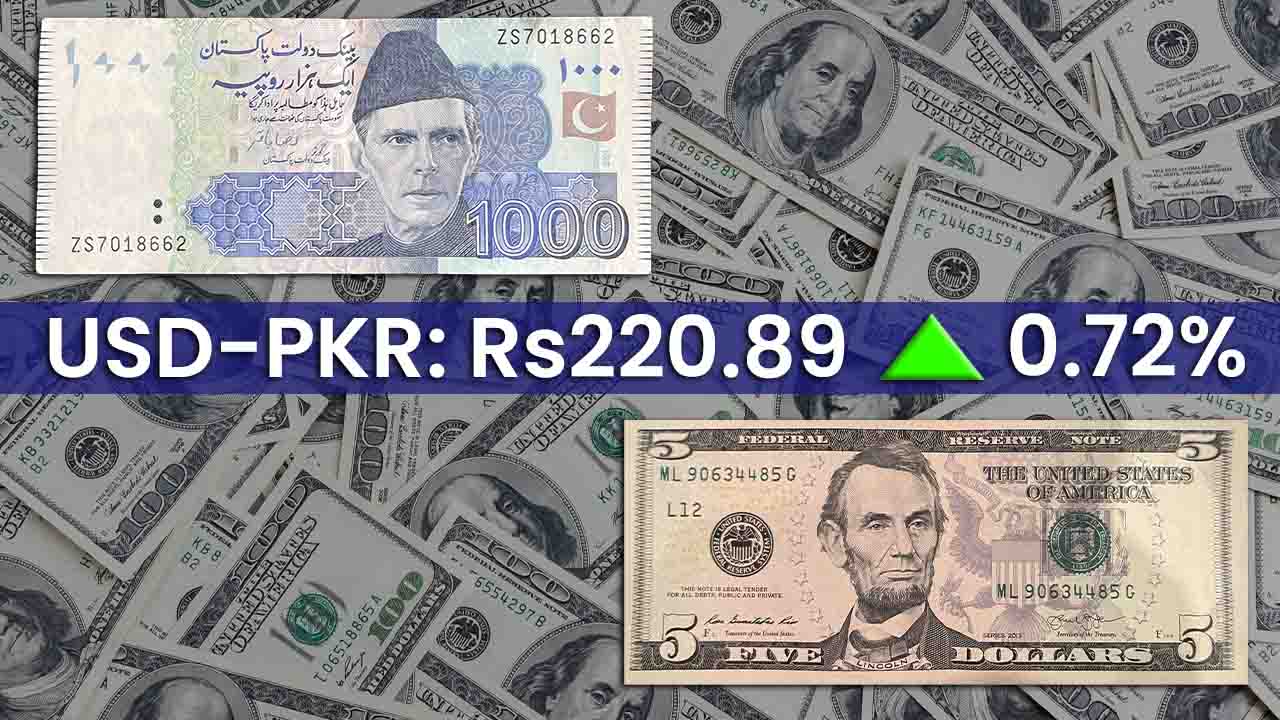
    Discussions between Finance Minister Ishaq Dar and State Bank of Pakistan (SBP) employees and currency traders had positive effects as the local currency increased by Rs1.59, or 0.72 per cent, versus the dollar.

    In the interbank market, the rupee was able to settle at Rs220.89, according to the SBP.

    The rupee last week dropped 0.93 per cent versus the dollar, trading at Rs222.47. Analysts predicted that this week will see range-bound trading in the local currency.

    Earlier, Ishaq Dar issued a warning last week saying that anyone detected manipulating the currency rate will face harsh punishment.

    Dar said that the rupee’s true worth in relation to the dollar is less than Rs200. He predicted that the rupee will soon strengthen against the dollar and gave a warning to those who were speculating in and hoarding foreign cash.

    Furthermore, the price of Brent oil fell by 0.65 per cent to $95.15 per barrel on Monday, while the price of US West Texas Intermediate (WTI) fell by 0.83 per cent to $87.17 per barrel. With advances of 7.7 per cent and 9.3 per cent so far in October, respectively, Brent and WTI are on course to post their first monthly gains since May.

    Europe, which is anticipated to experience a recession this winter, poses a threat to global oil consumption. The European Central Bank’s policymakers are also continuing with their plans to raise interest rates, despite the fact that doing so might plunge the region into recession and stoke political unrest.

  • Twitter is planning to start charging $20 per month for blue tick badge

    Twitter is planning to start charging $20 per month for blue tick badge

    Only a few days after taking over as Twitter’s CEO, Elon Musk is apparently working on some significant improvements. The Twitter Blue membership and even the verification procedure, which awards verified accounts with a “Blue tick,” are expected to undergo modifications.

    According to reports, the Twitter Blue membership will be connected to it, and Musk also has big price increases planned for the subscriptions.

    The new Twitter Blue membership will cost customers $19.99, according to a report by The Verge. Additionally, Twitter accounts that already have the blue tick will need to abide by this new system and pay for it.

    Verified users will have a total of 90 days to switch to Twitter Blue before they lose their checkmark. Employees of Twitter have also been told to resign or move quickly with this new membership plan. According to the article, a deadline of November 7 has been set for the staff.

    Twitter Blue, a paid monthly opt-in membership that grants exclusive access to premium services, was introduced last year. This, according to Twitter, will allow you to personalise your Twitter experience. In the US, Canada, Australia, and New Zealand, the subscription service is now available.

    It will be interesting to watch how Musk implements both a worldwide rollout and a complete overhaul of the payment system. Twitter Blue may be bought in-app on iOS and Android in the territories that are eligible.

  • PIA resumes direct flights from Islamabad to Beijing after 2.5 years

    PIA resumes direct flights from Islamabad to Beijing after 2.5 years

    The direct flights from Beijing to Islamabad were restarted by Pakistan International Airlines (PIA) on Sunday.

    According to ARY News, the first flight, PK-854, departed from the Islamabad airport at 6:45 am and touched down in Beijing at 2:55 pm. In the evening, this flight will make its way back to Islamabad.

    Following a lapse of more than 2.5 years, operations between the two capitals were restarted. In February 2020, this route saw the final PIA flight.

    China banned practically all incoming foreign flights in March 2020 due to concerns that passengers from other countries could be responsible for an outbreak of coronavirus illnesses.

    Since Pakistan is Beijing’s sole all-weather strategic partner of China and the two nations have mutual interests and collaboration in a number of areas, the Civil Aviation Administration of China (CAAC) has finally granted PIA permission to resume operations.

    Additionally, the flight will make it easier for Chinese workers on several CPEC-related projects in Pakistan.

  • Easiest way to sign up and sell products on Daraz

    Easiest way to sign up and sell products on Daraz

    Many small to large businesses are now listed on Daraz and are generating great earnings.

    There is no doubt that online enterprises will play a significant role in Pakistan’s future as the globe continues to move toward a digital economy.

    You can now experience what it’s like to work with the world’s top online commerce technology and logistics company, thanks to Daraz’s acquisition by the Alibaba Group, which makes it simple to grow your business from the comfort of your home.

    Surprisingly, joining Pakistan’s largest online marketplace is not that difficult.

    All small to medium-sized businesses can open stores on Daraz with dedicated one-on-one support, where sellers can get free business advice any time of day or night! Additionally, merchants will have free analytics tools at their disposal to aid in the optimization of their online business.

    On its official website, Daraz claims to have initiatives that reduce financial burdens by offering 0% commission. From May 1 through June 30, all newly registered and existing vendors are exempt from paying commission fees. Additionally, sellers can enjoy free pick-up and storage, promotional credits, and discounted packaging.

    Daraz offers express sign-ups for all new sellers, enabling you to launch your venture and begin selling on the platform in less than two days.

    How to sign-up

    Simply pick up your phone and text “Daraz” space “Name” to 7575 to get started, or you can also sign up as a vendor on the platform’s seller sign-up page.

    If you’re just getting started with your online business, Daraz also provides free training and instruction for online sellers through webinars offered by Daraz.

    According to its website, Daraz is the largest virtual marketplace in South Asia, with more than 20 million products listed in more than 100 categories on both its website and mobile application. The marketplace aims to empower and enable tens of thousands of sellers to interact with millions of customers in this cutting-edge technological era.

  • Weekly inflation up by 4% due to sharp increase in electricity prices

    Weekly inflation up by 4% due to sharp increase in electricity prices

    Owing to a sharp increase in electricity prices, the sensitive pricing index (SPI), which measures weekly inflation, increased by more than 4 per cent.

    According to data released on Friday by the Pakistan Bureau of Statistics (PBS), the SPI-based inflation rate increased 4.13 per cent from the previous week to the week ending October 27 while increasing 30.68 per cent from the same time last year.

    The cost of power, salt, rice, and other basic commodities went up on average during the previous week.

    According to Geo, there has been a decrease in the cost of 16 goods, including chicken, tomatoes, onions, and masoor pulses. In the meantime, the prices for 14 necessities remained the same.

    Electricity costs up by 89 per cent

    An increase from week to week is mostly caused by an 89 per cent increase in electricity costs.

    Recall that a negative Rs10 per unit adjustment to fuel prices was implemented in September. The government opted to postpone the Rs. 10 per unit adjustment for the June fuel price, but it had already been accounted for in the inflation figures for August, therefore it was corrected for in the September inflation figures.

    Inflation is expected to be 25.7 per cent in October, up from 23.2 per cent in September, according to the brokerage.

    In the week under examination, the combined income group index increased from 205.27 points for the week that concluded on October 20 to 213.74 points.

    In comparison to the prior week, the SPI for the income bracket with the lowest income rose by 4.64 per cent. The group’s index was 220.56 points, up from 210.78 points the previous week.

    Increase in prices

    Prices of the following items increased:

    Food items

    Salt powdered: 2.57 per cent

    Tea Lipton: 1.89 per cent

    Rice: 1.24 per cent

    Garlic: 1.04 per cent

    Non-food items

    Electricity charges for Q1: 89.34 per cent

    Energy saver: 1.57 per cent

    Reduction in prices

    Prices of the following items decreased:

    Food items

    Tomatoes: -3.77 per cent

    Onions: -2.97 per cent

    Pulse Masoor: -2.50 per cent

    Chicken: -1.86 per cent

    Pulse Gram: -1.35 per cent

    Gur: -1.09 per cent

    Non-food items

    LPG: -0.72 per cent

  • ‘I am very happy that Twitter is now in sane hands’: Trump welcomes Musk’s takeover

    ‘I am very happy that Twitter is now in sane hands’: Trump welcomes Musk’s takeover

    The takeover was hailed, but former US president Donald Trump, who was permanently banned from Twitter after the riots on January 6, 2021, said little about making a comeback. “I am very happy that Twitter is now in sane hands, and will no longer be run by Radical Left Lunatics and Maniacs who truly hate our country.”

    Trump was banned after the 2021 attack on the US Capitol, which the Republican leader is suspected of instigating. Musk has said he might lift the ban.

    Former Russian President and current Vice-Chairman of the Russian Security Council, Dmitry Medvedev, tweeted his congratulations, saying “Good luck @elonmusk in overcoming political bias and ideological dictatorship on Twitter. And quit that Starlink in Ukraine business.”

    Others urged Musk to undo restrictions imposed by the social network. In response to @catturd2, a random account with 852,000 followers, known for being a big supporter of Trump’s election fraud claims, and who said it was “shadowbanned,” Musk tweeted “I will be digging in more today.”

    Margarita Simonyan, the head editor of the Russian state-run media outlet RT, pleaded with Musk to “unban RT and Sputnik accounts and take the shadow ban off mine as well.”

    Musk and Twitter are under increasing pressure since he plans to address the Twitter workers on Friday after the purchase is finalised.

    “Hey @ElonMusk, now that you own Twitter, will you help fight back against Trudeau’s online censorship bill C-11?” tweeted Canada Proud, a group attempting to unseat Justin Trudeau as prime minister of Canada.

    According to Musk, Twitter may serve as the basis for a “super app” that does everything from ride-hailing to retail and money transfers.

    However, Twitter is having trouble retaining its most active users, who are crucial to the company. Less than 10 per cent of monthly active users are “heavy tweeters,” but they produce 90 per cent of all tweets and 50 per cent of global income.

  • Pakistani rupee continues to fall against USD for the third consecutive session

    Pakistani rupee continues to fall against USD for the third consecutive session

    For the third session in a row, the Pakistani rupee lost 97 paise in the interbank market on Friday as it fell against the dollar.

    The local currency depreciated by 0.44 per cent from yesterday’s finish of Rs221.5 to settle at Rs222.47 per dollar, according to the State Bank of Pakistan.

    Data gathered by Mettis Global show that the value of the PKR has decreased by Rs16.64 or 7.52 per cent since the beginning of this fiscal year.

    This week’s first day saw the sovereign default risk rise to its highest level since November 2009. On October 25, the country’s five-year credit default swap (CDS), which functions as a form of insurance against the risk of sovereign default, climbed by more than three per centage points, reaching 52.8pc, a 13-year high.

    Investors’ decreasing confidence in Pakistan’s capacity to repay its international loans is reflected in the growing CDS level.