Category: Business

  • Reduction in POL prices without IMF approval is a ‘reckless’ decision, says Miftah Ismail

    Reduction in POL prices without IMF approval is a ‘reckless’ decision, says Miftah Ismail

    Pakistan’s former finance minister Miftah Ismail has called the coalition government’s decision to maintain the petroleum development levy (PDL) this month unchanged “reckless”.

    However, he maintained that what the earlier PTI administration did to the nation was “unforgivable.”

    Shaukat Tarin, the leader of the PTI and a former finance minister, had tweeted about the PMLN’s -alleged doublespeak, to which Ismail responded.

    “We were blamed for violating IMF conditions. According to Miftah sahib, they did not wait to get clearance from MD IMF before announcing the fuel prices. Clear doublespeak,” he tweeted.

    https://twitter.com/shaukat_tarin/status/1576568757056512000?ref_src=twsrc%5Etfw%7Ctwcamp%5Etweetembed%7Ctwterm%5E1576568757056512000%7Ctwgr%5E5e775af4ab091b03900a542aeb8050d970a7d429%7Ctwcon%5Es1_&ref_url=https%3A%2F%2Fwww.dawn.com%2Fnews%2F1713254

    Ismail replied that the PTI administration had in fact broken the terms of the IMF deal.

    “You agreed to increase sales tax to 17 per cent but reduced it to zero. You agreed to raise petrol levy every month by Rs4 to Rs30 but brought it to zero. You agreed to not give amnesty but gave one anyway,” he said, in reference to the previous administration’s decision to temporarily freeze fuel prices.

    Ismail argued that the subsidy was “unfounded and unsustainable” and that the PTI nearly put the nation into bankruptcy. He continued by saying that, while serving as finance minister, he had visited the IMF and prevented the nation’s default.

    “Not increasing PDL this month without IMF approval is reckless, but what PTI did with our economy was unforgivable,” he insisted.

    Ismail brought up the fact that his administration had not sought IMF approval before freezing the petroleum charge for the second time in two days.

    Ismail claimed that when Ahad Cheema, the establishment adviser to Prime Minister Shehbaz Sharif, requested him to contact the IMF managing director if gasoline prices could be held for three months, “I said that I would die but not ask this.” Ismail was speaking at an event in Karachi on Saturday.

    “In any case … I asked the MD if we could freeze the tax for three months. The answer did not arrive and the government unilaterally did it. So may God have mercy.”

    On Tuesday, September 27, Ismail resigned from his position as finance minister to make room for Ishaq Dar. Three days later, on Friday, the administration decided to lower petrol costs (Sept 30).

    Petrol costs now cost Rs224.80 per litre, down from Rs237.43 previously. This reduction in price amounts to Rs12.63. High-speed diesel (HSD) is now available at Rs12.13 less per litre, at Rs235.30 instead of Rs247.43. Kerosene’s cost per litre dropped from Rs202.02 to Rs191.83 by Rs10.19. Light diesel oil (LDO) was reduced in price from Rs197.28 to Rs186.50 per litre by Rs10.78.

    By lowering the petroleum development fee on gasoline by Rs5 per litre to Rs32.42, the government lost money. On HSD, the price was raised to Rs12.58 by an additional Rs5 per litre.

    According to DAWN, the government currently charges Rs12.58 per litre PDL for HSD, Rs15 for kerosene, Rs10 for LDO, and Rs30 for High Octane Blending Component. Additionally, the cost of gasoline and HSD includes a Rs22 per litre customs fee.
  • Here’s how Pakistan’s inflation is impacting consumer buying pattern

    Here’s how Pakistan’s inflation is impacting consumer buying pattern

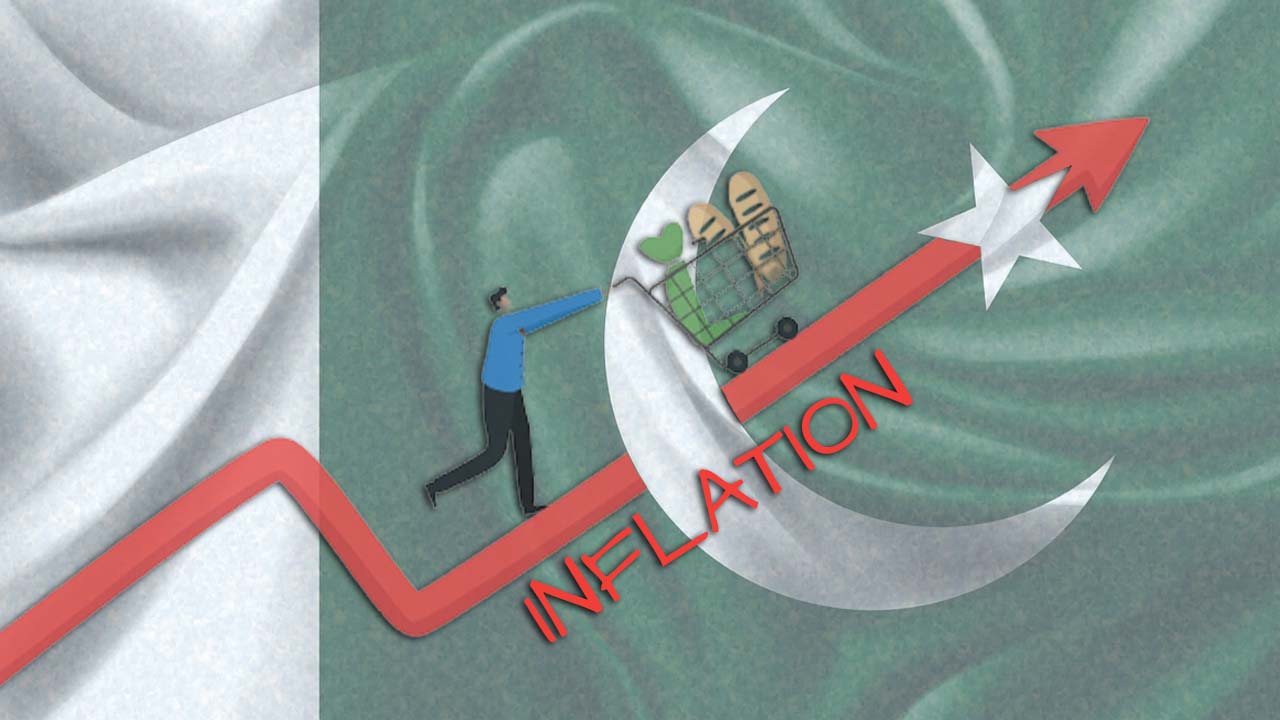
    In Pakistan, the real value of income has been undermined by inflation, while high interest rates have raised the cost of borrowing.

    Record inflation rates have dominated news for the past year, coupled with supply chain problems, material shortages, elevated fuel prices, and vegetable prices that increased by 500 per cent in September.

    According to a poll by Pulse Consultant, which was conducted in August 2022, 78 per cent of Pakistanis think that their country’s economy is going on the wrong path. Inflation has affected 66 per cent of people hard, and 12 per cent of people say their expenses aren’t keeping up.

    Pulse Consultant asked an open-ended question in a nationwide computer-assisted telephonic study in which more than 1,600 people across the country responded and revealed how they are dealing with the current wave of inflation.

    The following are the areas where customers lowered their spending:

    • Reduced Grocery Purchasing – 24 per cent
    • Avoid Going Out – 18 per cent
    • Stop Unnecessary Shopping – 16 per cent
    • Reduced Fast Food – 10 per cent
    • Reduced Overall Expenses -9 per cent
    • Save Petrol – 7 per cent
    • Reduced Children Expenses – 5 per cent
    • Avoid Beauty Parlor / Salon – 3 per cent
    • Save Electricity – 3 per cent
    • Avoid Family Gatherings – 3 per cent
    • Reduced Meat Consumption – 2 per cent

    In Pakistan, CPI inflation increased to 27.3 per cent in August 2022 from 12.1 per cent in January 2022. There are a number of causes for the sudden rise in inflation, despite the fact that core inflation (excluding oil and food costs) is at 18 per cent. The incidence of imported inflation has increased as a result of the rupee’s depreciation. From April through August 2022, the rupee’s value against the US dollar decreased by around 23 per cent.

    Pakistani currency is presently strengthening as a result of the restoration of the IMF package following its derailment last winter. Additionally, even though the oil bill still accounts for around 26–30 per cent of all imports, import reduction has improved the current account situation. The administration has promised to pass along any decrease in oil prices to the public.

    The lag effect of the significant budget deficit experienced in the previous year is one of the other primary causes of the high level of inflation. In contrast to the 4.2 per cent agreed upon with the IMF, the budget deficit during the FY ending on June 30, 2022, reached as high as Rs6,900 billion, or about 9 per cent of GDP.

    In addition, $20 billion in debt, as opposed to $53 billion between 2008 and 2018, was committed over the past four years. As a result, more money is being spent in pursuit of fewer commodities.

    The challenges of recession and skyrocketing inflation are pretty much universal. Despite having low inflation rates, China and Japan’s economies are expected to slow down. Inflation is being fueled by earlier Covid and current high oil, gas, and commodity costs in the wake of the Ukraine war, which is slowing growth.

  • Pakistan seeks rollover of SAFE deposits worth $2 billion from China in March 2023

    Pakistan seeks rollover of SAFE deposits worth $2 billion from China in March 2023

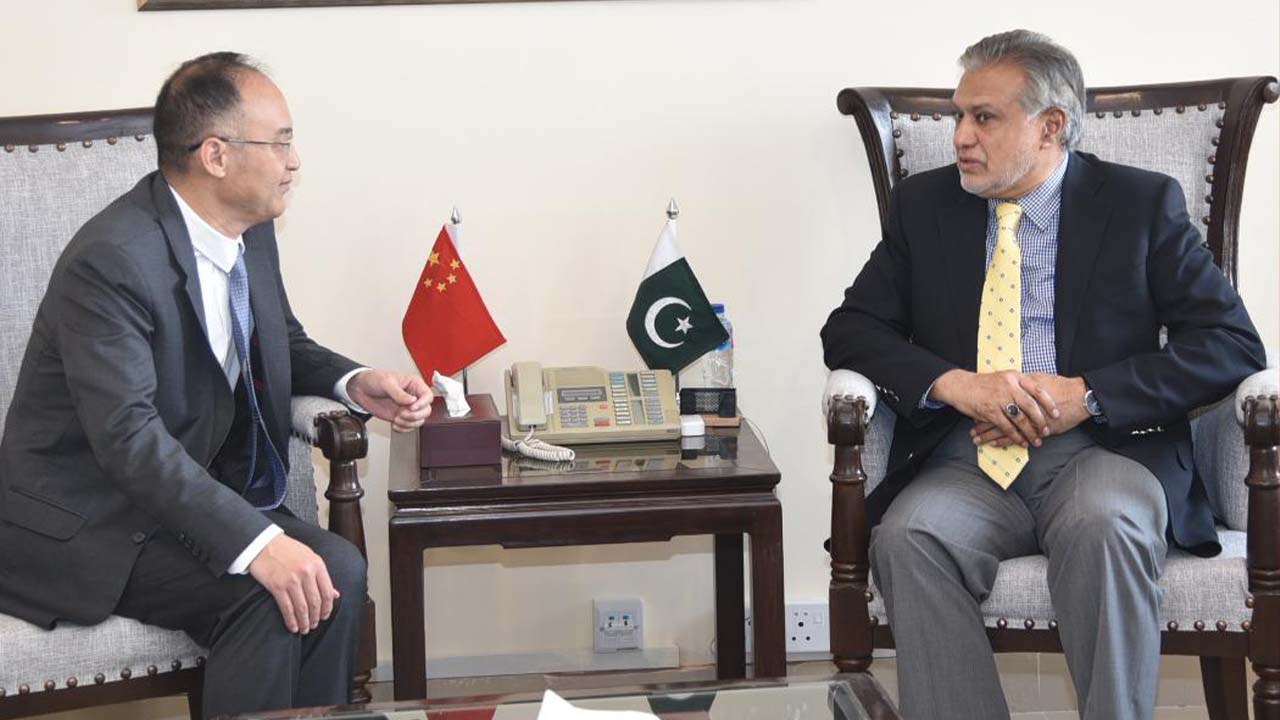
    Pakistan seeks the rollover of $2 billion in State Administration of Foreign Exchange (SAFE) China deposits in March 2023. Federal Minister for Finance and Revenue Ishaq Dar, received a visit from Nong Rong, the People’s Republic of China’s ambassador, at the Finance Division.

    According to APP, Dar emphasised the long-standing friendship and kinship ties between Pakistan and China.

    The finance minister also thanked the Chinese leadership for their assistance in refinancing a syndicate facility worth RMB 15 billion ($2.24 billion) for Pakistan. He also asked the ambassador to help facilitate the rollover of $2 billion in SAFE China deposits in March 2023.

    Dar informed the ambassador of the costs to the overall economy as well as the harm done to Pakistan’s infrastructure, agriculture, lives, and property by the severe floods. He expressed gratitude to the Chinese government for providing the government and people of Pakistan with unwavering support during this difficult time.

    In reference to the CPEC, the finance minister stated that the economic corridor will be crucial in advancing Pakistan’s economy and fortifying bilateral ties between the two nations. He further pledged his unwavering support for the aid in realising the success of CPEC.

    The minister received Nong Rong’s congratulations on taking up his new duties. The envoy underlined China’s continuous support for Pakistan and emphasised how China is a rock for the Pakistani people in this time of need.

    “Since the devastating floods occurred in Pakistan, among all countries, China has announced over 644 million RMB (around 90 million dollars), the biggest amount of assistance to Pakistan,” said Nong Rong, in a tweet.

  • Weekly inflation increases 0.94% as food prices rise

    Weekly inflation increases 0.94% as food prices rise

    Owing to an increase in the prices of food items, the Sensitive Price Indicator (SPI)-based weekly inflation for the week ending September 29 increased by 0.94 per cent.

    The items which saw an increase in prices include onions (47.77 per cent), tomatoes (30.29 per cent), tea Lipton (2.50 per cent), bread (1.74 per cent) and non-food item, washing soap (1.13 per cent), according to the Pakistan Bureau of Statistics (PBS).

    Moreover, the year-on-year trend recorded an increase of 30.62 per cent, mainly due to a surge in prices of tomatoes (224.20 per cent), onions (139.03 per cent), diesel (105.12 per cent), petrol (91.87 per cent), pulse gram (74.56 per cent, masoor (72.42 per cent), mustard oil (64.53 per cent), washing soap (63.33 per cent), cooking oil 5 litre (61.78 per cent), vegetable ghee 2.5 kg (58.37 per cent), maash (57.36 per cent), vegetable ghee 1kg (55.89 per cent), gents sponge chappal (52.21 per cent), and moong (47.96 per cent), while decrease observed in the prices of electricity for q1 (45.61 per cent), chillies powder (42.73 per cent), sugar (18.27 per cent), and gur (1.92 per cent).

    According to the most recent PBS data issued on Friday, the SPI for the week under review in the aforementioned category was recorded at 205.13 points as opposed to 203.21 points observed in the previous week.

  • Petrol price reduced by Rs12.63 to Rs224.80 per litre

    Petrol price reduced by Rs12.63 to Rs224.80 per litre

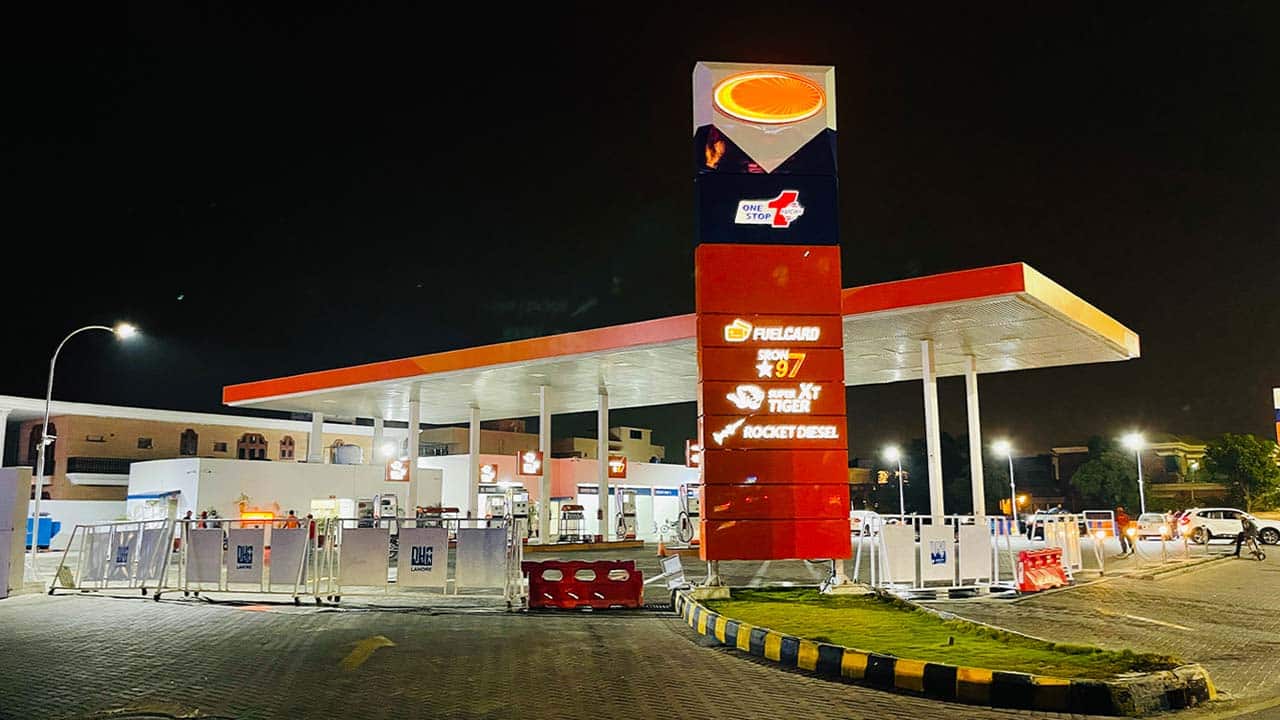
    Finance Minister Ishaq Dar has announced a significant reduction in petrol prices on Friday, cutting the cost by Rs12.63 per litre to Rs224.80 per litre.

    A reduction of Rs12.13 has also been made to the cost of high-speed diesel, bringing the new price down to Rs235.30 per litre. After a reduction of Rs10.19 per litre, the cost of light diesel oil will be Rs191.83, according to Geo News.

    The new petrol price will go into effect after 12 AM.

    According to a statement from the Finance Division, the government decided to lower the price of petroleum goods in response to a drop in the price of these products on the global market and to help consumers who had been affected severely by inflation.

  • Petrol price may go down by Rs7.24 to Rs230.19 per liter

    According to industry projections, the ex-depot cost of petrol has declined by Rs7.24 per litre to Rs230.19 per litre for the upcoming fortnight from the current price of Rs237.43 per litre, as reported by The News.

    Considering recent reports, this might lead to a fall in the price of petrol by Rs7.24 per litre and diesel by Rs16.61 per litre in Pakistan at the upcoming fortnightly review if the government does not raise taxes to offset the effects of the declining worldwide market.

    Expected new prices

    In comparison to the present price of Rs247.43 per litre, the ex-depot price of diesel has fallen by Rs16.61 to Rs230.82 per litre for the upcoming two weeks.

    In comparison to the current fortnight, the ex-depot price of light diesel decreased by Rs10.87 to Rs186.41 per litre.

    Kerosene’s ex-depot price fell from Rs197.28 per litre to Rs187.82 per litre, a decrease of Rs14.20.

    The oil sector bases its prices on the current taxes levied by the government. Petroleum goods are exempt from general sales tax (GST), which is charged at a rate of Rs37.42 for petrol and Rs7.58 for diesel per litre.

    There has been a considerable decline in international oil prices, but it is unclear if the government would pass the impact through to the public or offset it by increasing taxes.

  • Rs75 commemorative banknote is now officially available

    Rs75 commemorative banknote is now officially available

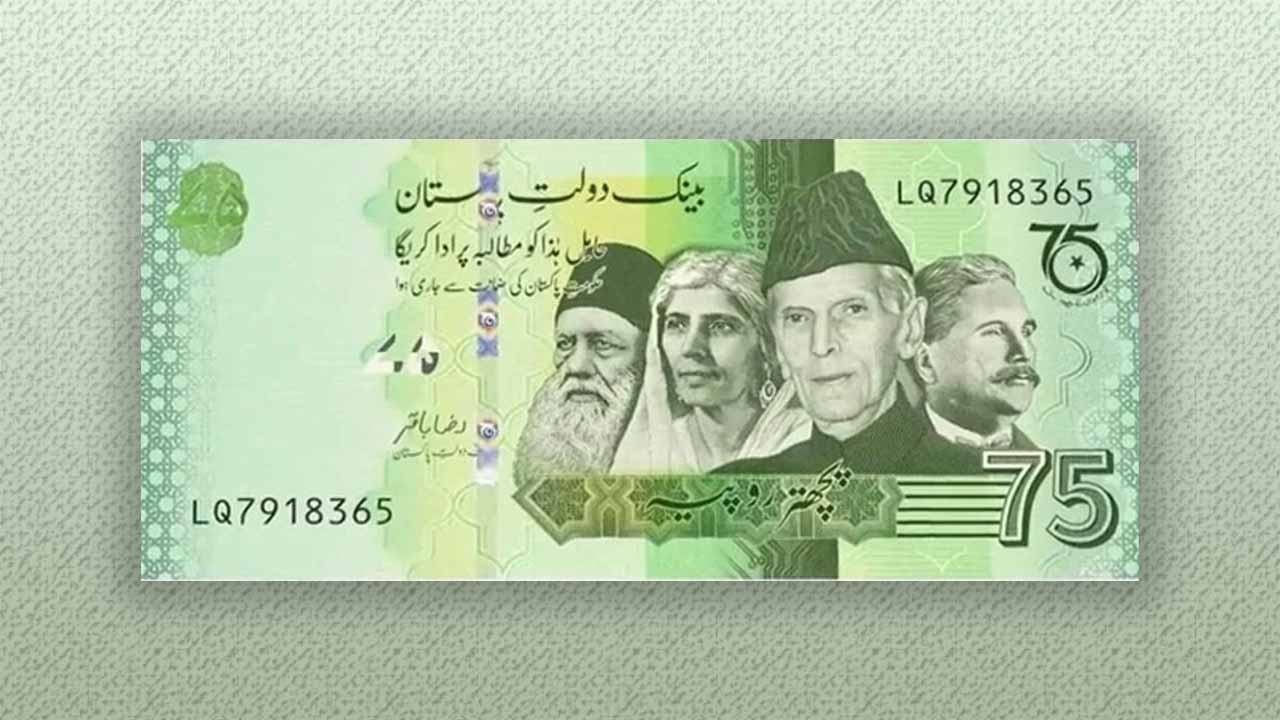
    The commemorative banknote of Rs75 is available for the general public from September 30 (today), which was released by the State Bank of Pakistan (SBP) on August 14th to mark Pakistan’s 75th Independence Day.

    At a ceremony held at the SBP offices in Karachi on August 14, 2022, the design of this commemorative banknote was presented.

    The SBP announced in a statement that starting on September 30, the general public can get the commemorative Rs75 banknote from SBP BSC offices and commercial banks’ branches.

    As a result, the Quaid-e-Azam Muhammad Ali Jinnah, Allama Sir Muhammad Iqbal, Mohtarma Fatima Jinnah, and Sir Syed Ahmed Khan are shown on the banknote’s obverse, according to the statement.

    According to SBP, the reverse of the banknote emphasises the nation’s commitment to combating climate change and its effects on Pakistan. This issue has become even more urgent in light of the unprecedented loss brought on by the recent torrential rains and flooding that affected large portions of Pakistan, according to SBP.

    The portraits of the national animals Markhor and Deodar on the reverse also draw attention to the threat of extinction and the necessity of protecting these species.

  • FBR must collect Rs120 billion in two days to meet monthly target of Rs684 billion

    To reach its monthly goal of Rs684 billion by the end of the current month, the Federal Board of Revenue (FBR) must collect approximately Rs120 billion in the final two days of September.

    The FBR’s preliminary revenue collection as of September 2022 was over Rs565 billion compared to the target of Rs684 billion, representing a shortfall of over Rs119 billion.

    To reach the monthly goal of Rs684 billion, the FBR needed to collect about Rs60 billion every day during the final two days of September 2022, according to Brecorder.

    The government would be forced to implement emergency collection measures, such as imposing a sales tax on petroleum items, if the FBR is unable to meet the monthly target of Rs684 billion. To avoid taking emergency revenue measures, the FBR has increased efforts to reach the desired revenue collection objective.

    The tax collecting system currently has a difficult task ahead of it: achieving the assigned revenue collection target of Rs684 billion in September 2022.

    In order to maximise revenue collection, tax authorities have developed a plan in conjunction with the chief commissioners of the LTOs and heads of MTUs.

    The final day to pay advance tax instalments was September 25, and the majority of the corporate sector had already paid their owed advance tax instalment by that date.

    The FBR examined the big tax offices’ and medium tax offices’ revenue results via the video link. The meeting also covered the potential reduction in income collection under a few heads as a result of the severe floods.

    In comparison to the target of Rs483 billion, the FBR had tentatively collected net revenue of Rs489 billion for August 2022, representing an increase of Rs6 billion.

    In comparison to the set revenue collection target of Rs926 billion during the first two months of July and August in 2022–2023, the FBR has collected Rs948 billion. The Board has so far surpassed the specified target in the current fiscal year 2022–2023 by Rs22 billion.

    The FBR collected net revenue of Rs489 billion during August 2022, exceeding the objective of Rs483 billion compared to Rs448 billion collected during the same period last year, according to provisional figures.

  • Pakistanis to face gas shortage in winter once again

    Pakistanis to face gas shortage in winter once again

    The government has warned of an impending gas crisis in the nation due to a dramatic reduction in gas supplies and a gradually growing imbalance between demand and supply.

    With each passing year, Pakistan’s gas reserves are declining by roughly 10 per cent annually in past years, according to DAWN.

    Officials from the Public Accounts Committee (PAC) gathered to discuss the Petroleum Division’s annual report for 2019–20.

    We cannot purchase the gas, according to Petroleum Secretary Ali Raza Bhatti, who spoke to PAC about the state of the market. Since the start of the war in Ukraine, gas prices have risen everywhere. Gas prices had increased by about 4% at the time.

    According to Bhatti, Pakistan is considering purchasing gas from other nations as the prime minister just visited Qatar and held a private meeting where a request for extra cargoes was on the agenda.

    Nevertheless, the government is currently thinking about importing gas from friendly nations. Previously, the nation got its gas from Qatar, but now it wants to get supplies from other friendly countries to make up for the deficit.

    According to him, domestic consumers use the majority of the gas in Pakistan’s system, which is extensively subsidised by the government.

    Qatar is the most dependable provider, it should be noted. According to the petroleum secretary, Qatar has continued to provide Pakistan with LNG at a rate of $15 per million British thermal units (mmBtu), down from the $60 per mmBtu it was previously charging from other nations, despite the market’s rising demand.

    Sui Northern was also asked to provide information on defaulters in the Gas Infrastructure Development System by the PAC, which was led by Noor Alam Khan.

    The committee instructed gas firms to take payment from late payers within seven days, and the government to cut off the defaulters’ connections right away.

  • Kya log waqai mehngai se tang aa kar apna sona baich rahay hain?

    Kya log waqai mehngai se tang aa kar apna sona baich rahay hain?

    From meeting hospitalisation expenses to paying hefty electricity bills, Pakistanis are increasingly selling their gold jewellery to tide over inflation in Pakistan.

    This trend has been fueled by mounting expenses, such as expensive food products, rising petroleum prices, education fees, medical expenses, and house rents, in the face of low income. According to multiple sources in the jewellers’ association, there has been an upsurge in the number of people selling off gold as compared to buyers, in recent months.

    Several social media posts indicated that people were compelled to sell their gold in order to pay for their electricity bills after the government imposed hefty Fuel Cost Adjustment (FCA) charges in monthly electricity bills.

    The FCA was added to the electricity bills for the month of August, drawing protests from citizens who demanded the government immediately withdraw the FCA as it was an injustice to the consumers and they did not have the capacity to pay outrageous electricity bills.

    The Current contacted several jewellers in Lahore to uncover whether people were actually selling gold to pay their electricity bills.

    According to the owner of a renowned gold shop in Liberty Lahore, when inflation is high, people’s only alternative is to sell any gold they may have. “There are undoubtedly more sellers because gold prices have reached an all-time high at this time. Comparatively, there are noticeably more sellers than purchasers. Another reason for selling gold is to combat inflation.”

    When asked if locals were really selling gold to pay their power bills, the goldsmith responded, “People sell gold for many different purposes outside merely paying their electricity bills. A lot of people sell their gold in order to invest in more lucrative assets, this may not necessarily be about bills. A number of individuals sell gold in order to invest in real estate or build their own houses.”

    Owing to overall inflation, gold prices had hit an all-time high, but since last week, they have been steadily declining. The latest drop in gold prices also prompted people to sell their gold as it was the ideal time to get the best price and acquire other assets, as they could later buy gold at a lower price after its price is stabilised.

    The majority of gold jewellers in the vicinity of Lahore’s posh area asserted that this unquestionably occurs at a time when the country’s economy is unstable and consumers are left with no choice but to sell the assets they have been saving for years to utilise in crises.

    Another jewellery store owner in Lahore’s less well-off area admitted that “This happens,” but added that “Not everyone is willing to discuss their personal and financial concerns or reveal causes why they are selling gold and what they need money for. People visit our shops for reasons other than just paying their electricity bills, such as emergencies or the urgent need for cash to cover healthcare expenses.”

    Investors frequently turn to gold as a safe haven when the economy is struggling or when there are conflicts on an international scale. For investors looking for a safe investment with a proven track record of profitability, gold appears to be an attractive alternative in light of rising inflation and the stock market trading far below its highs.