Category: Business

  • 45pc Pakistanis under poverty line, World Bank data reveals

    45pc Pakistanis under poverty line, World Bank data reveals

    A World Bank report reveals that approximately 45 percent of Pakistan’s citizens live below the poverty line. The change in the domestic poverty rates stems from updated poverty lines by the international lender.

    According to the report, the percentage of Pakistanis living in extreme poverty skyrocketed from a conservative 4.9 percent to a staggering 16.5 percent. This rise in poverty rates does not have any correlation with macroeconomic conditions; it only changes because of the update in the international poverty line.

    The global lender outlined how the poverty rate in Pakistan has been formulated keeping in view the updated $3 international poverty line (IPL) as per the 2021 purchasing power parity (PPP). This caused the new poverty rate to balloon to 16.5 percent.

    Previously, the World Bank used a poverty line of $2.15 under 2017 PPP, which showed only 4.9 percent living in extreme poverty. The report explained that a whopping 82 percent of the rise in poverty can be explained by the higher IPL value.

    The other 18 percent increase can be explained by price increases in the domestic economy that occurred during the 2017-21 time frame. The report also outlined how the poverty rate sits at 44.7 percent under an IPL of $4.2.

    However, the global lender has highlighted that while Pakistan has witnessed a substantial hike in the rate of poverty, overarching trends in poverty remain unchanged. Senior Economist of the Poverty and Equity Global Practice, Ms Wieser, has outlined that shifting global poverty lines do not indicate that “poverty in Pakistan has worsened as living standards of the population have not changed to what was previously reported”.

    Nevertheless, the report paints an alarming picture of the state of the economy. According to data released by the International Monetary Fund (IMF), Pakistan’s real gross domestic product (GDP) growth rate sits at an abysmally low 2.6 percent.

    The aforementioned rate of economic growth is alarmingly low for an economy with a GDP per capita value of $1,580. The GDP per capita value may not witness a substantial rise in the coming period, given that Pakistan’s population growth is under two percent.

    A slower growth in GDP per capita value indicates lower wealth being created per person. According to economists, this phenomenon may not allow Pakistan to escape the shackles of poverty for a prolonged period.

  • Govt urged to avoid tax hikes ahead of budget: report

    Govt urged to avoid tax hikes ahead of budget: report

    As the federal government gears up to present the budget for fiscal year (FY) 2025–26, a recent economic report by a Pakistani think tank Tabadlab has warned policymakers to not repeat past mistakes. According to reports, the group has specifically warned against pursuing “bad growth” strategies, which it defines as short-term booms that later collapse under structural weaknesses.


    Tabadlab’s latest report has advised the government to refrain from raising tax rates, highlighting how Pakistan already has some of the highest tax burdens in the region. Instead of focusing on revenue through a hike in taxation, the report called for long term planning. It warned that encouraging consumption led growth could push the country back into a familiar boom and bust cycle. 


    This is because Pakistan’s foreign exchange reserves remain critically low. Data from reports affirms that as of the start of June, reserves can barely cover two months of imports.


    Despite the aforementioned vulnerabilities, the report acknowledged that Pakistan is displaying signs of macroeconomic stability. Inflation has slowed to a manageable five percent while interest rates have been fallen from a staggering 21 percent to a more reasonable 11 percent.


    Furthermore, the rupee has settled near Rs280 per dollar with the risk of default having eased. Debt levels have also remained largely in check causing Tabadlab to attribute macroeconomic stability to a multitude of factors. 


    These factors include discipline, implementing austerity measures, and luck. The macroeconomy has been “lucky” as it has been spared from a high trade deficit owing to a decline in global oil prices. 


    The report outlined that while the Federal Board of Revenue (FBR) is expected to fall short of its ambitious Rs13 trillion target by around Rs1 trillion, it is still set to collect approximately Rs12 trillion, an improvement of Rs3 trillion from last year’s Rs9 trillion. 


    On the expenditure side, the report mentions how the government has managed to rein in costs. The reduction in interest rates has cut debt servicing expenses by roughly Rs1 trillion. Similarly, austerity measures led to significant savings in public sector development spending. 


    The initial Public Sector Development Programme (PSDP) target of Rs1.4 trillion was revised down to Rs1.1 trillion, but actual spending in FY25 stood at only Rs450 billion.


    However, Tabadlab highlighted that this stability came at a cost. Poverty has increased by 6.5 percentage points over the past seven years, and the unemployment rate remains stuck at an alarmingly high eight percent.

  • IMF pushes Pakistan on agri tax, slams subsidized power plans

    IMF pushes Pakistan on agri tax, slams subsidized power plans

    The International Monetary Fund (IMF) has asked Islamabad to comply with its program requirements during final deliberations on the budget. According to reports, the lender has asked the federal government to incorporate agricultural income tax into provincial budgets by the end of the first quarter of fiscal year (FY) 2025-26.

    The lender expects respective authorities to implement agricultural income tax which neither the federal nor provincial governments have been able to decide upon. Moreover, the IMF has voiced its disapproval of the government’s intentions to utilize surplus power capacity by boosting power usage. 

    Authorities in Pakistan reportedly attempted to get a waiver that would allow surplus power capacity to be provided at a lower rate. As per reports, the waiver would have created provisions for 7000 megawatts (MW) of electricity.

    Islamabad’s motivation behind the provision of power at lower rates lied in increasing economic output. This is because lower power rates to new entrants would yield higher industrial output.

    However, the IMF did not support the scheme as it believes that the current state of the economy is a direct consequence of the distribution of similar allowances in the past. 

    The fund correctly outlined how this policy would serve to stifle competition in the domestic industrial sector as existing users of the national grid would be stuck paying hefty bills while new users would enjoy lower prices. According to reports, the IMF suggested that Islamabad stabilize the power sector and create a fair environment where new entrants are not protected by subsidized power.

    The IMF’s stance on the provision of surplus power has led analysts to question whether the government will still honor their announcement to allocate 2000MW of power to crypto mining and AI data centers.

    Data from reports suggests that the government intended to provide crypto miners with electricity at eight to nine rupees per unit. For reference, the base rate stands at a significantly higher Rs24 to Rs25 per unit, showcasing the magnitude of savings bitcoin miners would have enjoyed.

    Moreover, reports indicate that the fund expects provincial governments to observe austerity measures by reducing expenditures. However, provincial governments are not steering clear of costly development plans.

    According to the international creditor’s estimations, Pakistan’s provincial governments have surpassed their development budgets by a staggering Rs850 billion. Details from reports regarding the upcoming federal budget paint an alarming picture, suggesting that the provinces may fail to post budget surpluses in FY 2025-26.

  • Pakistan, US explore crypto collaboration in White House meeting

    Pakistan, US explore crypto collaboration in White House meeting

    In a bid to align Pakistan’s digital asset goals with the US, Federal Minister for Crypto and Blockchain, doubling as Chief Executive Officer (CEO) of the Pakistan Crypto Council (PCC), Bilal Bin Saqib held a meeting with Executive Director of US President Donald Trump’s Council on Digital Assets Robert Hines. According to a press release, both officials met at the White House to discuss how to align strategically on crypto.

    As per reports, discussions between the two revolved around the integration of digital assets into both states’ respective economies. Both officials also went over the “future of decentralised infrastructure”.

    Reports indicate that the meeting remained fruitful, with both sides expressing interest in building greater ties to boost digital asset innovation. The press release outlined how a key talking point was supporting innovation systems that “empower youth and accelerate economic inclusion through blockchain”.

    The PCC’s CEO has highlighted the ability to leverage Pakistan’s youth for economic growth in the past. His blueprint at the Bitcoin Vegas 2025 placed Pakistan as a “youth-powered, and opportunity-rich nation ready to lead”.

    It merits a mention that this high-profile meeting is being held after PCC’s CEO announced Pakistan’s first-ever government-led Strategic Bitcoin Reserve (SBR). PCC’s CEO made the announcement during a keynote speech at Bitcoin Vegas 2025 in Las Vegas, United States.

    Recent developments indicate that the federal government has been moving to adopt crypto at a rapid pace. Islamabad recently allocated 2,000 megawatts of surplus power to crypto mining and to power artificial intelligence data centres.

    Prior to his meeting with Bo Hines, the PCC’s CEO even asked crypto builders to tokenise land and “build wallets for the unbanked”. If builders heed his advice, Pakistan could witness a sizable influx of foreign direct investment (FDI), to the tune of billions of dollars, along with a potential increase in employment opportunities.

    Following the successful launch of the SBR and calls to invest in Pakistan, the PCC’s CEO expressed his vision of Pakistan being “a leader in the Global South for Digital Assets”.

    Bilal Bin Saqib was appointed as the PCC’s CEO in May 2025 when the federal government began efforts to adopt and regulate digital assets. His counterpart Bo Hines was appointed a few months prior, in January, by President Trump to lead policy development regarding digital assets.

  • PSX hits record high after ADB greenlights $800 million package for Pakistan

    PSX hits record high after ADB greenlights $800 million package for Pakistan

    The Pakistan Stock Exchange (PSX) rallied, with the benchmark KSE-100 index surpassing its previous record high and setting a new one. Reports reveal that the bullish trend can be attributed to the Asian Development Bank (ADB) approving a financial package for Pakistan.

    ADB cleared a $800 million policy-based loan and guarantee package to help Pakistan improve its public finances and push long-overdue economic reforms. According to reports, the approval came under the second phase of the “Improved Resource Mobilisation and Utilisation Reform Programme”, which focuses on rectifying how the federal government collects and spends money.

    Reports reveal that Pakistan is set to receive a $300 million policy-based loan, which will be utilised to support reform efforts. Moreover, the ADB is offering a $500 million policy-based guarantee, which is the first of its kind by the Manila-based lender. 

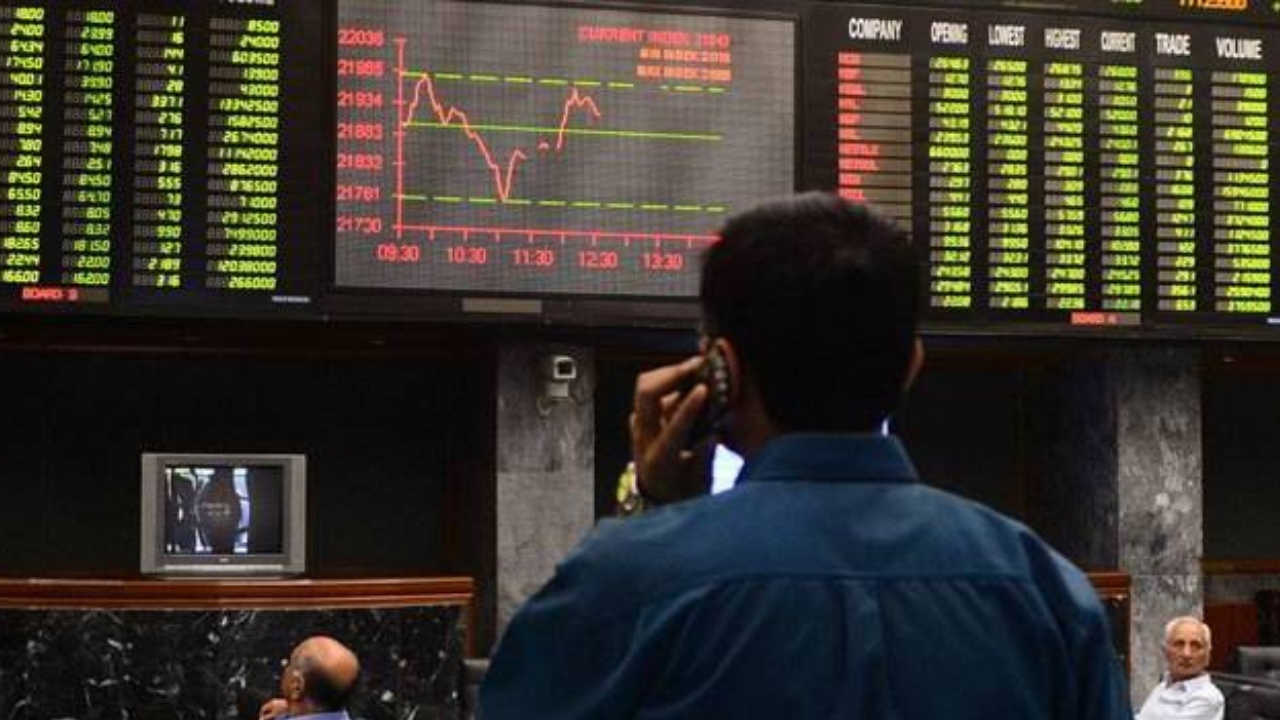
    These developments led to a surge in investor confidence, causing the KSE-100 index to cross 121,500 points during intraday trading. Bullish sentiments allowed the index to open in the green in the early hours of the day, with the upwards momentum continuing until closing hours.

    The KSE-100 index reached an intraday high of 121,882.47 points. The index peaked at 3:01 PM, after which the market closed at a lower, yet respectable, 121,798.86 points.

    For reference, the KSE-100 closed at 120,450.87 points on Tuesday, after which the index recorded a growth of 1.12 percent during trading hours on Wednesday, leading to a 1,347.99 point rise. The market displayed a slowdown around 9:34 AM as the KSE-100 hit its intraday trading low of 120,896.13 points.

    All 17 indexes listed on the exchange remained in the green with the All-share index (ALLSHR) growing by 1.07 percent, which translates into a 801.91 point rise in the index. Unlike the KSE-100, which tracks the performance of the 100 largest and most liquid companies, the ALLSHR index records the performance of all publicly listed companies on the PSX.

    A number of companies witnessed a rise in share prices, with Invest Capital Investment Bank Limited (ICIBL) and First Credit and Investment Bank Limited (FCIBL) winning big, to the tune of growth rates that sat at 42.55 percent (ICIBL) and 13.68 percent (FCIBL). 

    However, not every publicly listed stock witnessed an improvement as many companies witnessed sharp declines. Of these declining companies, the one that fared the worst during intra-day trading was ICC Industries Limited (ICCI), which posted a 10.00 percent decline in its position.

    Recent reports have suggested that the KSE-100 index could cross 165,000 points by December 2025, owing to a drop in interest rates and an improved state of the wider economy. These factors are responsible for creating a business-friendly environment, lending weight to analysts’ claims.

  • EcoStar: Redefining cooling for Pakistan’s climate

    EcoStar: Redefining cooling for Pakistan’s climate

    In the consumer electronics and home appliances industry of Pakistan, DWP Group stands out as a name synonymous with innovation, quality, and customer trust. It has a strong legacy in delivering world-class technology. DWP Group has continued to raise the bar through EcoStar. The brand has rapidly gained recognition for its high-performance, energy-efficient air conditioners tailored for the Pakistani climate.

    Among EcoStar’s most outstanding achievements, it has made a commitment for advanced cooling technology that goes beyond the ordinary. Summers in Pakistan are growing increasingly intense and so EcoStar has responded with powerful, durable solutions, none more impressive than its Genuine T3 air conditioners.

    What is Genuine T3? Why is it important?

    Genuine T3 refers to Tropical Climate Compressor Technology. It is an advanced compressor system specifically engineered to deliver consistent cooling even in ambient temperatures exceeding 50°C. While a conventional air conditioner may struggle to deliver consistent cooling in high temperatures, a Genuine T3 AC ensures stable performance even in extreme heat.

    Genuine T3 technology features larger indoor and outdoor units, a genuine T3 compressor, and a large condenser. This advanced design enables faster heat dissipation, lowers thermal stress, and ensures stable performance even during prolonged use. Built for durability, it’s engineered to withstand the most extreme weather conditions Pakistan has to offer.

    Introducing the EcoStar Prince Series

    EcoStar has recently introduced its Prince Series, a premium lineup of air conditioners developed to offer robust performance with intelligent cooling. The EcoStar Prince Series is equipped with Genuine T3 technology along with other advanced features that makes it stand out when it comes to functionality and user convenience:

    It’s A Genuine T3!

    With its larger indoor and outdoor units, extra-large double-layered condenser, and a genuine T3 compressor, the EcoStar Prince AC delivers powerful, stable cooling even in ambient temperatures of 50°C and beyond, making it the perfect choice for Pakistan’s extreme summer conditions!

    4D Airflow Technology

    EcoStar Prince ACs feature 4D Airflow, which ensures uniform air distribution across every corner of your room. This intelligent multi-directional airflow system guarantees a more immersive and comfortable cooling experience, without uneven temperature.

    5th Generation Auto Washing Technology

    Maintaining a clean air conditioner is essential for its long-term performance. The Prince Series introduces 5th Generation Auto Washing Technology which allows the unit to self-clean automatically, removing dust and bacteria from the evaporator coil, promoting healthier air quality and extending unit’s life.


    Power Limit Feature

    The EcoStar Prince AC’s Power Limit feature allows users to cap energy consumption during peak load hours, helping manage electricity bills without compromising on comfort, making it the perfect solution for energy-conscious cooling this summer!

    High SEER Rating Up to 15.18

    The Prince series has a higher Seasonal Energy Efficiency Ratio (SEER) of 15.18. It reflects excellent cooling efficiency, offering significant energy savings across extended use.

    Precise AI Temperature Control

    The EcoStar Prince has advanced AI-based sensors and temperature algorithms. It adjusts cooling output based on room temperature and humidity. This means optimized performance, enhanced comfort, and smart energy savings with every use.

    Eco-Friendly R-32 Refrigerant

    The EcoStar Prince Series uses R-32 refrigerant, an eco-friendly alternative to older refrigerants. With a global warming potential close to zero, R-32 enhances energy efficiency, supports faster cooling performance, and significantly reduces the overall carbon footprint, making it a smarter, greener choice for your home.

    Why Choose EcoStar Prince T3 AC?

    The combination of DWP Group’s industry expertise and EcoStar’s innovative engineering with the unmatched resilience of Genuine T3 technology, makes the EcoStar Prince Series the ideal solution for Pakistan’s brutal summers. From the the double-layered condenser to smart features like 4D airflow and auto washing, it is built to deliver uninterrupted, powerful, and energy-efficient cooling, even if temperatures reach extreme levels.

    If you are looking to upgrade your home or preparing for the upcoming heatwave, the EcoStar Prince Air Conditioner with Genuine T3 technology is a smart, future-proof investment.

  • Govt approves Rs1 trillion budget, key sectors face steep funding cuts

    Govt approves Rs1 trillion budget, key sectors face steep funding cuts

    Islamabad has approved a Rs1 trillion federal development budget for fiscal year (FY) 2025-26, alongside setting a 4.2 percent growth target. However, Planning Minister Ahsan Iqbal has reportedly highlighted how the budget may fall short, causing economic growth to falter.

    The Planning Minister chaired the Annual Plan Coordination Committee (APCC) meeting, after which he outlined how the government will be left with a measly Rs880 billion after setting aside funds for the development of certain projects. According to reports, the aforementioned projects include the Diamer Basha Dam, Karachi-Quetta expressway, Karakoram Highway and Hyderabad-Sukkur Motorway.

    Despite Pakistan’s fiscal position, the APCC cleared a record Rs4.1 trillion national development outlay, with the provinces paying Rs2.8 trillion of the total amount. Data from reports suggests that Punjab leads spending with a staggering Rs1.19 trillion allocation.

    Sindh trails close behind, allocating a whopping Rs887 billion for their development budget. Khyber Pakhtunkhwa has increased its development budget by 63 percent causing their budget to swell to Rs440 billion. Balochistan ranks last, having the smallest provincial development budget amounting to just Rs280 billion.

    However, the distribution of federal Public Sector Development Programme (PSDP) funds has stirred political tension. This is because Sindh secured Rs86 billion, causing a cabinet member to allege that Sindh was able to secure funds primarily because of its alliance with the ruling coalition. In stark contrast, Khyber Pakhtunkhwa received only Rs3 billion, drawing criticism from Finance Advisor Muzzammil Aslam.

    The Planning Minister responded that Rs70 billion has separately been earmarked for Khyber Pakhtunkhwa’s merged districts and that Islamabad is stepping back from projects that fall under provincial scope.

    While road infrastructure like the Karachi-Quetta expressway and Karakoram Highway remains a top priority, other key sectors may reportedly take a hit owing to financial constraints. As per reports, funding for the water sector has been slashed by 45 percent, despite ongoing concerns about India’s water threats. 

    The Diamer Basha Dam, which the Planning Minister says should ideally finish in three to four years, might now take two decades at this pace because of funding issues. The power sector’s budget has reportedly been slashed by 41 percent, and the Higher Education Commission’s funding has been cut by nearly 33 percent.

  • ADB approves $800m package to back Pakistan’s fiscal reforms

    ADB approves $800m package to back Pakistan’s fiscal reforms

    The Asian Development Bank (ADB) has cleared an $800 million policy based loan and guarantee package to help Pakistan improve its public finances and push long-overdue economic reforms. According to reports, the approval came under the second phase of the “Improved Resource Mobilisation and Utilisation Reform Programme” which focuses on rectifying how the federal government collects and spends money.

    Reports reveal that Pakistan is set to receive a $300 million policy-based loan, which will be utilized to support reform efforts. Moreover, the ADB is offering a $500 million policy-based guarantee which is the first of its kind by the Manilla based lender. 

    Reports suggest that this guarantee could allow Pakistan to raise upwards of $1 billion in additional financing from commercial banks. This is because the ADB’s guarantee helps commercial banks limit their risk exposure as the ADB will be liable to pay the banks in case Pakistan defaults on its loan agreements.  

    Emma Fan, ADB’s country director for Pakistan, said the country has made headway in stabilizing its economy. As per reports, she outlined how the country has improved macroeconomic conditions and how the ADB’s program will support Islamabad enact reforms that could “strengthen public finances and lay the foundation for sustainable growth”.

    The program targets tax reform at its core, reportedly pushing for clearer tax policy, stronger enforcement, and better compliance. Details from reports suggest that the program will also focus on improving how the government manages its cash, tracks spending, and allocates funds. 

    Measures suggested by the ADB to improve tax policy and compliance include digitalization, making it easier for businesses to invest and to foster an environment conducive to private sector growth.

    Reports suggest that following the ADB roadmap could allow for a reduction in the budget deficit and debt burden. This could allow the government to spend on education, healthcare, and development projects.

    The program includes technical support and coordination with other development partners to help Pakistan stay on track. According to the ADB, the focus is on building long term fiscal resilience which could help break Pakistan’s historic trend of persistently needing emergency bailouts.

    Taking to social media, the finance minister’s advisor confirmed the approval and pointed to the behind-the-scenes effort that made it happen. “Diplomacy led by the Economic Affairs Division and the Ministry of Finance secured majority support at the ADB Board” he said in a post on X (formerly twitter).

  • Profit taking grips PSX after early rally

    Profit taking grips PSX after early rally

    Following optimism regarding the upcoming federal budget, the Pakistan Stock Exchange (PSX) continued its upward trend to cross 120,000 points during intraday trading. However, despite investor confidence surging in the early hours of the day, the market closed in the red on Monday.

    The KSE-100, the benchmark index of the PSX, reached an intraday high of 120,590.77 points. The index peaked at 9:56 AM after which significant profit taking took hold of the market, causing the market to close at a lower, yet respectable, 118,877.80 points.


    For reference, the KSE-100 closed at 119,691.09 points on Friday, after which the index recorded a shrinking of 0.68 percent during trading hours on Monday, leading to an 813.29 point rise. The market displayed a slowdown around 3:25 PM as the KSE-100 hit its intraday trading low of 118,672.84 points, closing the day lower than when trading hours started.

    Of the 17 indexes listed on the exchange, 14 remained in the red with the All-share index (ALLSHR) shrinking by 0.4 percent, which translates into a 302.57 point loss for the index. Unlike the KSE-100, which tracks the performance of the 100 largest and most liquid companies, the ALLSHR index records the performance of all publicly listed companies on the PSX.

    A vast array of companies witnessed a rise in share prices with Invest Capital Investment Bank Limited (ICIBL) and TPL Trakker Limited (TPLT) winning big, to the tune of growth rates that sat at 57.14 percent (ICIBL) and 15.97 percent (TPLT). 

    However, not every publicly listed stock witnessed an improvement as many companies witnessed sharp declines. Of these declining companies, the one that fared the worst during intra-day trading was Idrees Textile Mills Limited (IDRT), which posted a 10.01 percent decline in its position.

    Recent reports have suggested that the KSE-100 index could cross 165,000 points by December 2025, owing to a drop in interest rates and an improved state of the wider economy. These factors are responsible for creating a business-friendly environment, lending weight to analysts’ claims.

  • Here’s how much tax you’ll have to pay on bank withdrawals under ‘new policy’

    Here’s how much tax you’ll have to pay on bank withdrawals under ‘new policy’

    The Federal Board of Revenue (FBR) has reportedly suggested that the withholding tax on withdrawals from banks be raised from 0.6 percent to 1.2 percent for non-filers. This move intends to boost the federal government’s revenues for the upcoming fiscal year (FY) 2025-26.

    A reputable news platform was informed by sources that the FBR intends to utilise the hike in taxes to “penalise” non-filers. Aside from the aforementioned disadvantage, the government has non-filers in their crosshairs on other fronts too, as Islamabad will reportedly scrap the non-filers category altogether, curtailing their financial freedoms.

    Reports suggest that non-filers may not be allowed to make financial transactions of any kind. While the government expects its move to broaden the tax net by penalising non-filers, analysts have outlined how this could lead to the rise of unrecorded transactions.

    This may cause a significant setback to the federal government, which is implementing reforms to transition the economy towards a cashless system. According to reports, in meetings held last week as part of pre-budget consultations, the finance minister pushed for stronger digitisation efforts and a move to limit cash transactions.

    While the National Assembly Standing Committee on Finance and Revenue intends to curtail transactions made by non-filers in the upcoming Finance Bill 2025-26, it merits a mention that the federal government has not yet provided an official confirmation for the hike in taxes. 

    Reports suggest that the FBR’s suggestion, if approved, will double the tax rate on cash withdrawals made by non-filers. However, the taxes are likely to be applicable only on cash withdrawals exceeding Rs50,000. Currently, cash withdrawals exceeding Rs50,000 via either credit or debit cards are subject to a 0.6 percent tax.

    Reports indicate that withdrawals larger than Rs50,000 will result in the tax amount being deducted from the entire amount. Under a 1.2 percent withdrawal rate, withdrawals amounting to Rs75,000 in a single day will result in non-filers paying Rs900 to the federal government. Similarly, non-filers withdrawing Rs100,000 in a single day will have to face a tax of Rs1200.

    While the tax seems nominal at first glance, it could prove to be a respectable source of revenue for the government if non-filers continue to use the formal banking system. However, the government will have to ensure that non-filers do not resort to informal channels for transferring cash.