Category: Business

  • Govt hints at tax relief for salaried class in upcoming budget

    Govt hints at tax relief for salaried class in upcoming budget

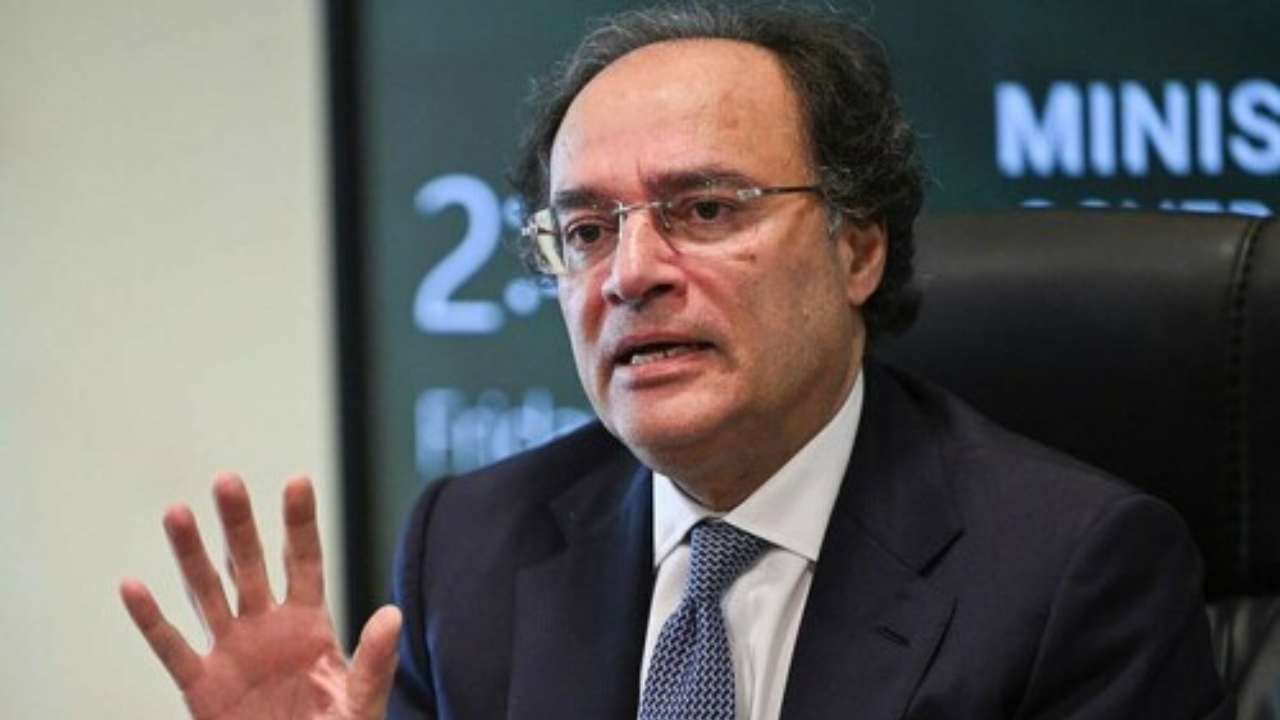
    Finance Minister Muhammad Aurangzeb has indicated a potential relief in taxes for the salaried class. While speaking at an event, he stated that the federal budget for fiscal year (FY) 2025-26 will reduce the strain on salaried individuals.

    The federal budget for the coming fiscal year will be presented on June 10. It merits a mention that the federal government was to announce the budget earlier. However, authorities chose to delay the announcement instead as discussions between Islamabad and the International Monetary Fund (IMF) remained inconclusive. 

    As per reports, the government is attempting to “reduce the tax burden” on the salaried class. The finance minister indicated that Islamabad was working towards simplifying processes surrounding the filing of taxes for the salaried class. If taxes are slashed, it could increase the disposable income of households, resulting in an improvement in the purchasing power of households.

    Moreover, he outlined the difficulties caused by automatic deductions in the salaries of the working class. The finance minister also highlighted how efforts are underway to digitise the Federal Board of Revenue’s (FBR) operations.

    If successful, it could minimise the intervention of officials, thereby boosting transparency and faith in the tax collection process. Reports indicate that Islamabad is attempting to reform pension plans and intends to modernise debt management systems.

    The finance minister emphasised the government’s commitment to supporting the armed forces, framing it as a national necessity rather than merely a military obligation. However, he highlighted how “no concrete announcement has been made regarding salary revisions”, leaving analysts wondering if civil-military personnel will witness increments in their pay for FY 2025-26. 

    Speaking at the same event, the finance minister revealed how international players have started to recognise the trajectory Pakistan’s economy is on, with the speed of recovery leaving many stunned. 

    “The world is satisfied with Pakistan’s macroeconomic stability,” he proclaimed, suggesting that all macroeconomic indicators are moving in the right direction. He revealed how 24 state-owned enterprises had been passed off to the Privatisation Commission, which could result in cutting off loss-making institutions while simultaneously generating revenue for the federal government.

    According to reports, lawmakers in Islamabad are likely to introduce reforms that will transform the energy sector and the system for taxation, improving Pakistan’s fiscal position. The energy sector has already begun to undergo reforms, notably the repurposing of excess electricity for crypto mining and AI data centres.

    Pakistan has reportedly received positive feedback regarding the direction of its economy during meetings with the United States (US) and the United Kingdom (UK) based investors.


  • Govt to allocate 2,000MW for crypto mining, AI data centres

    Govt to allocate 2,000MW for crypto mining, AI data centres

    The federal government has decided to allocate 2,000 megawatts of power for the purposes of crypto mining and to power artificial intelligence data centers. As per a press release, the measures are part of the first phase of a national initiative to establish Pakistan as a leader in digital innovation.

    According to reports, the Pakistan Crypto Council (PCC) is leading the initiative to utilise surplus power. The integration of digital assets into Pakistan’s economic structure could result in the creation of high-tech jobs while potentially boosting foreign direct investment (FDI) levels.

    Reports suggest that the FDI might grow by billions of dollars, along with the federal government witnessing a sizable surge in revenue as well. The press release cites Finance Minister Muhammad Aurangzeb, who outlines that this allocation of excess power will translate into investments and innovation.

    Details from the press release suggest that lawmakers in Islamabad intend to utilise Pakistan’s strategic location to its benefit, as Pakistan possesses “the most strategic location in the world for data flow and digital infrastructure”. This could allow Pakistan to become a hub for global data centres.

    As per reports, a number of international entities have engaged with authorities for exploratory discussions. These ‘entities’ include data infrastructure firms and crypto miners.

    The PCC has been attracting companies to invest in the country, and as per the press release, the announcement of allocating excess power towards digital assets could result in capturing the interest of international entities, resulting in the visit of additional “global players”. The reason for anticipating the aforementioned visits stems from what the press release describes as excess power being “repurposed into a high-value digital asset”.

    Currently, several power plants in Pakistan are operating below capacity, causing them to be a liability. However, since crypto mining and AI data centres consume large amounts of electricity, redirecting excess power could eliminate these liabilities while simultaneously generating revenue.

    Crypto mining at large is an extremely electricity-intensive operation. Reports place the annual electricity consumption of global mining operations at a staggering 130 terawatt-hours (TWH). 

    For perspective, the electricity consumption for overall mining operations is so large that it dwarfs even the power consumption of advanced economies, such as the Netherlands. Owing to its electricity-intensive nature, many countries have instated bans on bitcoin mining to combat local power deficits and rising environmental issues.

    In 2021, China officially cracked down on their domestic bitcoin mining industry by banning the activity altogether. However, with Pakistan embracing the crypto wave and the crackdown other countries have imposed on their crypto systems, investments could pour in.

    PCC Chief Executive Officer (CEO) Bilal Bin Saqib has outlined how “Pakistan can accumulate Bitcoin directly into a national wallet”. Power sold to miners in exchange for Pakistani rupees could pave the way for the generation of valuable digital assets, leading to “economic stability”.

  • Harvest on Hold: 20% FED Burden Draining Pakistan’s Fruit Juice Industry

    Harvest on Hold: 20% FED Burden Draining Pakistan’s Fruit Juice Industry

    Pakistan’s fruit farmers and pulp industry are facing a serious challenge as procurement by juice and nectar companies has sharply declined, jeopardizing the entire fruit value chain.

    Traditionally, juice manufacturers procured over 100,000 tonnes of fruit annually, often buying surplus or export-grade fruit directly from growers. These advanced contracts provided farmers with stable income and helped reduce wastage.

    However, this season, many growers report a noticeable drop in industry engagement.

    “Usually, companies approach us well before harvest, but this year the inquiries have been few and far between,” says Mubashar Durrani, a mango grower from Multan.

    The core issue behind this downturn is the steep 20% Federal Excise Duty (FED), imposed on top of an 18% GST. Since the FED hike in 2023-24, sales in the formal juice sector have fallen by nearly half, forcing companies to hold inventory and drastically cut back on new fruit purchases.

    “With existing stock piling up and weaker sales, we expect a significant reduction in buying mangoes, peaches, and apples this season,” explains representative of a juice brand.

    This reduction hits farmers hard. Many are already struggling due to limited exports caused by trade route disruptions. Lower procurement means fruit prices are dropping, squeezing growers’ incomes and threatening future orchard investments.

    “If this trend continues, we may have to stop planting new trees—or even uproot existing ones just to salvage some value,” warns Ebadur Rehman, a guava grower from Sheikhupura.

    The tax policy has also encouraged the rise of unregulated, cheaper products that avoid taxes and food safety standards, further hurting the formal industry.

    “The formal juice sector pays heavy taxes but faces unfair competition from undocumented producers,” says a Fruit Juice Council spokesperson. “This discourages investment and stalls industry growth.”

    Globally, many countries offer preferential tax rates for fruit juices. For example, India applies only 12% GST with no excise duty on pure fruit juices, making Pakistan’s combined 38% tax rate exceptionally high.

    The formal juice industry has significant export potential, but without a healthy domestic market and supportive policies, that opportunity remains out of reach.

    “The government should reduce the FED and support the formal sector, which protects farmers, reduces wastage, and creates jobs,” the spokesperson adds.

    Until then, fruit farmers and pulp processors face mounting uncertainty as procurement declines, threatening one of Pakistan’s most promising agricultural value chains.

  • Power Division seeks Rs161bn from provinces

    Power Division seeks Rs161bn from provinces

    The Power Division has asked the Ministry of Finance to recover around Rs161 billion in unpaid electricity bills from provincial governments, according to Power Minister Sardar Awais Leghari. 


    As per reports, while speaking during a Senate Standing Committee on Power meeting, Awais Leghari outlined how the Council of Common Interests (CII) had already approved a mechanism. Under this mechanism, the federal government can deduct 25 percent of the outstanding dues directly from the provinces’ shares, while the rest would be recovered once bills are reconciled.

    Reports indicate that the committee, chaired by Senator Mohsin Aziz, was briefed regarding these unpaid bills that had piled up over the last three years mainly due to the provinces’ unwillingness to cooperate in reconciling the figures. Data from reports suggests that Sindh owes a staggering Rs67 billion followed by Punjab and Balochistan at Rs42 billion each.

    Khyber Pakhtunkhwa owes Rs10 billion as well. The panel showed strong dissatisfaction with the delays and demanded urgent action to recover the dues.

    Back in February 2014, the CII had already settled the framework for how such payments would be handled, including the principle of deducting dues directly from the provinces’ federal transfers. This was followed by a detailed meeting in August 2014 with all stakeholders in the Ministry of Finance, where SOPs were finalized. Since then, the federal government has been deducting 25% of pending power sector payments at source using a uniform process.

    Reports reveal that in addition to recoveries, the committee also turned its attention to ongoing efforts to privatise several power sector entities. Leghari confirmed that three distribution companies, namely Iesco, Fesco, and Gepco, are up for privatization in the first phase. 


    Lesco, Mepco, and Hesco will follow in the next phase, along with the Guddu and Nandipur power plants. Investor outreach, restructuring efforts, and promotional roadshows are currently in progress, with the entire process expected to wrap up by January 2026.


    According to reports, the committee voiced concern over what this shift means for employees of these companies. It urged the ministry to come up with fair and worker-friendly policies, including options for voluntary early retirement, to protect workers’ rights during the transition.


    Another key issue raised was the high cost of electricity during peak nighttime hours. Reports reveal that Leghari has attributed  this spike results from reliance on expensive Residual Fuel Oil (RFO)- based generation to meet demand. The committee was unimpressed and pushed for a shift toward more efficient and affordable power plants to ease the burden on consumers.


    Meanwhile, the installation of 800,000 Advanced Metering Infrastructure (AMI) meters across Islamabad, Rawalpindi, and Taxila has already been completed. This move has helped reduce line losses by 2%, offering a glimpse into how technology can play a role in addressing some of the power sector’s chronic inefficiencies.

  • Budget delayed as IMF talks remain inconclusive

    Budget delayed as IMF talks remain inconclusive

    Discussions between Islamabad and the International Monetary Fund (IMF) have remained inconclusive, causing the federal government to delay the announcement of the budget till June 10. The IMF will reportedly continue to engage with relevant authorities over the fiscal year (FY) 2025-26’s budget in the coming days.

    The series of Pak-IMF high-level policy talks began on May 19 in Islamabad, and according to reports, both sides failed to reach an agreement on the budget by the end of the mission.

    However, the IMF’s Pakistan mission chief, Nathan Porter, described the discussions to be “constructive”. Moreover, he asserted that IMF will remain locked in talks with Pakistani authorities until an agreement is reached for the nation’s federal budget for the upcoming FY.   

    He also revealed that the talking points included avenues to boost government revenue and to “prioritise expenditure”. The federal government could attempt to expand the tax net while simultaneously increasing compliance with tax laws.

    Reports indicate that a multitude of businesses do not comply with laws surrounding taxation. This problem is especially pronounced in the cigarette manufacturing sector, where the government loses out on a staggering Rs300 billion in revenue because of tax evasion. 

    According to Nathan Porter, the discussions also went over “budget proposals and broader economic policy, and reform agenda”. Reports reveal that the aforementioned reforms are to be funded by the 2025 Resilience and Sustainability Facility (RSF) package along with other economic goals falling under funding provided by the 2024 $7 billion Extended Fund Facility (EFF) program. 

    Reports cite Porter describing Islamabad’s commitment to aim for a surplus amounting to 1.6 percent of the Gross Domestic Product (GDP) for FY 2025-26. To achieve this, the federal government will have to prioritise government expenditures and ensure an increase in revenue to consolidate its fiscal position.

    In a separate development, Minister for Power Sardar Awais Ahmad Khan Leghari received a delegation from the World Bank earlier this week to discuss reforms that are currently in progress. These reforms were in line with those recommended by the IMF, as Islamabad intends to substitute broad subsidies with those that offered support to a targeted segment, which could help with fiscal consolidation. 

    Porter outlined the importance of Pakistan’s inflation rate remaining within a band of five to seven percent in the medium term. The State Bank of Pakistan (SBP) is responsible for targeting the optimal inflation rate in the economy and, as such, has been recommended to ensure that its policies are “data-dependent”.

    Porter also highlighted the importance of allowing the exchange rate to fluctuate as it will allow Pakistan to grow resilient to “external shocks”. Currently, the rupee is subject to a managed float regime which allows for the SBP to intervene to insure that the rupee does not face significant depreciation. However, this puts pressure on the SBP’s reserves.

  • World Bank commits $55 million to help govt reform power sector

    World Bank commits $55 million to help govt reform power sector

    Minister for Power Sardar Awais Ahmad Khan Leghari received a delegation from the World Bank to discuss reforms that are currently in progress, along with discussing additional avenues of collaboration. Details from reports reveal that Anna Bjerde, Managing Director Operations at the World Bank, is heading the delegation.

    According to a press statement, the power minister has highlighted initiatives to bring about a competitive power market in the country. This move is reportedly expected to reduce financial strain on the federal government by improving efficiency.

    During the discussions, the power minister told the World Bank’s delegation about the establishment of an Independent System and Market Operator (ISMO), which will serve to ease the shift from the government being the only power purchaser to a system where various buyers and sellers can operate in the power market.

    Reports indicate that Pakistani authorities have already begun to hire officials to make the aforementioned shift. Moreover, the power minister outlined progressive policies, telling the delegation about the ministry’s success in public revenue enforcement and Islamabad’s goals to substitute broad subsidies with those that offered support to a targeted segment.

    This could result in the national exchequer being spared unnecessary strain, allowing the government to consolidate its fiscal position or allocate the freed-up funds elsewhere. 

    According to reports, the power minister requested the World Bank’s help regarding the design and implementation of narrow subsidies. If designed correctly, it would allow for only the deserving stratum of the population to receive subsidies.

    Anna Bjerde assured Pakistani officials that the country would have the World Bank’s support in the implementation of the reforms. She hailed the ISMO as a significant landmark in Pakistan’s journey to deregulate and liberalise the power market.

    The power minister outlined Pakistan’s excess electricity capacity of approximately 7,000 megawatts. As per reports, he suggested that the electricity should be diverted to industrial customers at competitive rates instead of allowing it to go to waste.

    The reduction in electricity rates could encourage a greater level of industrialisation in the economy. A fall in power rates could pull the large-scale manufacturing (LSM) sector out of its decline, which has witnessed a 1.9 percent contraction in the large-scale manufacturing (LSM) sector during the first eight months of fiscal year 2024-25. 

    The delegation from the World Bank agreed with the idea of utilising surplus electricity. The World Bank’s Country Director, Najy Benhassine, pledged $55 million in funding to assist Islamabad in transforming the country’s power sector.

  • Exporters eye $100 million mango exports despite climate hurdles

    Exporters eye $100 million mango exports despite climate hurdles

    Pakistani exporters are targeting to ship off 125,000 tons of mangoes this season. Shipments will reportedly begin from May 25 and are expected to generate large foreign exchange inflows for cash-strapped Pakistan.

    According to the Pakistan Fruit and Vegetable Exporters Association (PFVA), if exporters are able to meet the target, the mangoes will bring in approximately $100 million in export revenues. Reports reveal that last season’s export target sat at just 100,000 tons, indicating that exporters have increased their target by 25,000 tons for the current season.

    Analysts believe, however, that the domestic supply of mangoes may be detrimentally impacted by climate challenges, creating difficulties for exporters to meet their target. As per a key member of the PFVA, the supply of mangoes has been falling persistently owing to water scarcity and climate change.

    The aforementioned PFVA member, Waheed Ahmed, outlined how mango production could decline by a staggering 20 percent this year. He highlighted how mango production may fall from a respectable 1.8 million tons to a measly 1.4 million tons.

    Reports reveal that 70 percent of mangoes are grown in Punjab, with 29 percent being grown in Sindh. Khyber Pakhtunkhwa is responsible for producing just one percent of Pakistan’s mangoes.

    According to Waheed Ahmed, authorities need to enact “provincial-level initiatives” to relieve climate-based pressures impacting mango production. These include, but are not limited to, developing mango varieties that are climate resilient, improving water management on a provincial scale, modernising the agricultural sector and investing in research and development.

    As per experts, climate change poses a significant threat to agricultural activities, a threat which mangoes are not immune to. Pakistan may soon be able to invest in initiatives once it receives funds from the International Monetary Fund (IMF) under the Resilience and Sustainability Facility (RSF) to combat climate-related shocks.

    Falling mango yields could result in an uptick in fruit prices in the domestic market. Increasing mango exports could exacerbate the problem, causing a further increase in prices.

    Waheed Ahmed has revealed that exporters are targeting new markets in addition to long-standing importers of Pakistani mangoes. These new markets include the United States, Australia, Japan and South Korea.

    Moreover, he outlined that exporters will place special emphasis on moving into the Turkish and Chinese markets. Reports suggest that South Africa will open its market for Pakistan’s mangoes too, which could result in a significant jump in mango exports.

  • Digital asset authority formed to meet FATF requirements

    Digital asset authority formed to meet FATF requirements

    In a bid to ensure that Pakistan’s Virtual Asset Economy complies with safeguards set by the Fina­ncial Action Task Force (FATF), the federal government has decided to set up the Pakistan Digital Assets Authority (PDAA). According to details from reports, PDAA will be responsible for regulating digital assets and ensure that processes do not violate FATF’s regulations.


    As per a statement issued by the Ministry of Finance (MoF), officials from the ministry will initiate a strategy to accelerate the growth of Pakistan’s virtual asset economy while simultaneously regulating the digital asset space. The Pak­istan Cryptocurrency Cou­ncil (PCC) has recommended a general outline of tasks for the PDAA.


    Reports indicate that the tasks include ensuring economic inclusion, responsible adoption of virtual assets and to regulate financial infrastructure that is based on the blockchain. The purpose of regulation lies in ensuring that innovations are in accordance with FATF’s rules.  


    Finance Minister Muhammad Aurangzeb, also PCC’s chairman, outlined how Pakistan’s goal is “not just to catch up but to lead”. He highlighted that this was possible via regulation and with the PDAA, Pakistan will get catapulted to a leading role in global financial innovation.


    The PCC’s chairman further elaborated on the PDAA’s importance as its regulations could protect consumers and attract international investments – as regulation reduces risk.


    As per reports, he emphasized how the newly created PDAA is responsible for matters pertaining to digital asset compliance, licensing and innovation. The body is expected to regulate tokenized platforms, digital stablecoins, DeFi applications, wallets and exchanges. 


    Analysts have pointed out how Pakistan’s decision to lean into crypto and the digital asset space places it in the rank and file of leading economies such as those of Singapore, Japan, Hong Kong and the UAE. Reports confirm that the aforementioned countries have set up regulatory bodies of their own to oversee activities occurring in the digital asset space.


    The establishment of such bodies reportedly allows for the host country to remain compliant with international financial laws while also promoting innovation. Details from reports suggest that the PDAA will be able to yield positive returns from the domestic electricity surplus via regulated crypto mining.


    Aside from attracting investments, reports suggest that PDAA may regulate over $25 billion of the informal crypto market and tokenize government debt and national assets.


    Reports indicate that the PDAA may also assist startups to design and launch block-chain based solutions. If managed effectively, the PDAA could allow Pakistan to become a major competitor to existing players in the international virtual asset economy.

  • Investment ratio records major boost, just short of target

    Investment ratio records major boost, just short of target

    Pakistan has missed its targeted investment ratio despite the federal government’s best efforts. However, details from reports reveal that the investment ratio has improved, rising to 13.8 per cent of the economy’s size in the current fiscal year (FY).

    Islamabad has been working to raise investment inflows, particularly those that do not contribute to the national debt stock. Figures approved by the National Accounts Committee, however, indicate that the government was unable to meet the official investment ratio target.

    A possible contributing factor is the inelastic nature of private investments. Moreover, the Pakistan Sovereign Wealth Fund (PSWF) remains largely idle despite being set up about two years ago.

    The PSWF’s dormancy is linked to disagreements with the International Monetary Fund (IMF), with reports suggesting that the IMF is concerned about its legal framework.

    Lawmakers and authorities intended to boost the investment-to-GDP ratio up to a respectable 14.2 percent. While this conclusion has been based on provisional figures, reports have revealed that the result will become official next Sunday when authorities launch the Economic Survey of Pakistan. 

    Analysts note that despite missing the investment-to-GDP ratio target, the figure has logged a remarkable improvement from the previous fiscal year, as it sat at an abysmal 13.1 percent – the lowest investment ratio in 50 years.

    Pakistan is now relying on the Special Investment Facilitation Council (SIFC) to boost domestic investment levels while simultaneously assisting the federal government with the implementation of policies. Private sector investment levels increased marginally to settle at 9.1 percent of the Gross Domestic Product (GDP) – well below the target of 9.7 percent. 

    According to reports, the fixed investment-to-GDP ratio climbed up to 12 percent, a stark improvement from the 11.4 percent recorded during the previous FY. However, the targeted level was 12.5 percent, implying that the economy missed yet another investment goal. 

    Reports reveal that if the federal government exhausts its development budget of Rs1.1 trillion, the public sector investment-to-GDP ratio will be able to climb up to 2.9 percent. 

    The lack of investments suggests that the government will have to finance projects by taking out loans. However, the cash-strapped country is already beset by external financing issues; taking up additional loans will only serve to exacerbate financing problems.

    As per a recent staff report released by the IMF, Pakistan needs to ease its trade policies, which the IMF considers to be restrictive. The IMF believes that the removal of trade-hindering policies, with a focus on abolishing the existing inefficient tariff system, could result in increasing private investment levels.

  • Local gold prices record slight rise, global rates witness sharper hike

    Local gold prices record slight rise, global rates witness sharper hike

    Gold prices witnessed a rise in the international market owing to uncertainty regarding the United States’ (US) position on tariffs, depreciation of the US dollar and ongoing Russia-Ukraine ceasefire talks. As per reports, domestic gold prices did not shift significantly, as the price of one-tola 24k gold increased by a marginal Rs300.

    According to details released by the All Pakistan Sarafa Gems and Jewellers Association (APSGJA), per tola gold rates have inched up to Rs342,800. The price of a 10-gram 24k increased by Rs257, coming to rest at Rs293,895.

    However, details from reports suggest that the commodity is trading below the aforementioned prices in domestic gold and sarafa markets. One-tola gold is fetching Rs341,350 in local markets, with 10 grams being sold for approximately Rs292,658. This phenomenon is fairly common as prices quoted by APSGJA and domestic gold rates differ slightly at times. 

    The price of gold in the domestic market rallied sharply on Monday, recording a Rs4,000 gain per tola. A director of a reputable commodities institution has reportedly highlighted that gold trading stayed muted throughout the day.

    As per reports, the director outlined the trends in the international bullion market, mentioning how gold hit a low of $3,206 per troy ounce (t oz). Currently, the price of the commodity is resting at approximately $3312 per t oz.

    According to analysts, $3,250 and even $3,200 could be key support levels for the commodity if prices begin to fall. As per reports, comments by analysts outlined how a close above $3,300 could result in a “bullish breakout”.

    The price of gold in the international market rose by over one percent on Tuesday, owing to a depreciation of the dollar. The strength of the dollar and gold prices are inversely related, meaning that gold prices surge when the dollar depreciates.

    Reports reveal that the cause of the dollar’s depreciation was a consequence of Moody’s, a renowned credit rating agency, downgrading the economic superpower’s sovereign rating. Moody’s downgrade, coupled with the Federal Reserve displaying caution, triggered a large sell-off as many perceived that it was riskier to hold onto dollars.

    Reports attribute uncertainty related to tariffs and the Russia-Ukraine ceasefire negotiations as another factor causing gold prices to rise. This is because gold is perceived by many as a safe haven asset, and with uncertainty on the rise, many prefer to hold onto gold given its historic status of being a store of value.