Category: Business

  • No relief in petrol costs despite decline in global oil prices

    No relief in petrol costs despite decline in global oil prices

    The federal government has decided to withhold the full extent of relief from users by keeping petrol prices unchanged. According to reports, this marks the third time in the past two months that the government has taken not transferred the reduction in global prices to domestic users. 


    Petrol prices remain untouched at Rs252.63 per liter despite the creation of room to pass relief to consumers. Islamabad decided to raise the Inland Freight Equalization Margin (IFEM) on petroleum products by Rs1.87 per liter to plug the losses that were sustained by the oil industry. 


    As per reports, refineries and oil marketing companies’ (OMCs) losses amount to a staggering Rs34 billion which were reportedly incurred because of a ‘tax loophole’ that existed in the Finance Bill 2024-25.


    Since the finance act labelled petroleum products as exempt, those in the oil sector could no longer claim the sales tax amount which they had paid to acquire their inputs. This caused oil companies to suffer financially.


    However, the IFEM is not a permanent charge as the Petroleum Division has suggested that the financial losses, amounting to Rs34 billion can be recovered within 12 months. If this is true, the charge may be removed in just a year.


    However, the price of high speed diesel (HSD) has recorded a drop or Rs2 per liter, despite the higher IFEM, and will remain unchanged for the next two weeks. After witnessing a drop in prices, the ex-depot price of HSD sits at Rs254.64 per liter, slightly lower than its price of Rs256.64 prior to the revision.


    Currently, the government charges approximately Rs78 per liter under the petroleum development levy. This is to be charged on both petrol and HSD, significantly raising the price of the commodity for consumers.


    The federal government does not charge consumers any general sales tax (GST) on petroleum products. However, the government does charge a customs duty of Rs17 per liter on HSD and petrol. 


    Put together, the government extracts approximately Rs96 in revenue from each liter of petrol sold. Fuel suppliers and distributors tack on an additional 17 rupees per liter as markup.


    Reports have outlined how the government has blocked a Rs18 per liter drop in fuel prices to deter the general public from purchasing petroleum while simultaneously raising government revenues.  With HSD and petrol sales averaging about 750,000 tons per month, both commodities bring in a significant amount of revenues for the national exchequer.
  • Trump secures over $2 trillion in Gulf investments

    Trump secures over $2 trillion in Gulf investments

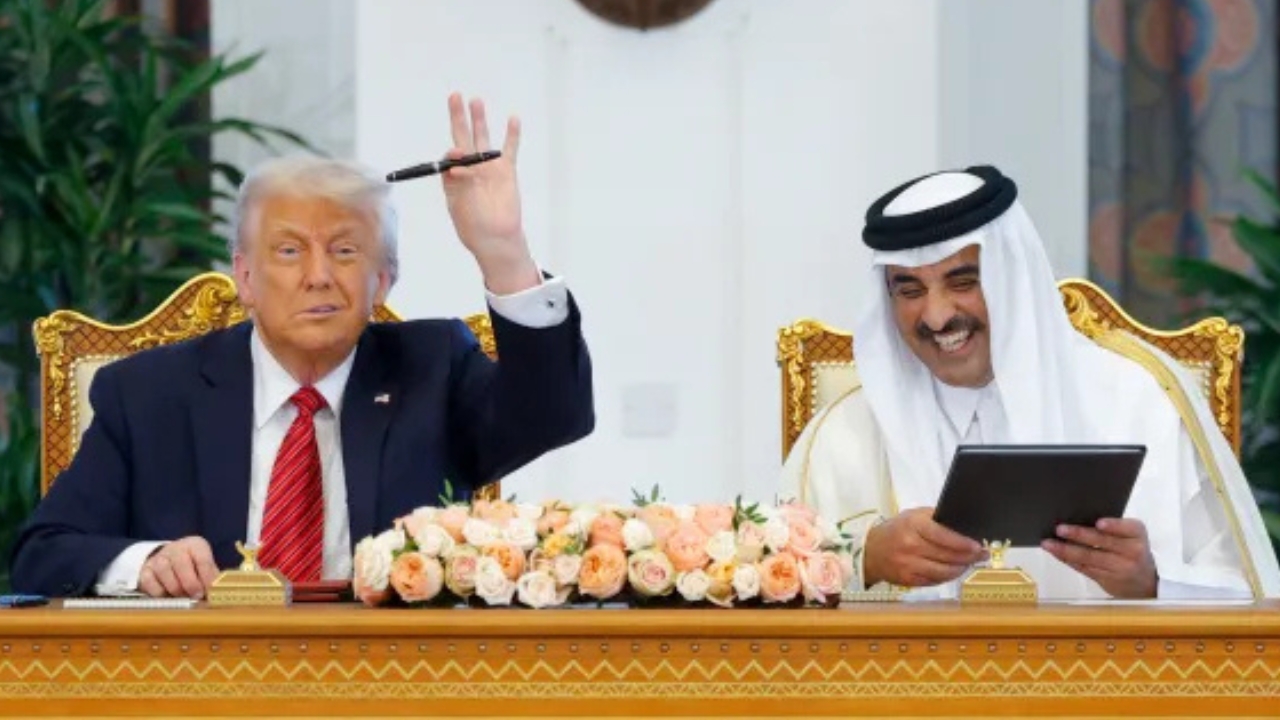
    US President Donald Trump is currently on a four-day trip to the Middle East to secure large investments from the oil-rich Gulf countries. According to reports, Trump’s tour has been extremely successful, with the Kingdom of Saudi Arabia (KSA) and Qatar both promising to potentially add upwards of $2.2 trillion in investments into the US.

    The trip started in the KSA and is expected to end in the United Arab Emirates (UAE). As per reports, Trump’s visit to the KSA has enabled the US to unlock $1 trillion in investments following multi-billion-dollar commercial agreements with large companies. These companies include household names such as Amazon and Oracle, among others.

    Trump’s visit to Doha has proved fruitful as well, with initial agreements bringing in $243.5 billion. However, reports indicate that the wider US-Qatar economic exchange following Trump’s visit to Doha is worth a staggering $1.2 trillion.

    Investments from Doha alone are expected to support over one million jobs in the US, an attractive prospect for Trump, as he intends to re-industrialise the economy. Trump’s concerns echo a broader fear gripping the US economy as manufacturing employment in the US continues to decline steadily. 

    According to experts, the decline in manufacturing-related employment has not given way to white collar high tech jobs as it should have, being overshadowed by rising employment in the poorly paid service sector.

    However, with the US and Qatar reportedly inking deals concerning the aviation, defence, energy and quantum technology sectors, economic activity is expected to witness a significant boost. A statement released by the White House reiterated Trump’s talking points, outlining Washington-Doha ties by highlighting the recent sale of “Boeing aircraft and GE Aerospace engines to Qatar Airways.”

    Qatar Airways’ order, worth a whopping $96 billion, will allow the airline to reportedly obtain 210 Boeing 787 Dreamliners and 777x aircraft that utilise GE Aerospace engines – both of which are manufactured in the US.

    The agreement spells great news for Boeing as it has allowed the company to get its largest widebody and 787 order to date. According to details from reports, this deal alone will support over 150,000 jobs in the US, allowing for 1 million jobs to be supported throughout the production of the aircraft.

    The White House’s statement hailed the deals as a way for the US to boost its manufacturing capabilities. Moreover, the statement outlined how the aforementioned deals have “put America on the path to a new Golden Age”.

  • Trump says he doesn’t want Apple manufacturing products in India

    Trump says he doesn’t want Apple manufacturing products in India

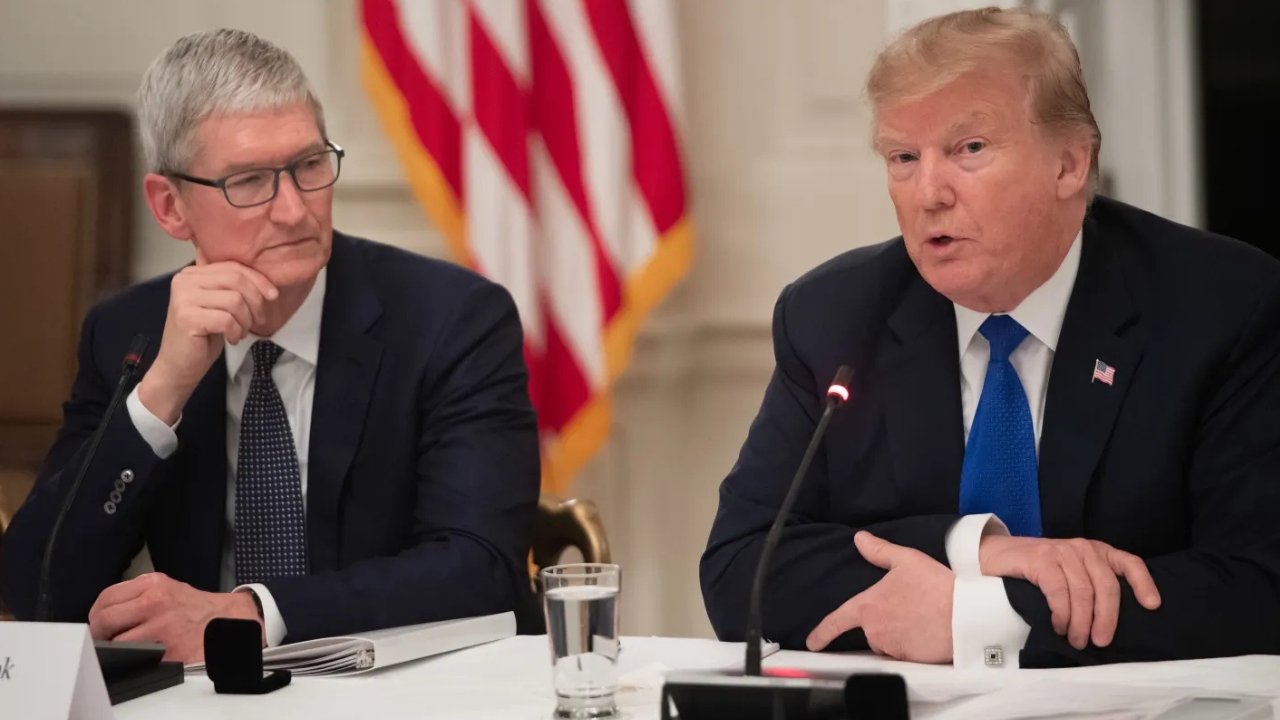
    During his visit to Qatar, US President Donald Trump stated that America is “not interested” in Apple establishing a manufacturing hub in India. According to reports, Trump made the comment while referencing a recent conversation with Apple CEO Tim Cook. Reiterating his “America First” stance, he added that India could “take care” of itself.

    His visit to Qatar is part of a broader tour of the Middle East. As per reports, Trump is pushing to re-industrialise the US by promoting local manufacturing operations instead of offshoring to countries such as India.

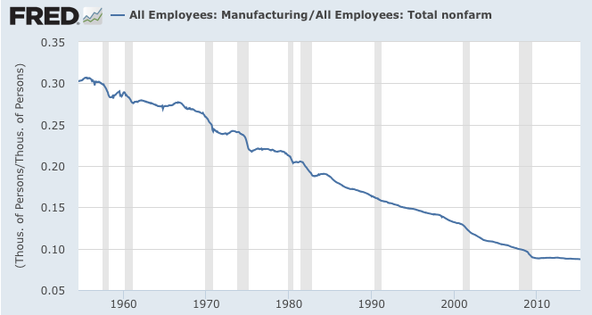
    Trump’s concerns echo a broader fear gripping the US economy as manufacturing employment in the US continues to decline steadily. According to experts, the decline in manufacturing-related employment has not given way to white collar high tech jobs as it should have, being overshadowed by rising employment in the poorly paid service sector.

    Declining employment in domestic manufacturing sector as a result of offshoring operations.

    However, Apple has already been shifting manufacturing responsibilities to India. Data from reports indicates that Apple has already produced approximately $22 billion worth of goods in India in fiscal year (FY) 2024-25. 

    Moreover, the company intends to make India the primary producer of US-bound iPhones by the start of 2027. India has been able to garner Apple’s attention as the company aims to limit the commercial risks that are associated with China. Moreover, while the tariff war has been suspended temporarily, the company is wary of similar escalations in the coming periods as China is a large manufacturer of iPhones.

    Reports have revealed that Apple is choosing to move its production base to India despite higher production costs compared to China. However, owing to the wage differentials, it is unlikely that Apple’s production processes will shift to the US, as costs are likely to balloon.

    Aside from Trump’s comments about the offshoring of manufacturing processes to other countries, he also reportedly managed to secure an economic package worth a staggering $243.5 billion. Moreover, Trump has also managed to boost bilateral ties with Qatar, ensuring greater collaboration across the technology and energy sectors.

    According to reports, Mukesh Ambani, chairman of Reliance Industries, was accompanying Emir Sheikh Tamim of Qatar at the high-profile meeting with Trump. Trump’s meeting with Ambani outlines his aims to foster greater commercial ties with Indian players while simultaneously attempting to industrialise the US to reinstate its status as the manufacturing hub of the world.

  • ‘Mini-miracle’: World in awe of Pakistan’s economic rebound

    ‘Mini-miracle’: World in awe of Pakistan’s economic rebound

    With the Pakistan-India conflict catapulting both nations into the international spotlight, many have begun to notice the remarkable economic trajectory Pakistan seems to be treading on. An award winning journalist from Barrons has labelled Pakistan’s economy a “mini-miracle”. 


    Analysts have highlighted how Pakistan represents a missed opportunity for investors, citing the country’s rapidly improving macroeconomic indicators along with the improving health of the domestic capital and financial market. Data from the Pakistan Stock Exchange (PSX) suggests that the benchmark index of the exchange, KSE-100, has “tripled’ in just two years, indicating a great return on capital for foreign investors.


    Moreover, reports indicate that Eurobonds maturing in 2031 have marked an improvement from 40 cents to 80 cents on the dollar. This means that investors are now willing to pay 80 percent of the bonds face value instead of a measly 40 cent. This improvement reflects growing confidence of international investors regarding Pakistan’s ability to pay back its debt without defaulting.


    Moody’s, an internationally acknowledged credit rating agency, also improved the domestic banking sector outlook from ‘stable’ to positive. Fitch, yet another renowned credit rating agency, also upgraded Pakistan’s economic outlook by boosting the country’s credit rating from CCC+ to B-. 


    The chief investment officer of an internationally recognized capital management institution has outlined how India’s recent aggression towards Pakistan “won’t likely knock Pakistan’s recovery off course” according to Barrons. The capital management company now holds the view that purchasing Pakistan’s debt is “not risky enough” anymore despite persisting Pak-India tensions.


    However, the situation was starkly different two years ago, with inflation skyrocketing to approximately 38 percent and the economy being on the precipice of default. The State Bank of Pakistan (SBP) was able to rein in inflation, by raising interest rates from 10 percent to a staggering 22 percent. 


    Since then, inflation has fallen significantly along with default being averted – owing to Islamabad reaching an agreement with the International Monetary Fund (IMF) regarding the disbursement of $7 billion of which over $2 billion have been disbursed till date. 


    However, it was not just the IMF agreement that averted disaster but the benevolence of those nations that had extended credit to Pakistan. This is because these creditors, such as China, United Arab Emirates (UAE) and the Kingdom of Saudi Arabia (KSA) allowed for Pakistan to roll over its debt, creating fiscal breathing space.


    Another reason behind the recent praise Pakistan’s economy has received from experts is the current account. While the economy has witnessed large current account deficits historically, Pakistan recorded a large current account surplus of $1.2 billion in March 2025. Many analysts have outlined however that the current account surplus was a result of large remittance inflows, stemming from rising immigration levels.


    Experts have commended lawmakers’ commitment to sticking to the roadmap provided to it by global lending institutions such as the IMF. However, given the state of the economy two years ago, Pakistan had no choice but to comply with IMF prescribed austerity measures.

  • Govt to track fuel digitally, impose heavy fines to combat smuggling

    Govt to track fuel digitally, impose heavy fines to combat smuggling

    Islamabad has decided to introduce a bill in the National Assembly which could allow for the digital tracking of petroleum products in various stages of the production process. According to reports, officials aim to introduce tracking mechanisms from import and production to retail sales.

    Tracking petroleum products could allow for a reduction in petroleum smuggling and may reduce instances of retailers mixing inferior fuels into high-grade fuel to illegally boost profit margins. As per motor vehicle experts, fuel adulteration results in significant “engine wear and poor performance”.

    While not immediately apparent, the smuggling of petroleum products into the country results in greater damage. Smuggled petroleum evades taxes and duties, allowing for the generation of supernormal profits for all those involved in the malpractice. However, this phenomenon results in the national exchequer losing out on a staggering Rs300 to Rs500 in annual tax revenue.

    Moved by Pet­roleum Minister Ali Per­vaiz Malik, the Petroleum (Amend­ment) Act, 2025 aims to include clauses that can track petroleum products via the usage of information technology. Moreover, reports indicate that the amendment, if passed, will result in strict punishments for those involved in operating illegal fuel stations, decanting fuel and transporting smuggled petroleum products.

    The introduction of the clauses to the amendment could grant government officials, such as deputy and assistant commissioners, along with a handful of other officers, the power to confiscate fuel, machinery and the equipment of fuel vendors not abiding by the law. 

    If the amendment gets passed, any entity convicted of importing, storing, refining, moving or supplying illegally procured petroleum products will be slapped with a Rs1 million fine. To discourage individuals from repeatedly engaging in the illegal sale of petroleum, those found to be violating the legislation repeatedly will have to face a larger fine of Rs5 million.

    Moreover, the owner of a facility with an invalid license will be liable to pay a Rs10 million fine to the government in addition to facing a seizure of their stock and machinery. Facility owners who possess an expired licence will be given a period of six months to ensure their licences are renewed, after which they can be fined Rs1 million for non-cooperation.

    The fear of paying the aforementioned hefty fines is likely to bring more petroleum importers, producers and retailers into the tax net, thereby boosting tax revenues.  Moreover, ensuring that every entity is subject to the same rules will reduce the upside of not cooperating with the law, as the opportunity to generate supernormal profits by engaging in illegal activities will not seem as attractive given the possibility of facing a fine.

  • Arnab Goswami’s guest admits Pakistan outpacing India in crypto race

    Arnab Goswami’s guest admits Pakistan outpacing India in crypto race

    A leading policy analyst has admitted that Pakistan’s influence in the global tech and financial space has been growing on Indian television. Speaking at Arnab Goswami’s show, the expert also warned that while India’s economic position has weakened because of the recent war it had with Pakistan, Pakistan was rapidly benefiting from the global narratives and trends by deeply entrenching itself in the world of cryptocurrency, especially in the West.

    At the core of this is Pakistan Crypto Council (PCC), an official entity established in the beginning of this year by the federal government on March 2025 by way of an official Finance Division directive, the council unites members of the State Bank of Pakistan (SBP), the Securities and Exchange Commission Pakistan (SECP), IT Ministry, and Law Division under the umbrella of a single organization.

    Under the leadership of Finance Minister Muhammad Aurangzeb and PCC CEO Bilal Saqib, the council is tasked with constructing a regulatory framework that makes digital assets safe and accessible within Pakistan. As per reports, this has placed Pakistan among the leading blockchain countries in the world.

    Addressing Goswami’s show, the Indian analyst highlighted Pakistan’s recent partnership with World Liberty Financial (WLF) crypto venture that is supported by Donald Trump. This move indicates that Pak-US financial ties are strengthening and that both countries are poised for further collaboration with respect to the digital asset space. As per the expert, Zach Ritco, son of US President Donald Trump’s ally Steve Whitkoff, recently visited Pakistan and inked a deal with the PCC.

    According to reports, the agreement could open doors for multimillion-dollar crypto exchanges, further cementing Pakistan’s economic relations with the US-based blockchain networks, while also marking a major step towards ‘digital diplomacy’. The aforementioned transactions include remittance transfers and business transactions that crypto may be able to facilitate, as traditional financial institutions are known for charging extortionate fees at times.


    In Dubai, after Ritco’s dealings with the PCC in Pakistan, he convened with Eric Trump, son of US President Donald Trump, at the World Crypto Conference. The conference was attended by Pakistani officials and American crypto personalities, and we see Islamabad using its alliances to extend its foothold in the field of global finance and technology. 

    Reflecting India’s sentiments about Pakistan’s growth, the expert warned the audience about such relations, highlighting how these relations would be able to imply grave financial clout, especially at a time when the Indian nation is struggling to recover from the economic losses in its unjustified war effort against Pakistan.

  • Gold digs down as US-China relations normalise

    Gold digs down as US-China relations normalise

    Gold prices continued to tumble on Monday in Pakistan as international prices of the commodity recorded a sharp decline following reports of a temporary deal that will result in lower tariffs on imports between the United States (US) and China.

    According to the All Pakistan Sarafa Gems and Jewellers Association (APSGJA), the price of one tola 24 karat gold fell by a staggering Rs10,400 in the domestic market, causing it to come to a rest at Rs340,500. 10-gram 24 karat gold rates fell substantially too, falling to Rs291,923 after logging a decline of Rs8,917.

    Reports indicate that a similar phenomenon was witnessed on Friday when per tola gold rates declined by Rs1,800. Prior to the downtrend, the commodity’s price witnessed a surge owing to falling investor confidence in global capital and financial markets. 

    Historically, gold has been perceived by many as a safe-haven asset, and with the US-China trade war sending global capital markets into a free fall, many preferred to park their funds in gold, considering it to be a great source of value.

    This allowed per tola gold prices to reach as high as Rs390,000 in the domestic market. However, analysts predicted that a sharp revision was due. The yellow metal experienced a substantial fall in its price as spot prices fell by a whopping 2.6 percent on Monday, resulting in international prices falling to $3,237.04 per troy ounce.

    US gold futures followed a similar trend, recording a 3.1 percent decline in their position to drop to just $3241.70. A director from a reputable commodity institution in Pakistan has attributed the decline in gold prices to improving commercial ties between the two economic hegemons of the Western and Eastern world: the United States and China.

    According to reports, both economic giants have decided to issue a temporary, 90-day moratorium on tariffs, which has led to a 90 percent drop in tariffs between the two economies. Analysts have outlined that if gold rates fall below $3,180 per troy ounce, the commodity could witness prices plunge even further, as prices falling below the $3,180 support level could potentially trigger sell-offs. 

    Currently, investors look to the US and China to determine the trajectory that both countries have chosen relative to the other. While normalisation could result in a further decline in prices, analysts believe that gold prices may begin to rise again if US-China relations sour.

  • Rafale’s market crashes, JF-17 manufacturer’s stock price soars after Indian debacle

    Rafale’s market crashes, JF-17 manufacturer’s stock price soars after Indian debacle

    International defence stocks have reacted noticeably after India launched Operation Sindoor, striking at least six targets in Pakistan and Azad Kashmir early Wednesday morning. ⁠

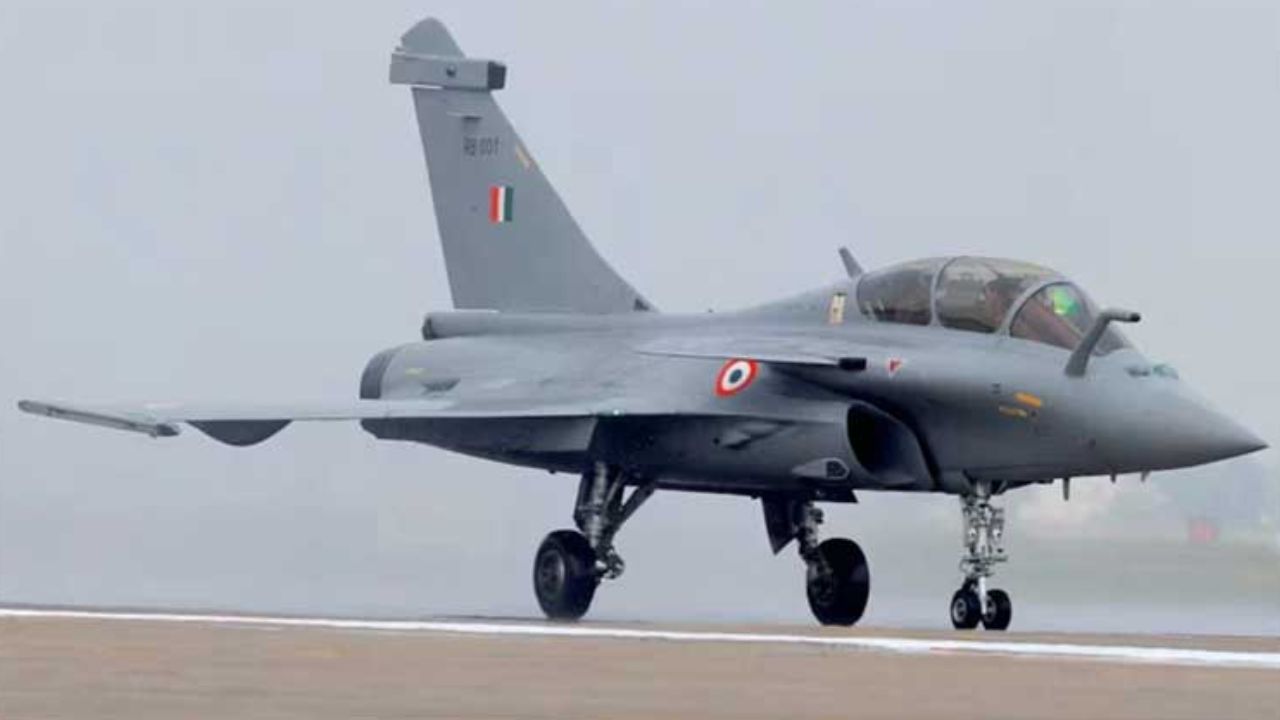
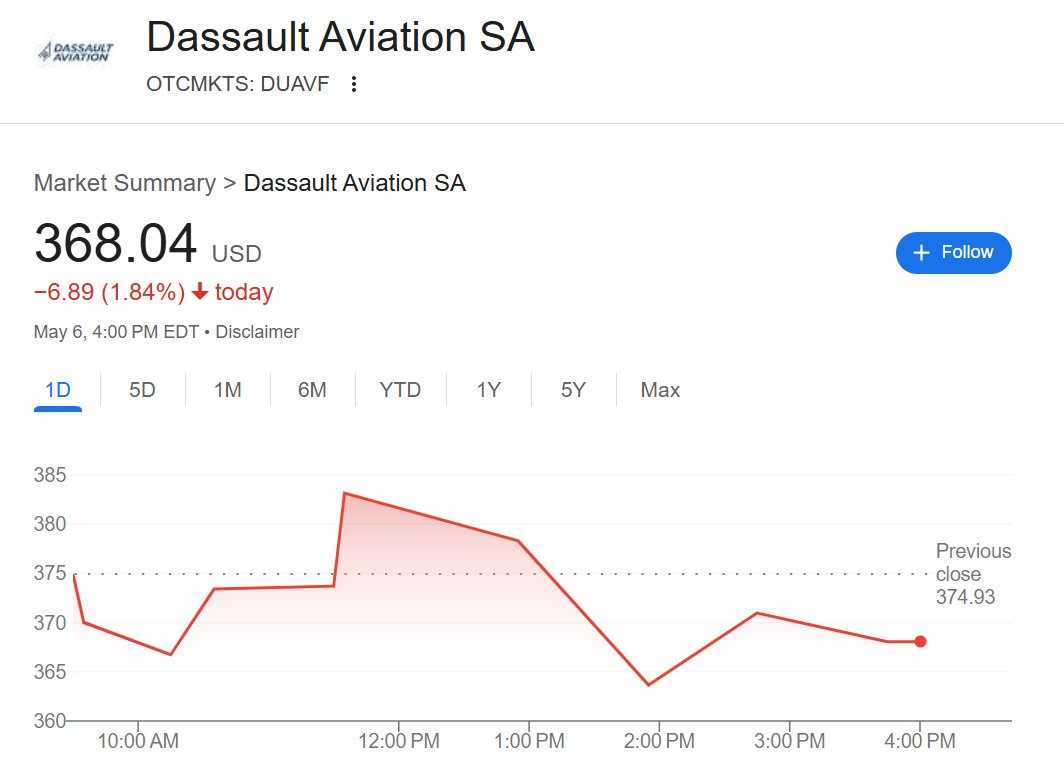
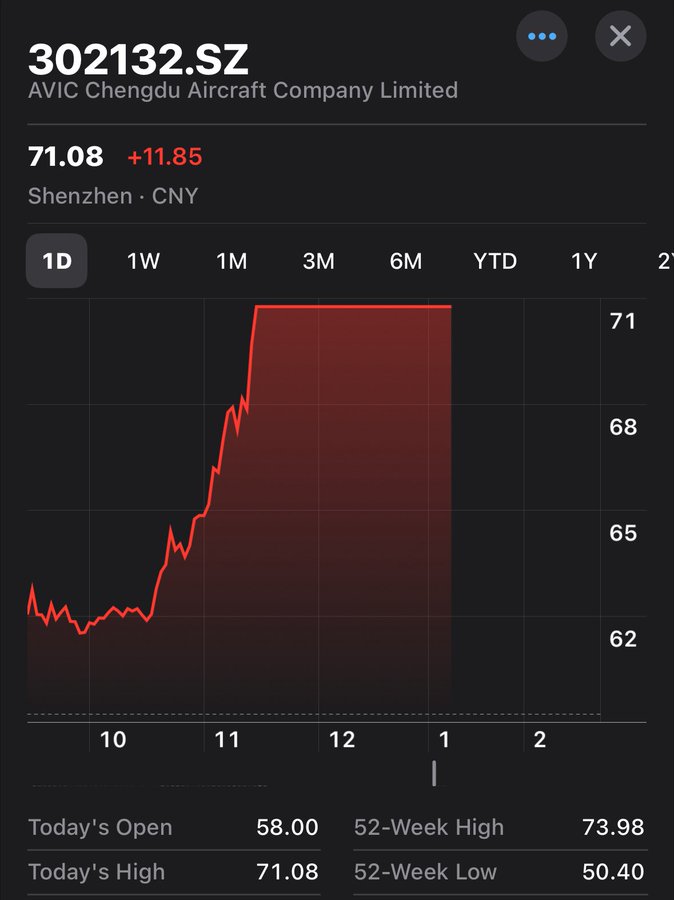
    France’s Dassault Aviation saw a 6% drop in share value, while China’s Chengdu Aircraft Corporation (CAC) recorded an 11.85% surge.

    Dassault Aviation, the French manufacturer of Rafale jets, saw its share value fall by 6% following reports of the aircraft losses. In contrast, China’s CAC, which produces the JF-17 and J-10 jets used by the Pakistan Air Force, recorded an 11.85% rise in its share price.

    According to Inter-Services Public Relations (ISPR), India launched airstrikes shortly after midnight on several locations in Pakistan, including Kotli, Bahawalpur, Muridke, Bagh, and Muzaffarabad. The strikes resulted in the martyrdom of at least 26 citizens and injuries to 46 others. The attack followed heightened tensions after the April 22 Pahalgam incident in Indian Illegally Occupied Jammu and Kashmir (IIOJK), where 26 Indian tourists were killed. India accused Pakistan of involvement but has yet to provide any evidence to support the claim.

    In retaliation, the Pakistan Air Force shot down three Rafale jets operated by the Indian Air Force. According to international media outlets, a total of six Indian warplanes were downed in the encounter.

    ISPR Director General Lt Gen Ahmed Sharif Chaudhry confirmed that Pakistan had responded to the Indian strikes and had downed five Indian Air Force jets, including three Rafale fighter aircraft. He also stated that an Indian Army brigade headquarters and a military post in the Dhundial sector along the Line of Control (LoC) were targeted and destroyed.

    “All of our air force jets are airborne,” said the ISPR DG. “This is a shameful and cowardly attack that was carried out from within India’s airspace. Pakistan will respond to this provocation at a time and place of its choosing.”

    The situation remains tense, with both sides on high alert and conducting damage assessments. Further statements from both governments and military spokespersons are expected in the coming hours.

  • Donkey business: Rs80m worth of donkey hides seized in export shipment to China

    Donkey business: Rs80m worth of donkey hides seized in export shipment to China

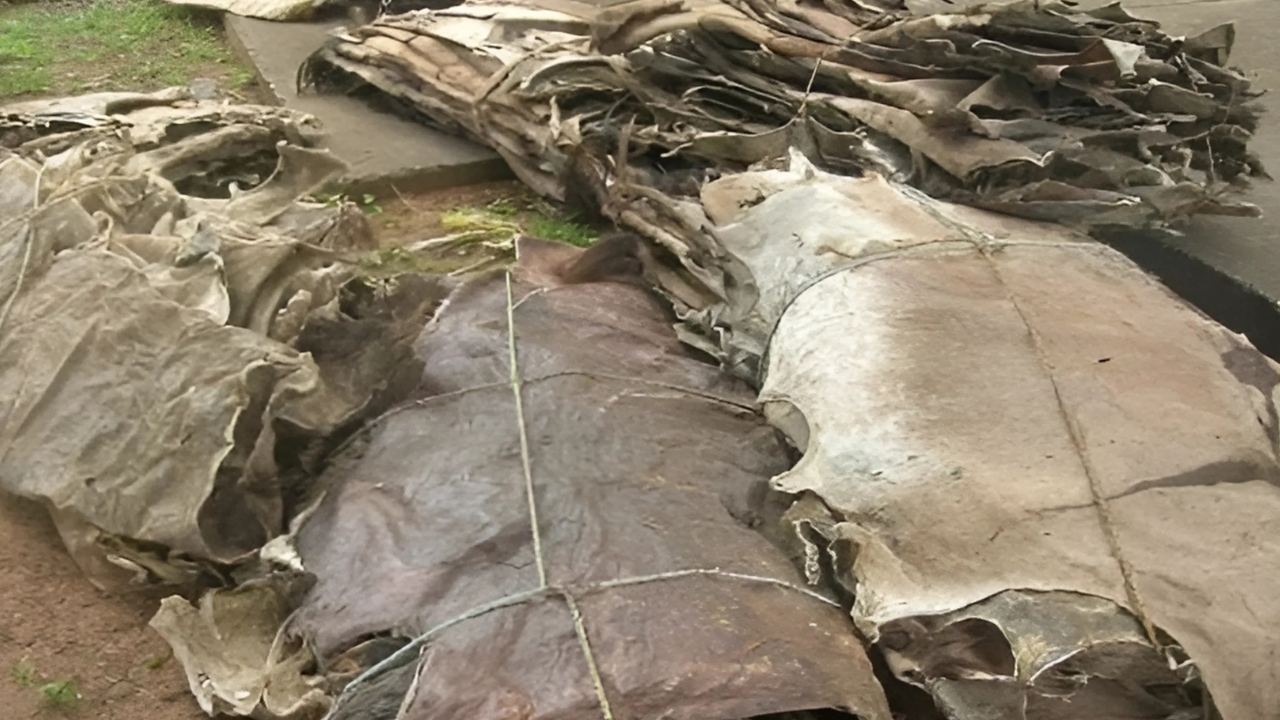
    The Collectorate of Customs Enforcement at Karachi has managed to halt a major smuggling operation, confiscating 14 tons of donkey hides that were being illegally shipped to China. As per reports, the hides were falsely labelled as leather products to facilitate the clearance process and were worth approximately Rs80 million.

    Donkey hides are highly sought after in China, where gelatin extracted from the hides is used in beauty products and traditional medicine. Reports have revealed that a key official from the Collectorate of Customs Enforcement has commended the relevant stakeholders involved in the seizure. Under Pakistani law, the export of donkey hides is prohibited under export policy regulations.

    The Collectorate is responsible for curbing transnational smuggling operations and analysing suspicious cargo to verify whether the contents align with their declared labels. While the Collectorate of Customs Enforcement typically deals with the seizure of contraband such as cigarettes, vehicles, and petroleum products, customs officials maintain strict vigilance even over shipments that may not initially appear suspicious, ensuring that smuggling activities remain effectively curbed.

    At the South Asia Pakistan Port Terminal (SAPT) in Karachi, the Risk Management Profiling System identified a questionable consignment containing 285 packages that were mislabeled as leather goods. Reports suggest that the container, numbered SEGU-3154225 and carrying the donkey hides, was initially cleared by the Customs Export Collectorate.

    However, officials later handed the container over to the Anti-Smuggling Department for inspection. Upon examination, customs officers discovered that the cargo contained donkey hides instead of genuine leather, prompting them to initiate legal proceedings.

    According to reports, the Anti-Smuggling Department relocated the seized donkey hides to their warehouse for safekeeping. Moreover, legal action has been initiated against the exporter under the provisions of the Customs Act.

    Chinese demand for donkey meat and hides led to a meeting between Zhao Fei, Vice President of China’s Donkey Industry Branch, and Pakistan’s Minister for National Food Security and Research, Rana Tanveer, in April 2025. As per reports, China expressed its interest in establishing donkey farms across Pakistan.

    Facilities proposed to meet China’s demand for donkey meat are intended to ensure that the domestic donkey population is not depleted by mass hunting operations. These farms are expected to operate under strict oversight to ensure full compliance with legal and ethical standards.

    China reportedly plans to set up donkey farms in Gwadar’s export processing zone, along with the necessary infrastructure to transport meat and hides to the Gwadar port.

  • Pakistan’s trade deficit surges to $3.4 billion in April

    Pakistan’s trade deficit surges to $3.4 billion in April

    Pakistan’s economic woes continue as the economy witnessed its trade deficit grow to a staggering $3.4 billion in April 2025. According to reports, economic experts believe that Pakistan’s overall current account balance may close in the red for fiscal year (FY) 2024-25, as Pakistan runs persistently high trade deficits.

    Macroeconomic indicators exhibited signs of revival in March 2025 as Pakistan logged its largest current account surplus of $1.2 billion. For reference, the current account considers net export income, net income from abroad and net current transfers.

    Cash-strapped Pakistan was only able to achieve a surplus based on the net current transfers component of the current account, which considers remittance inflows into the country. According to reports, Pakistan has witnessed a significant growth in remittance inflows, largely because of 2.4 million migrating out of the country over the last three years.

    Data from the Pakistan Bureau of Statistics (PBS) paints an alarming picture, revealing falling export revenues alongside growing import bills. Pakistan’s trade deficit surged to a staggering $3.39 billion, translating into a month-on-month (MoM) deficit growth of 55.2 percent.

    The widening of the trade deficit is likely to put significant depreciatory pressure on the rupee, resulting in a subsequent pressure on the State Bank of Pakistan’s (SBP) foreign reserves. This is because the SBP follows a managed float regime, intervening in the foreign exchange market to prevent the rupee from straying beyond its permitted exchange rate band.

    As per data from the PBS, Pakistan’s import bill grew to a whopping $5.53 billion, indicating that the import bill had recorded a 14.52 percent growth on a MoM basis. Export figures in April 2025, on the other hand, witnessed a 19.05 percent MoM drop, falling to just $2.14 billion.

    Moreover, this trend of rising imports and falling exports is present in year-on-year (YoY) trade statistics as well. Imports have logged a 14.09 percent YoY increase, with exports witnessing 8.93 percent fall on a YoY basis. 

    Aggregated data from the PBS indicates that the trade deficit for the first ten months of FY 2024-25 has ballooned to a colossal $21.35 billion. The breakdown of Pakistan’s trade statistics over the aforementioned period has revealed that total exports stand at $26.86 billion, vastly outweighed by imports amounting to $48.21 billion.

    Details from reports suggest that the higher import bill signifies a revival of the economy, as the domestic economy demands more petroleum products. The surge in petroleum demand comes on the back of higher vehicle sales due to lower interest rates.