Category: Editorial

  • India’s disinformation campaign

    India’s disinformation campaign

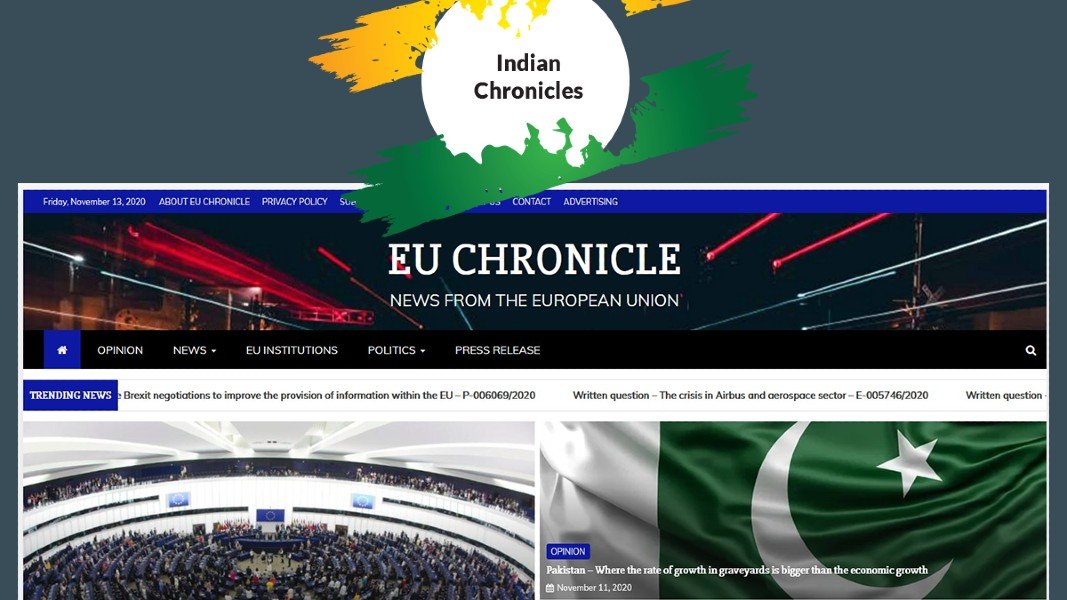
    The EU DisinfoLab, a Brussels-based NGO that focuses on researching and tackling sophisticated disinformation campaigns targeting the European Union (EU), its member states, core institutions, and core values, has uncovered a 15-year-old operation by India.

    Titled ‘Indian Chronicles: deep dive into a 15-year operation targeting the EU and UN to serve Indian interests’, the DisinfoLab termed this as the “largest network” of disinformation they have exposed so far. According to their research, India used hundreds of fake media outlets and the identity of a dead professor to target Pakistan.

    According to the BBC, the researchers uncovered 265 pro-Indian sites operating across 65 countries and traced them back to a Delhi-based Indian holding company, the Srivastava Group (SG). BBC says that the content produced on fake media outlets is amplified with the help of Asian News International (ANI) – India’s largest wire service and a key focus of the investigation.

    Pakistan’s Foreign Office on Saturday rejected the Indian Ministry of External Affairs’ “attempt to deny responsibility for the elaborate and reprehensible” disinformation campaign against Pakistan. Indian MEA had earlier said that “India does not practice disinformation campaigns”, a denial that falls flat on its face when you go through the DisinfoLab’s in-depth research.

    It was no secret that India was involved in such disinformation operations globally to discredit Pakistan but the extent of the way these networks has been used is quite eye-opening. In 2017, Geo News reported that “the Indian mission in Geneva is controlling anti-Pakistan activities and the local Swiss administration has been paid heavy amounts in commercial deals for these campaigns across its public transport, road networks, and private business venues” after an expensive multi-faceted campaign in Geneva targeting Pakistan was highlighted when the 36th session of the UNHRC was underway.

    India thinks of itself as a regional superpower in South Asia and leaves no stone unturned to malign Pakistan and has used extensive paid propaganda campaign to achieve its nefarious designs. Last month, Pakistan handed over a dossier on India’s terror campaign to UN Secretary-General Antonio Guterres, urging him to prevail on New Delhi to desist from its illegal and aggressive activities. In light of the new report by EU DisinfoLab, the international community must investigate how the EU and UN were duped by India’s disinformation campaign, including a controversial visit of European parliamentarians (MEPs) to Indian-Occupied Kashmir last year.

    It is pertinent to note that the world continues to ignore the atrocities being committed in Occupied Kashmir by the Indian forces. Global human rights organisations and the international media highlighted Indian atrocities but the international community has largely turned a blind eye to grave human rights violations because of the Indian economic market. It is unfortunate that the world community, due to vested interests tied to the Indian market, has taken no action against India.

    Pakistan must keep highlighting this new report, which was unearthed by a neutral NGO that has nothing to do with Pakistan. The world must wake up to India’s disinformation campaign.
  • Dowry culture

    According to a recent survey conducted by Pulse Consultants, more than 50 per cent Pakistanis believe that a girl’s family should give dowry when she is getting married. Around 61 per cent respondents were of the view that dowry should be allowed in the Pakistani system while 36 per cent were against it. Almost 73 per cent women believed that dowry should be allowed whereas 24 per cent were against it.

    This survey’s results should not be surprising given that dowry has become an unfortunate reality in our region.

    Dowry is used as a measure of worth for the bride; it is used as a bargaining tool or as a price tag when marrying off girls. This is rooted in the patriarchal and misogynist belief that daughters are a burden when they are born and so to marry them off, a price must be attached to them to ‘lure’ a groom. Despite laws against dowry in the country, this ‘tradition’ continues. Underage girls are often married so that the family gives less dowry in comparison to an adult bride. Many women are left unmarried because their families cannot afford to give a sizeable dowry. This tradition is one that perpetuates violence against women. Pakistan has a high rate of dowry-related deaths. Many women are tortured and even killed for not meeting the dowry requirements of their in-laws. Laws can only do so much. Not many people would report that the other party is demanding dowry for their daughter’s hand in marriage. Dowry transcends all classes. A lot of people would say what they are giving to their daughter is a ‘gift’ when actually it is more like ‘ransom’. Sometimes it is also used to deny a woman her inheritance rights – once dowry is given, the family says they have no rights in their inheritance any more. In a patriarchal society, women are treated like a property or objects instead of human beings with any rights. Dowry is a custom that encourages such thinking.

    The need of the hour is a public awareness campaign against dowry and why this cultural tradition must end. Both the government and the media need to do their part to educate the masses that there are laws against dowry in the country and also why this custom is a social evil. The acceptability of dowry will not end overnight. It will take years of education and awareness for the masses to eradicate this menace.

  • Politics in the time of corona

    Politics in the time of corona

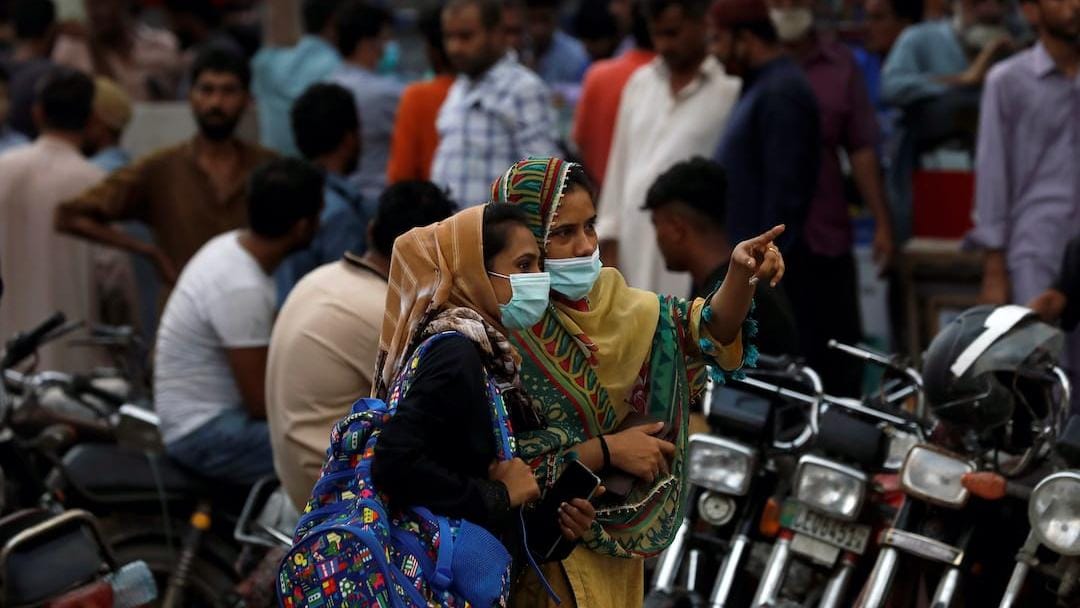
    The second wave of COVID-19 is here in Pakistan. The number of new coronavirus cases in the last few weeks has been gradually increasing. Reports indicate that hospital beds for corona-positive patients in several cities have reached maximum capacity.

    Pakistan had quite successfully controlled the coronavirus after its first wave. By August, the number of cases had gone down considerably. However, the success was short-lived. Come winter, the second wave was sudden but it spread quite rapidly. The positivity rate has now reached 7 percent in a matter of weeks. It is important that people follow SOPs like wearing a mask, sanitising their hands frequently, and maintaining social distance. Unfortunately, most of us have become careless.

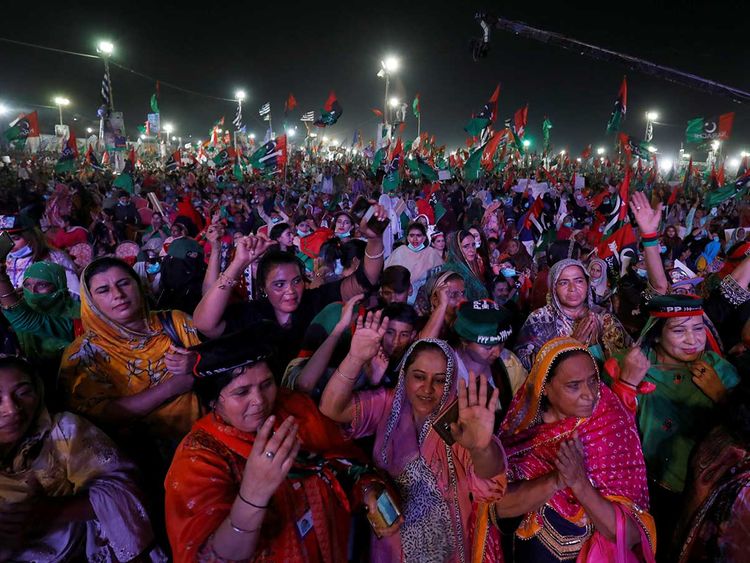
    On top of that, both the Opposition and the government are also being irresponsible. Leaders lead by examples but our leadership wants to spend more time in political point-scoring and blame-game than doing something for the people. The Pakistan Democratic Movement (PDM) has refused to postpone their rallies despite the fact that it can risk the lives of thousands of people who will be attending those jalsas.

    As if the PDM jalsas are not enough of super-spreader events, government officials don’t want to be left behind. Federal Minister Asad Umar, who also chairs the National Command and Operations Centre (NCOC), addressed a workers’ convention titled ‘Youth of Sukkur’ just yesterday.

    Tomorrow, the PDM is holding a rally in Multan. Chairman PPP Bilawal Bhutto-Zardari will be addressing the rally via video link because he contracted COVID-19 after the Peshawar jalsa. Both the Opposition and the government need to stop all public gatherings.

    Opposition leaders who are making light of the global pandemic by saying that the government is more dangerous than COVID-19 should really stop. They not just sound absurd but making light of a virus that can be deadly is highly irresponsible. The government, instead of threatening the Opposition and arresting their workers and leadership, should talk to the PDM leadership and talk them out of holding rallies. Such political rallies can hardly be stopped through sheer force. The Opposition really needs to put aside their egos and postpone their rallies for the larger good of the public. If our leadership will not set an example by acting responsibly, the public will not either.

    Educational institutions have now been closed. If people are not careful, soon the government may have to close down public places like parks, restaurants, gyms, malls, etc. We cannot take this new wave lightly. People are losing their lives across the world. We must stay vigilant.

  • Pakistan’s new social media rules

    Pakistan’s new social media rules

    Pakistan’s new social media rules have ‘alarmed’ the Asia Internet Coalition (AIC), an industry association that promotes the understanding and resolution of Internet policy issues in the Asia Pacific region. It comprises leading internet and technology companies such as Amazon, Airbnb, Apple, Facebook, Google, LinkedIn, Twitter, and Yahoo, among others.

    AIC issued a statement on Thursday about the Removal and Blocking of Unlawful Online Content (Procedure, Oversight and Safeguards) Rules 2020. As per the AIC statement, “The Rules would make it extremely difficult for AIC Members to make their services available to Pakistani users and businesses. If Pakistan wants to be an attractive destination for technology investment and realise its goal of digital transformation, we urge the Government to work with industry on practical, clear rules that protect the benefits of the internet and keep people safe from harm.”

    Digital rights activists in Pakistan have also condemned the move.

    In a world that is now all about technology, Pakistan should be embracing the digital spaces instead of alienating tech giants. Not only will it be a huge blow to everyone in Pakistan who uses the internet but it also means that leading tech companies will not consider investing in Pakistan.

    During the corona pandemic, we saw how tech companies were successful and also made life easier for people during lockdown. It is thus baffling to see a government that always talks about Digital Pakistan and has actually used social media and digital media to its advantage now come up with rules that are draconian and not practical.

    Such shortsighted moves could lead to consequences that we can ill afford. With a struggling economy, we should ideally be more open and welcoming to tech companies. Instead, these companies are now expressing alarm at the new rules.

    If we just look at countries around us, including China and India, they have taken full advantage of the digital world. The US economy is helped immensely by technology companies. Pakistan’s new rules make it almost impossible for international tech companies to even consider opening their offices in the country.

    In the past, the ban on Facebook and YouTube pushed Pakistan back digitally by several years according to digital rights experts. The new rules, if not improved, could have far-reaching consequences. While these companies have not given an inkling of their next move, what if they stop providing these services in Pakistan? We need to factor in that there can be such a possibility and how it will affect hundreds of thousands of users.

    Why is it that we want to ban games or apps or even bring in new rules that take away fundamental freedoms when we are a democratic country and not an autocratic state. It is hoped that the government would rethink this strategy and make Pakistan a more open and tech-savvy country that is on par with the digital world.

  • New wave of COVID-19 in Pakistan

    New wave of COVID-19 in Pakistan

    Pakistan is seeing another wave of COVID-19 in the country. On Saturday, the country saw over 2,000 cases reported for the second consecutive day, which means more than a 20 per cent increase in cases. These numbers are the highest since July. Seventeen people lost their lives to the coronavirus on Saturday as per the data from the National Command and Operation Centre (NCOC). Geo’s Arshad Waheed Chaudhry also lost his battle against COVID-19 on Saturday.

    After successfully controlling the pandemic, Pakistan’s new cases also point to the fact that people have become complacent in following the SOPs necessary till a vaccine comes out and is readily available across the country. From less than 6,000 active cases in September, we now have 24,938 active cases. While the NCOC has imposed a ban on indoor weddings in major cities with “high positivity and higher disease spread potential”, marriage hall owners are refusing to follow the government’s guidelines. They say that the new SOPs would not just lead to financial problems for the marriage hall owners but thousands of employees and businesses associated with the wedding industry would also suffer economic marginalisation.

    Federal Education Minister Shafqat Mahmood tweeted yesterday: “We have convened an important meeting of provincial education ministers on Monday at 11 am to discuss the latest coronavirus situation in the country. As stated before health of students is our no one priority.” Most schools across the country have reopened. Punjab’s Education Minister Dr Murad Raas also tweeted that there is a meeting of all provincial education ministers tomorrow to discuss the prevailing condition of COVID-19. “In my opinion, we should focus on a Smart Lockdown rather than an across the board shutdown of Schools,” tweeted Raas. NCOC has decided to close cinemas, theatres and shrines.

    The government will now have to decide what measures to take next. The new wave is turning out to be quite dangerous. The opposition parties are taking out rallies across the country while the government, too, has held some jalsas recently. Not many were seen following the SOPs, i.e. wearing masks, maintaining social distancing, etc.

    Such large gatherings apart from social gatherings will lead to more increase in the number of corona cases. It is time that all political parties as well as the people of Pakistan show responsibility before this new wave turns into a nightmare. Some organisations in the country have started implementing work from home again. Others may have to follow in case there is an increase in cases.

    There have also been some instances of faulty test results in recent months. Some people who have tested positive have had their tests done the next day from a different laboratory only to find out they were negative. The government also needs to increase testing across the country. We hope that this time around, the people will follow proper SOPs so that the new wave can be curtailed as soon as possible.

  • Biden is in the house

    Democratic challenger Joe Biden has won an extremely close US election battle against outgoing president Donald Trump. The election results were finally called on Saturday. Biden will become the 46th US president and leaders around the world have started sending congratulatory messages to the president-elect. Kamala Harris, the vice president-elect, has made history. She will be the first woman, the first black person and the first person of South Asian descent to become VP. Yesterday, she said, “While I may be the first woman in this office, I will not be the last, because every little girl watching tonight sees that this is a country of possibilities.”

    This US election was different in many ways. From an election held during a pandemic to one of the most polarised election in recent history, it was indeed a nail-biter. The two rivals were neck and neck in a few key battleground states before the final results were announced. According to NBC News, at least 159.8 million Americans voted. The number of votes has been the highest in US presidential election in history while the voter turnout has been the highest in over a century.

    Trump’s term has made politics extremely divisive in the US where racism is on the rise. Due to Trump’s policy on climate change, the US became the first nation in the world to formally withdraw from the Paris climate agreement. Trump also gravely mishandled the COVID-19 situation in the US. More than 200,000 people died due to coronavirus before the presidential election.

    On the day of the election when millions of ballots were left to count, Trump decided to claim victory. In the same breath, he suggested “major fraud on the nation” without offering any evidence and said he would take the election results to the US Supreme Court. Trump has been crying rigging, an all too familiar word in our part of the world, even before the election. Trump’s campaign filed lawsuits in some states as Trump has also been crying foul on Twitter, where most of his tweets are being flagged by the social network. Biden, on the other hand, was conciliatory in a speech after the election where he called for healing and unity in the wake of the brutal election. “We are not enemies… to make progress, we have to stop treating our opponents as enemies… we are campaigning as Democrats, but I will govern as an American president.”

    We hope that with the end of the four tumultuous years of Trump’s presidency, while the Democrats heal their own country, they do not end up hurting the rest of the world. For all his faults, Trump was not seen as a war-president. We hope that the US will not restart its interventionist policies under Biden.

  • Forced conversions

    Forced conversions

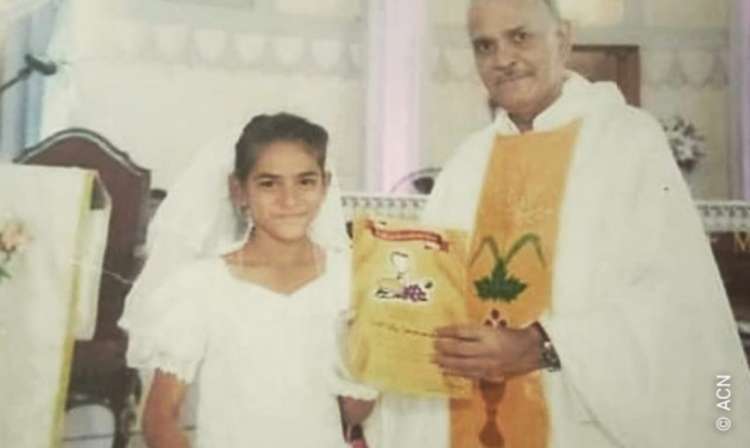
    According to her parents, a 13-year old Christian girl Arzoo Raja was abducted by a man in his 40s, forcefully converted to Islam and then married to him. Then a local court dismissed the plea moved by her family to send her to a shelter home so that she was released from the custody of her older Muslim spouse. The court said that Arzoo Raja accepted Islam willingly and she told them that she was not abducted and was not forced to marry the 44-year-old.

    Even if the girl says she was not forced to convert to Islam and did it wilfully, how is child marriage being allowed? The husband says she is 18 and so does she in an affidavit but NADRA records show she was born in 2007. Her marriage certificate does not mention her age or details of her CNIC. A medical certificate needed to prove a person is 18 was not provided either. Legal experts say that child marriage is a very integral part of forced conversions. They say that the law against child marriage is inadequate. Some believe that all child marriages should be prohibited and declared invalid but legal age of girls is something that many religious leaders do not agree with.

    The National Commission for Minorities has finalised a draft law to curb forced conversions but the law will be finalised only after consultations with the provinces and the leaders of all schools of thought. Senate Committee on Minorities’ Rights led by Senator Anwarul Haq Kakar is also working on the issue of forced conversions by getting all stakeholders, from minorities to religious leaders, on board.

    Forced conversion of Hindu girls in Sindh is an issue that has been highlighted a lot. Minorities’ representatives say that why is it that only their girls are converted and not men. But in some cases, the conversions are not forced. They are be due to economic reasons or to get away from families but the tool to justify these conversions is consent. “Why is it that mainstream religious parties are never involved in conversion of girls from minority communities and only fringe groups like Mian Mithu’s, etc?” a parliamentarian questioned while speaking to The Current. They said that administrative laxity, if turned to agility, can decrease the cases of forced conversions.

    Despite laws, their implementation is more important. We hope the courts will not give a stamp of approval to child marriages and forced conversions. Minorities are as much citizens of Pakistan as the Muslims.

  • Of freedoms and censorship

    Of freedoms and censorship

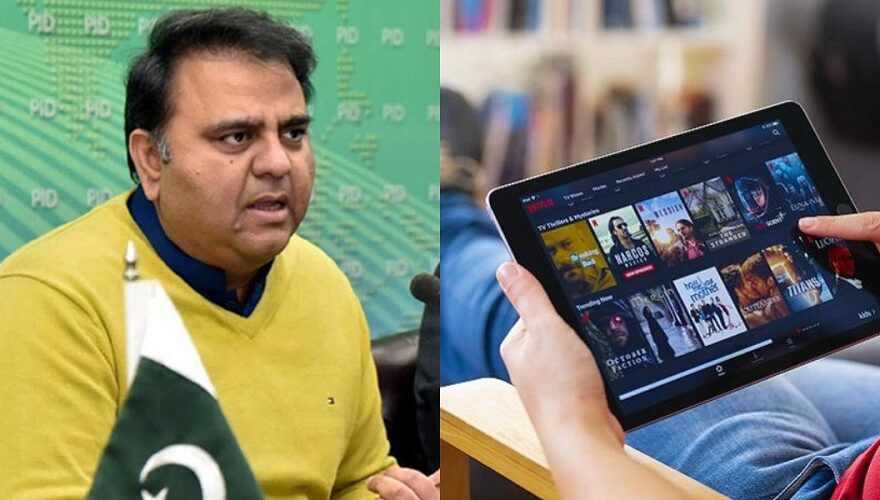
    Pakistan is all set to launch its own version of Netflix. It was announced by Federal Minister for Science and Technology Fawad Chaudhry that his ministry is all set to launch Pakistan’s first OTT (over-the-top) platform like Netflix.

    Chaudhry says that the aim is to put Pakistani content on the map and PEMRA has been asked to prepare guidelines keeping in mind the international market. He maintained that with internet freedom, censorship is unlikely. But in a country where PEMRA has started giving guidelines to products on how to make their television advertisements, where dramas are banned due to ‘indecency’, where video-sharing platforms are banned for spreading immortality, it would be interesting to see if international standards will be maintained without any trouble.

    Pakistan cannot get ahead in technology unless and until we get on with the times and stop censoring content.

    On the one hand, we are fighting censorship in the entertainment side and on the other, our mainstream news media is also facing a tough time. Geo News’ reporter Ali Imran Syed went missing for 22 hours on Friday. Mr Imran Syed was the one who had reported on the arrest of PML-N leader Captain (retd) Safdar from a Karachi hotel and whose CCTV footage was broadcast by Geo.

    Thankfully, the missing reporter returned safely the next day. Information Minister Shibli Faraz prayed for his safe return. According to journalist Mubashir Zaidi’s tweet, Ali Imran “was picked up by mistake regarding investigations of the murder of Maulana Adil. He was picked up for being a lookalike of one of the assassins. What’s surprising is that it took 22 hours to realize that he wasn’t the person they’re looking for.”

    Journalists going missing is not something unheard of in Pakistan. One considers it a miracle when missing journalists come back safely. In any civilised country, a journalist cannot be picked up like this. In Pakistan, we breathe a sigh of relief when journalists return alive. Media freedom is guaranteed under our Constitution but it is something that still alludes us.

    Censorship, be it in the media, entertainment industry, or any other sector, is detrimental to a nation’s growth. We hope that when the Pakistani version of Netflix is launched, the content that we see online will be creative and thought-provoking.

  • Dishonouring our heroes

    A few days ago, a group of youngsters smeared a portrait of the first Nobel laureate from Pakistan, Dr Abdus Salam. The video was widely circulated on the internet that showed the group, consisting of State Youth Parliament Pakistan members, painting Dr Salam’s portrait black while raising slogans against the minority Ahmadiyya community, of which Dr Salam was a member, outside Gujranwala’s National Science College.

    It was tragic to see that science students, rather than honouring Dr Salam, a world renowned physicist from Pakistan and champion of science in the developing world, would take pride in vandalising his portrait due to bigotry. Dr Salam’s contributions to science are undeniable and they have been recognised and hailed by the state of Pakistan as well. Thus it is unfortunate to see that our society is still reluctant to acknowledge him as a hero because he belonged to a religious minority. The white part in the Pakistani flag represents our minorities but if we can continue to persecute them, then we are in fact dishonouring our flag, our founding father’s vision for Pakistan and our Constitution that guarantees that all citizens are to be treated equally regardless of their faith, caste and creed.

    Why do we treat our heroes so badly? Pakistan’s second Nobel laureate and the youngest laureate Malala Yousafzai has also faced a barrage of criticism from Pakistani society. Many a conspiracy theory is associated with the assassination attempt on her life despite the fact that she barely survived the attack. Thankfully, the state of Pakistan has been consistently supportive of Malala and Dr Salam. This gives us hope that one day our society, too, will learn to honour those who have made Pakistan proud in the international arena. We always complain how Pakistan’s image is portrayed negatively in the international press but people like Dr Salam and Malala and many others continue to make us proud due to their contributions in areas like science, education, arts, among others. Asma Jahangir’s work for human rights and women’s rights was hailed around the world but she was not recognised by several segments of society because of her bold views on fundamental freedoms. It is high time that we put an end to such thinking and be more tolerant and appreciative of the work that our countrymen and country-women continue to do for the betterment of Pakistan.

    In an environment where we see rising political polarisation, religious intolerance, the state needs to continue to promote tolerance and honouring those who have made a mark. Dr Salam does not need validation from those who smeared his portrait; his work speaks for itself but at the same time, it is a tragedy that he does not have the same acceptance from fellow Pakistanis that the international community has given him. Let’s hope that one day, those who smeared his portrait too would feel ashamed of doing what they did.

  • Banning culture

    Banning culture

    Earlier this week, the Pakistan Telecommunication Authority (PTA) said in a statement that due to a number of complaints from “different segments of society against immoral/indecent content on the video sharing application TikTok”, it has issued instructions to block the popular video-sharing app.

    This comes after a final warning to TikTok was issued in July over explicit content posted on the platform. PTA says TikTok was given “considerable time to respond and comply with” instructions for development of an effective mechanism for proactive moderation of “unlawful online content” but TikTok “failed to fully comply” with the regulator’s instructions.

    Special Assistant to Prime Minister of Pakistan on Political Communication Dr Shahbaz Gill tweeted that several parents complained against the app on the Prime Minister Portal and said that their young children are being misled by the app’s content, which is against our religion and culture. One is bewildered why these parents felt the need to complain to the state regarding an app being used by their children instead of stopping them from using this app and limiting and monitoring their technology usage.

    It is the duty of parents to keep an eye on their children’s activities. We have seen that most parents give tablets or cell phones to children at a very young age and do not control what they see or do. Instead of encouraging their children to read books or play outdoor games or indulge in other healthy activities, a lot of parents worldwide give their children access to the internet and gadgets when even tech giants like Bill Gates and Mark Zuckerberg have a very strict policy for their children when it comes to technology. According to Business Insider, Gates, the former CEO of Microsoft, implemented a cap on screen time in 2007 when his daughter started developing an unhealthy attachment to a video game. He also did not let his children get cell phones until they turned 14. Zuckerberg wants his daughters August and Maxima to spend time reading books of all kinds instead of getting lost in technology at a young age.

    This is what these parents should have also done instead of asking the state to ban an app that is not just popular but has made money for many of its users. TikTok is an app that is used a lot by lower middle class or poorer sections of our society. A lot of Pakistani TikTok stars have now made it big due to their huge following on this platform. They are earning their livelihoods due to their popularity on TikTok. It is a platform where they display their talent. It is unfortunate that we have now banned an app that is being used for earning livelihoods in a country plagued by unemployment.

    Moral policing is something we should all be way off. Who would have thought that a biscuit advertisement with a few dance sequences would cause such controversy that the regulatory authority would issue an advisory to advertisers on how to make ads for their products? On October 5, the Pakistan Electronic Media Regulatory Authority (Pemra) issued an advisory for broadcasters and advertisers, which says: “It has been observed with concerns that themes of advertisements of ordinary consumer products like biscuits, surf, etc. being aired on satellite TV channels are not corresponding with the disposition of these products.” This led to some channels pulling the add off air.

    It is time that we stop regulating people’s lives, what they see, and their creativity. People need to express themselves in different ways and they should be allowed to do so as long as they are not breaking any rules or endangering someone’s life, including their own. Regulations lead to more censorship. We certainly do not need more of it.