Category: Editorial

  • PSL ka groove

    PSL ka groove

    Pakistan Super League (PSL) is back with its sixth season, which promises to be another exciting one. From February 20 to March 22, Karachi and Lahore will be hosting the latest edition of PSL 2021. Due to the covid-19 pandemic, the National Command and Operation Centre (NCOC) has allowed 20 per cent audience to attend the PSL matches. The opening ceremony of PSL was a star-studded event, which was reportedly recorded in Turkey. Naseebo Lal and Atif Aslam performed along with rapper Imran Khan and Humaima Malik as well as Aima Baig and Young Stunners.

    Yesterday’s match at the Karachi’s National Stadium between Quetta Gladiators and Karachi Kings was quite one-sided given Gladiator’s performance. Karachi Kings’ bowling restricted them to just 121 runs and the Kings had an easy win.

    Lahore Qalandars have defeated Peshawar Zalmi with four wickets in hand. Two-time champions Islamabad United will play Multan Sultans later this evening. The viewership last year was around 120 million worldwide. This is no small feat given how big and established other cricketing leagues are, like the Indian Premier League (IPL), Big Bash, CPL, etc. The first four seasons of PSL took place mostly in the UAE given the security situation at home and the reluctance of foreign players to play in Pakistan. It is good to see that given the security arrangements made in the last few years, foreign players’ confidence has been restored.

    Credit must be given to former PCB Chairman Najam Sethi for making PSL materialise in the first place. Sethi’s efforts led to the league taking off in such a big way. The new management has done well to continue the tradition with zeal. All the teams look super fine on paper and we will surely get to see some remarkable performances in the 34-match extravaganza. Some amazing talent has come out and also been groomed due to playing in the PSL. May the best team clinch the cup!

  • Ali Sadpara, an unsung hero

    On February 5, Mohammad Ali Sadpara from Pakistan, John Snorri from Iceland and Juan Pablo Mohr from Chile went missing while climbing K2, which is said to be the deadliest mountain. Despite special rescue and search efforts, they have not been found yet and are presumed to be dead. It is a huge loss for Pakistan as we have lost our unsung hero, Ali Sadpara. He was a man who was known to be a versatile climber and mountaineer.

    All national and international media outlets that have profiled him have been nothing but full of praise for Sadpara. Anyone who had ever met him speaks highly of him. A man with not enough resources but with a lot of talent, hard work and an adventurous streak, Sadpara went on to become one of Pakistan’s greatest mountaineers. What others say about Ali Sadpara also shows that the man was genuinely a lovely and humble human being.

    Sadpara hailed from Gilgit-Baltistan. Born to a poor family in 1976, he started climbing in 2003 or 2004. He is the only Pakistani mountaineer to have climbed eight of the 14 highest mountains in the world. Sadpara also successfully made the winter summit of Nanga Parbat, which is known as a killer mountain, back in 2016.

    Sadpara’s son Sajid says his father was like a snow leopard, who moved extremely fast in the mountains. K2 winter summit was his dream, which took his life. Sajid says that he did see the three men climb over the bottleneck at the top, so they probably did make the summit but met an accident during the descent. The entire country was praying for Sadpara’s success when he had started K2 winter summit.

    When the news came that he may have succeeded, everyone was overjoyed. When he went missing, the entire country was shocked but we were all waiting for a miracle. That he has not been found for almost 10 days now means he may not have survived, a heartbreaking truth. Sadpara will be remembered for his songs and dances on the mountains, his willpower, his humbleness and his heroic nature — a man who wanted to do so much for Pakistan even though we did not give him the recognition that he deserved.

  • Indian farmers’ protest

    Indian farmers’ protest

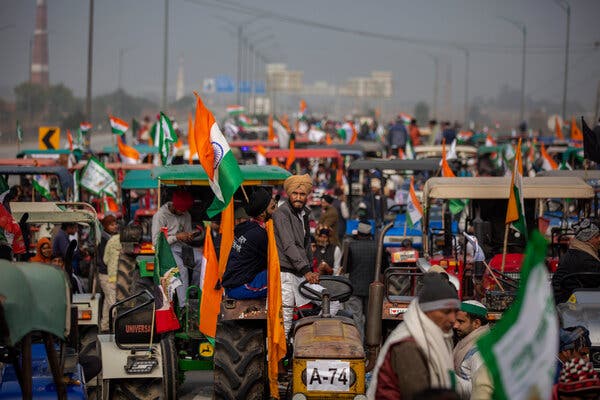
    Farmers across India are protesting against the new agricultural laws. Three laws pertaining to agriculture and farming have been passed in India, which the farmers say will affect their livelihood. It has been around 10 weeks since the farmers have been protesting. On India’s Republic Day, farmers marched on the Indian capital, New Delhi, in tractors and on foot. They stormed the Red Fort and also clashed with the police.

    These protests have evoked a strong reaction from across the world, which has kept the Indian Ministry of External Affairs (MEA) quite busy. From responding to Canadian Prime Minister Justin Trudeau’s supporting remarks for the farmers to even responding to pop star Rihanna’s tweet, the MEA statements have exposed India’s insecurities.

    A country that is very conscious of its international image and that takes pains to glamourise its culture and heritage across the globe, the Indian MEA referred to Trudeau by criticising “some ill-informed comments by Canadian leaders relating to farmers in India”. As if that was not enough of a diplomatic faux pas, Rihanna’s tweet led to a meltdown across India. Modi bhakts even lauded Rihanna’s ex for assaulting her.

    Kangana Ranaut called her a “porn singer”. Teen climate activist Greta Thunberg and Meena Harris, an American lawyer and the niece of US vice president Kamala Harris, also faced the brunt of Indian Twitterati as well as the Indian public. Their posters were set on fire and the Delhi Police registered sedition and conspiracy FIR on Thunberg’s Protest ”Toolkit” that she shared and tweeted in support of the farmers.

    What was even more disappointing but not surprising was how Indian celebrities and sports star like Sachin Tendulkar reacted to these tweets. It was an organised ”damage control” campaign launched at the behest of the Modi government but it backfired. Meena Harris and Greta have said that they will not be intimidated.

    Indians also accused them of taking money to push farmers’ demands. If it wasn’t so toxic, it would have been hilarious. Indian trolls and pro-Modi media (also called Godi media) have relentlessly tried to delegitimise the genuine grievances and demands of the farmers.

    In a capitalist world, farmers across the world are facing a lot of problems. The Indian Farm Laws will leave the farmers at the mercy of corporates. The farmers want them repealed. The Modi government is unmoved, which is expected of a fascist ruler who only believes in the mantra of profit and pushing the greater Hindutva agenda.

    The farmers are giving Modi a hard time that not even the opposition parties have been able to do in India. We hope that the farmers’ demands are eventually met. It will be a victory for labour rights and the marginalised. We stand in solidarity with the farmers.

  • Daniel Pearl case

    The Daniel Pearl verdict comes at a time when the new US administration has just come to power. The Supreme Court (SC) on Thursday ordered the release of four men accused of the murder of US journalist Daniel Pearl in 2002, including Ahmed Omar Saeed Sheikh, the principal accused in the kidnapping and beheading of Pearl.

    Daniel Pearl was Wall Street Journal’s South Asia Bureau Chief. He was working on a story about links between religious extremists in Karachi and ‘shoe-bomber’ Richard Reid. He went missing in January 2002 from Karachi and a month later, a video of Pearl’s beheading was delivered to the US Consulate in Karachi.

    The White House did not take the SC order lying down and expressed outrage right after. White House spokeswoman Jen Psaki called the decision “an affront to terror victims everywhere” and said Washington is “committed to securing justice for Daniel Pearl’s family”. Foreign Minister Shah Mahmood Qureshi US Secretary of State Antony J Blinken on Friday and discussed the Daniel Pearl murder case, among other issues.

    Blinken tweeted: “Spoke with @SMQureshiPTI on ensuring accountability for convicted terrorist Ahmed Omar Saeed Sheikh and others responsible for Daniel Pearl’s murder. The Foreign Minister and I underscored the importance of continued US-Pakistan cooperation in supporting regional stability.”

    The Sindh government filed a review petition on Friday, asking the SC to revisit its decision. As per news reports, the federal government will also join the review proceedings. While it may not lead to any different outcomes, lawyers believe that it could give the Sindh government a chance to keep Sheikh in jail.

    Ahmed Omar Sheikh is quite notorious. According to an explainer by AP, “Sheikh was arrested by India after the 1994 kidnappings but was among terror suspects freed by India on December 31, 1999, in exchange for the hostages on an Indian Airlines aircraft that was hijacked and taken from Nepal to the then Taliban-controlled Afghan city of Kandahar.” He is also said to have been a part of the conspiracy to assassinate General Musharraf and was said to be the person who called Asif Zardari, impersonating the Indian external affairs minister from inside his prison cell, as per Dawn.

    Last year in April Sheikh was found guilty of a lesser charge of kidnapping and sentenced to seven years in prison and a fine of Rs 2 million to be paid to Pearl’s widow and his orphaned son who was born after the murder. The other three accused — Fahad Nasim Ahmed, Sheikh Muhammad Adil, and Syed Salman Saqib — were also cleared of all charges. They were earlier given life sentence, which was overturned. The SC order also shows how the case was mishandled by the prosecution from the start.

    The case was treated on the basis of a conspiracy and never went into the details of the murder. There was no weapon recovery, which is important in a murder case. That such a sensitive and a high profile case was mishandled by our prosecution speaks volumes about our weak judicial system. It is important that we improve our judicial system as well as forensic investigation. Pakistan cannot take this lightly as the new US administration and Pakistan’s relations cannot start on a wrong footing.

  • Class and privilege

    Class and privilege

    A video of two women, who are the owners of Cannoli by Café Soul in Islamabad, mocking the café’s manager for not being fluent in English went viral on the internet this week.

    #BoycottCannoli trended online and even Prime Minister Imran Khan weighed in on the issue when he said on Thursday that he doesn’t use English phrases in public because it would be disrespectful to the majority of Pakistani citizens who don’t speak or understand the language.

    The elitist and classist owners were criticised on social media as well as mainstream media, but it seems that they remain unfazed by all the backlash. An ‘apology’ was posted by them on the café’s social media pages but it was anything but an apology. It said that this was just a banter with a team member.

    “We are not required to prove or defend ourselves as kind employers. Our team has been with us for a decade, that should speak for itself,” it said further. This non-apology led to more outrage and rightly so. There was no remorse in the apology, no acknowledgment that they did anything wrong, no sincerity. The thing that the owners need to realise is that not just their video but their so-called apology reeks of elitism, classism and workplace harassment.

    Unfortunately, these two women are not the only ones who are elitist but that as a class-based society, which is very conscious of status, many of us are very much part of the problem. We forget that we have no control over where we are born and being born in a privileged family is just an accident of birth.

    We have complexes about speaking in English, how being fluent in the English language opens up a lot of doors for us in the job market as well as society, how a certain accent would show that we come from a privileged background because we went to the ‘right’ schools and colleges.

    We all make fun of Meera jee’s English, we criticise our cricketers for not speaking proper English (remember Inzi’s ‘boys did well’?), we don’t treat the English language as just a medium of communication but as a status symbol.

    We hope that all of us have learned something from this unfortunate incident, which is to treat our employees with kindness and compassion and also not insult someone for not knowing the English language. Our society needs to break the barriers of class and be more tolerant and less judgmental.

  • Vaccine procurement woes

    Vaccine procurement woes

    We thought the year 2021 will be a year of hope after last year’s pandemic outbreak. This year will indeed be a year when a vaccine is rolled out around the world but there is a catch. According to the People’s Vaccine Alliance – a coalition including Oxfam, Amnesty International and Global Justice Now – just one in 10 people in dozens of poor countries will be able to get vaccinated against the coronavirus because wealthy countries have hoarded more doses than they need.

    The Alliance said that the rich nations have bought more than 50 per cent of the total stock of the world’s most promising vaccines, despite being home to just 14 per cent of the global population. According to the Duke Global Health Innovation Centre, the current models predict that there will not be enough vaccines to cover the world’s population until 2023 or 2024. This is quite worrying. Pakistan, too, has yet to procure the vaccines.

    Special Assistant to the Prime Minister on Health Dr Faisal Sultan told Dawn that Pakistan’s target is to procure the vaccine in the first quarter of the current year, and “we are confident of doing so. But it is quite difficult to say on which date we will acquire the vaccine”. Reports indicate that apart from Chinese vaccines and the Oxford vaccine, Pakistan will also be relying on the World Health Organization’s (WHO) COVAX initiative, which insures “rapid and equitable access to COVID-19 vaccines for all countries, regardless of income level”. Some government officials say that Pakistan did not have enough resources to place orders initially for vaccines. It is understandable given that Pakistan’s economy is already struggling.

    The lesson to learn from this pandemic is that countries like Pakistan must invest in science, technology and medical/health research. If we do this, we would be able to work on our own vaccines and manufacture them in the future. Healthcare is one of the top priorities of the current government. The government must step up and invest in research related to healthcare so that it helps Pakistan in the future. Coronavirus may have been a once-in-a-century pandemic but there will be new health emergencies that we could face in the future. Thus, it is important to invest heavily in research because the future is all about scientific research and development.

  • Hazaras face yet another tragedy

    Hazaras face yet another tragedy

    Imagine the pain of those families who not just lost their loved ones to a gruesome terrorist attack but also kept waiting for the state to show empathy towards them.

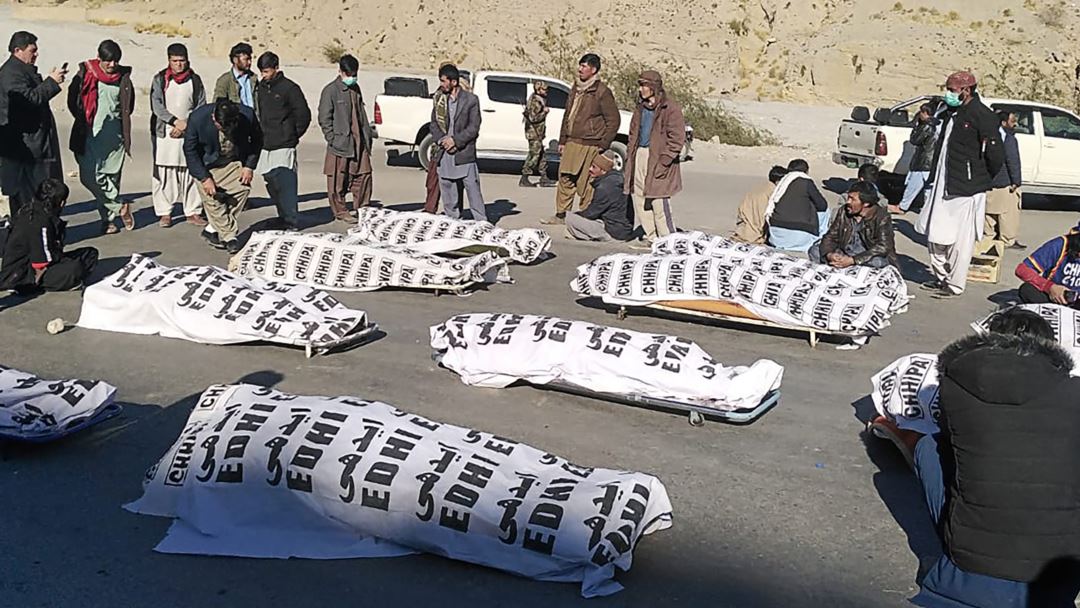
    11 Hazara coal miners were target killed in Balochistan last week. Their families staged a protest in the freezing cold of Quetta for a week and said they would not bury their dead till they meet Prime Minister Imran Khan. But the PM asked them to bury their dead first. He said he wouldn’t be ‘blackmailed’.

    At last, the Hazara mourners had to bury their dead and only then did PM Imran visit Quetta to meet them. No words can make us imagine the pain of the mourners. And to even think that they could blackmail anyone — those who are a marginalised community, those who have been relegated to a designated area, those who cannot even roam their area freely, those who cannot even get justice for their dead. There are Hazara families that have no male members left as they have all been target-killed.

    In a 2014 report by the Human Rights Watch (HRW), the Hazara Shias were described as ‘The Walking Dead’. They have continued to suffer at the hands of sectarian terrorist outfits committing genocide of the Hazara community. Thus the state should not have shown apathy towards their demand of meeting the PM. A powerful state cannot put conditions on its marginalised and beleaguered people. It is callous. Period.

    It is also important that the state safeguards the lives of all citizens, especially a marginalised community like the Hazaras. Pakistan made a lot of gains in its fights against terrorism in the last few years. The government should have consolidated those gains and made a proper strategy to counter terrorism and extremism.

    It is also important to empower the local police in Balochistan just like it was done in Khyber Pakhtunkhwa. We hope that the Hazaras will get justice as well as protection. They have suffered enough.

  • Police brutality, again

    Pakistan is no stranger to incidents of police brutality but there are events that leave the entire nation shell-shocked.

    Five officials of Islamabad Police’s Counter-Terrorism Department (CTD) were arrested after they gunned down a 21-year-old boy, Usama Satti, in cold blood near Srinagar Highway, G-10 sector in the federal capital.

    This incident has led the nation to question why ours is a trigger-happy police force.

    Earlier today, Senate’s Human Rights Committee Chairperson Senator Mustafa Nawaz Khokhar tweeted, “Heart goes out to the family of young Usama. Can’t imagine what his parents and loved ones must be going through. Although judicial inquiry has been ordered, will take it up in HR committee too. Use of deadly assault weapons should b the last resort. Fatal error of judgement.”

    Social media trends asking for justice for Satti as well as arresting Interior Minister Sheikh Rasheed started trending following the young man’s brutal killing.

    In a report published by Human Rights Watch (HRW) in 2016 on police in Pakistan, the rights group noted that successive Pakistani governments have for decades failed to reform an under-resourced and under-equipped police force or hold abusive police to account. 

    Two years ago in January 2019, police officials killed several members of the same family in Sahiwal town on suspicion of terrorism. At that time, Prime Minister (PM) Imran Khan not just condemned the killings but he also promised police reforms so as to avoid torture and extrajudicial killings.

    An anti-terrorism court acquitted all six personnel of the CTD who were allegedly involved in the Sahiwal incident. The Punjab government did challenge the acquittal but such is the state of justice in this country that an encounter in broad daylight in front of young children could not garner any justice for the victims’ family.

    Two years ago in January 2019, police officials killed several members of the same family in Sahiwal town on suspicion of terrorism. At that time, Prime Minister Imran Khan not just condemned the killings but he also promised police reforms so as to avoid torture and extrajudicial killings. An anti-terrorism court acquitted all six personnel of the CTD police who were allegedly involved in the Sahiwal incident. The Punjab government did challenge the acquittal but such is the state of justice in this country that an encounter in broad daylight in front of young children could not garner any justice for the victims’ family.

    Police reforms were one of the key promises made by PM Imran and his party, the ruling Pakistan Tehreek-e-Insaf (PTI), when they came to power in 2018. Unfortunately, we have not seen any substantive move towards the same. It is important now more than ever that the government starts walking the talk because such incidents occur due to lack of accountability. We cannot continue to live in fear of a trigger-happy police force that can kill at will without any consequences.

    After police reforms in Khyber Pakhtunkhwa (KP) by the PTI government during its last tenure, we had high hopes that the PTI’s federal government would emulate the KP Police Act, 2017 in other provinces where it is in power, especially Punjab. We hope that the government would now do so at an urgent basis. 

  • Goodbye, 2020…

    The coming week will usher us to a new year and the entire world is hoping that it would be better than 2020. This year was certainly one that we will remember for a long, long time.

    Concepts like social distancing, wearing face masks and sanitising your hands regularly, ‘work from home’ and lockdowns have become a norm. Many regular travellers have not travelled in almost a year. A lot of people have lost their loved ones due to this novel coronavirus.

    The coronavirus pandemic has changed the world in many ways. From exposing how the healthcare system was unable to deal with a global pandemic in most countries, to an economic crisis that many poor countries would take years to recover from, it affected all and sundry.

    According to a blog published by the World Bank, “the pandemic has harmed the poor and vulnerable the most, and it is threatening to push millions more into poverty. This year, after decades of steady progress in reducing the number of people living on less than $1.90/day, COVID-19 will usher in the first reversal in the fight against extreme poverty in a generation.”

    COVID-19 should also make the world think of how much damage we have done to our globe and environment. Climate change is a harsh reality that one can only ignore at their own peril. When lockdowns around the world started and travel restrictions were imposed, the level of air pollution compared to last year went down during that same period.

    People were fascinated by the clear blue skies in their cities. According to researchers at Future Earth’s Global Carbon Project, the global COVID-19 lockdowns caused fossil carbon dioxide emissions to decline by an estimated 2.4 billion tonnes in 2020, which was a record drop. 

    This pandemic was also one of the main reasons why Donald Trump lost the US elections. The way Trump mishandled the pandemic and denied how serious it was, it led to more than 300,000 deaths till date. On the other hand, Pakistan was relatively successful in dealing with the pandemic after the first wave. Now that the second wave is here, we hope that people will take it more seriously and not be careless.

    Hopefully, the next year will bring some semblance of normalcy once the vaccine is administered in all countries. Unfortunately, it seems that poor countries will get the vaccine much later than rich countries. Let’s hope that the world community will help each other in this hour of need.

    Here is wishing everyone a peaceful new year!

  • We are celebrating Christmas

    We are celebrating Christmas

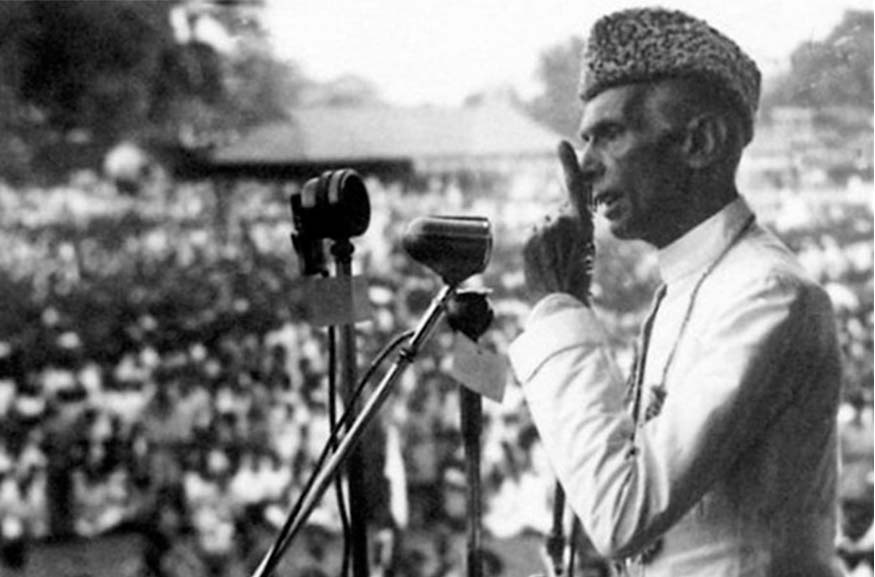
    In his first presidential address to the Constituent Assembly of Pakistan, Quaide Azam Muhammad Ali Jinnah said, “Now if we want to make this great State of Pakistan happy and prosperous, we should wholly and solely concentrate on the well-being of the people, and especially of the masses and the poor […] if you change your past and work together in a spirit that every one of you, no matter to what community he belongs, no matter what relations he had with you in the past, no matter what is his colour, caste or creed, is first, second and last a citizen of this state with equal rights, privileges and obligations, there will be no end to the progress you will make.”

    The Quaid made a case for equality of all citizens of Pakistan regardless of their colour, caste, or creed.

    In the same speech, he said, “I think we should keep that in front of us as our ideal and you will find that in course of time Hindus would cease to be Hindus and Muslims would cease to be Muslims, not in the religious sense, because that is the personal faith of each individual, but in the political sense as citizens of the State.”

    Christmas is just around the corner. We must remember Jinnah’s words. We must keep this in mind if we want Pakistan to progress. Recently we saw the case of a minor Christian girl Arzoo Raja’s forced conversion and underage marriage. Both the Sindh government and the federal government played their part in ensuring that justice was served. Every year, we see hundreds of cases of forced conversions in the country, most of them young Hindu and Christian girls. This is a worrying trend.

    Christians, Hindus and people belonging to other minority faiths have equal rights as citizens of Pakistan according to our Constitution. Unfortunately, we see discrimination against minorities around us all the time. From giving separate utensils to minority workers at our homes, workplaces to using derogatory terms for them, we show our bigotry and racism without even acknowledging it. We casually remark on people’s colour or caste or religion without realising how wrong it is.

    On this Christmas Day, and every other religious celebration of minorities, we should ensure that we don’t discriminate. Due to COVID-19, this year’s celebrations may not be as festive as in the past but through kindness and interfaith harmony, we can spread a message of love and cheer.