Category: Global

  • Muslim advisor resigns from Trump religious panel after anti-Zionist commissioner’s dismissal

    Muslim advisor resigns from Trump religious panel after anti-Zionist commissioner’s dismissal

    Sameerah Munshi, the only Muslim woman serving on the Advisory Board of Lay Leaders for the Religious Liberties Commission, has resigned in protest of the White House’s removal of anti-Zionist Catholic commissioner Carrie Prejean-Boller. Munshi’s resignation letter, obtained by Middle East Eye on Thursday, cited what she described as “hostile” behavior towards Muslims and a lack of respect for religious beliefs.

    Prejean-Boller, who confirmed that she was fired on X on Thursday, said that her removal was due to her opposition to Israel’s genocide in Gaza and her insistence that Catholicism and Zionism are not compatible. Her dismissal followed a viral video clip from a February commission meeting, in which she argued against the compatibility of the two.

    Munshi, in her resignation letter, wrote: “If we are not free in America to abide by our religious beliefs and hold fast to them despite others’ disagreement, then in what country are we free to do so?” She added that the commission treated Muslim members with hostility and mocked their faith.

    The commission, established under the Department of Justice in May 2025, reports directly to the president. There are no Muslim commissioners, only three appointed as advisors: Munshi; Ismail Royer, director of the Religious Freedom Institute; and scholar Sheikh Hamza Yusuf. 

    Munshi said she began to feel isolated after testifying in September 2025 about students’ rights to protest Israel’s actions in Palestine. “After I testified about Palestine, I stopped receiving the witness lists before each hearing, so I don’t know if that was a coincidence, if it was organizational, just a miscommunication on their end, or if they literally held it against me about what I testified on,” she said.

    Munshi described developing a connection with Prejean-Boller after the meeting. “Carrie has been wonderful. We’ve become pretty good friends at this point, and we’ve shared a lot,” she said. She also noted that Prejean-Boller respects Muslims, a quality she said she has rarely seen in conservative circles.

    Prejean-Boller has also spoken out against the US-Israeli war on Iran, which Munshi cited as another reason for her resignation. Munshi wrote: “This government’s unlawful killing of children and civilians in Iran is at the urging of a genocidal state… It is painfully obvious through their actions that this administration has no regard for the Constitution’s protection of free expression and religious liberty, nor its detailing of war powers.”

    After the February hearing clip gained attention, Jason Bedrick of The Heritage Foundation claimed Munshi provided Prejean-Boller with talking points. 

    Munshi denied the claim, stating: “I deny providing her talking points. Me and Carrie were texting during the hearing… That morning I was in that meeting… it was a joke. It was a clown show in there. And I was frustrated. Carrie was frustrated. She told me to start recording her in case they didn’t call on her.”

    Prejean-Boller said she felt sidelined because of her advocacy for Palestinians and for wearing a Palestinian flag pin. “I had to do it. I knew that it had to be done because of what I’d seen, and the poor Palestinian people… I had to speak for them. I couldn’t just sit there in this fancy room with important people and allow them to just disregard Palestinians as human beings,” she said.

    Prejean-Boller added: “I am disgusted. I am absolutely disgusted with this president. He betrayed the American people, and he’s betrayed our constitution.” 

    The genocide Gaza has killed over 72,000 Palestinians, including 651 since a ceasefire brokered by the Trump administration. Lawmakers are now examining possible violations of the Federal Advisory Committee Act, including concerns over transparency, balance, and fair representation.

    Munshi clarified that her resignation was not due to fear or intimidation but a response to what she described as injustice within the commission.
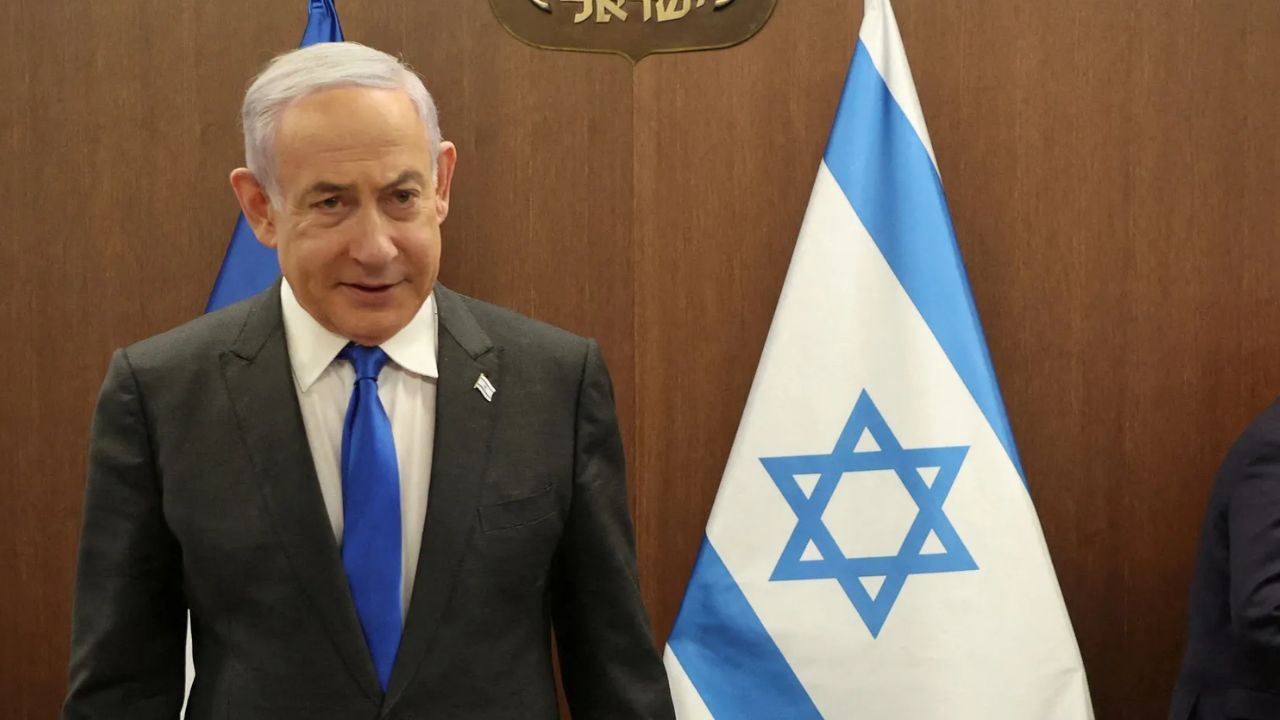

  • Was Netanyahu killed? Here’s what we know so far…

    Was Netanyahu killed? Here’s what we know so far…

    Multiple unverified claims about the death of Israeli Prime Minister (PM) Benjamin Netanyahu have circulated widely on social media, suggesting that he was killed in an Iranian airstrike amid the ongoing Iran-Israel conflict.

    Similar posts have targeted his brother Iddo Netanyahu and Israeli National Security Minister Itamar Ben-Gvir, alleging that they were also injured. 

    Many of the claims were shared alongside videos of airstrikes and AI-generated images, sometimes amplified by commentary from former US intelligence officer Scott Ritter.

    Reports cited by Tasnim News Agency did not provide evidence of an attack on Netanyahu or confirmation of injury. The articles referenced circumstantial factors, including the absence of recent videos of the prime minister and heightened security around his residence.

    Speculation appeared to gain traction because it had been nearly three days since the last video of Netanyahu was posted on his personal channel, and almost four days since recent images were shared publicly. Previously, at least one video, and sometimes up to three, were typically posted each day.

    Additional reports said that the security perimeter around Netanyahu’s home had been increased, reportedly to counter potential drone threats. Observers also pointed to the cancellation of a planned visit to Israel by Jared Kushner, US President Donald Trump’s son-in-law, and Steve Witkoff, United States special envoy to the Middle East. A separate report from the Elysée Palace did not specify the date of a phone conversation between French President Emmanuel Macron and Netanyahu, releasing only a text transcript.

    Israeli officials and international media have described the claims as false. Netanyahu’s office dismissed reports of his death as “fake news.”

    Public updates show Netanyahu continuing his official duties. On March 10, he visited Israel’s National Health Command Centre, and on March 11, he conducted a visit to Ashdod Port to assess maritime trade operations during Operation Roaring Lion. Video footage of both visits was released publicly.


    Images circulating online that claimed to show Netanyahu after an attack were flagged as AI-generated.

  • Jeffrey Epstein confessed to being a father, DOJ files show

    Jeffrey Epstein confessed to being a father, DOJ files show

    Jeffrey Epstein confessed to being a father to a child borne by one of his victims, files released by the United States Department of Justice suggest.

    Documents reviewed by the Federal Bureau of Investigation (FBI) include claims from a woman who told investigators that Epstein sexually assaulted her for several years beginning when she was 16.

    According to the FBI notes, dated January 2020, the woman said Epstein showed her a photograph inside his residence in New York City and identified the woman in the image as the mother of his child.

    The documents state: “In another suite of his residence, there was a picture of a blonde woman on the beach.

    “Epstein told [redacted] that this was the mother of his child.”

    The woman told the investigators that she met Epstein in 2005 while working as a teenage model. The notes further record that Epstein later showed her a sculpture of the same woman.

    “There was a torso sculpture, like a mold – EPSTEIN said this mold was of this woman,” the notes read.

    “EPSTEIN told [redacted] that this woman was perfect. EPSTEIN told [redacted] that her husband will be very lucky.”

    Claims that Epstein fathered children have surfaced in reports a few times. Earlier this week, an international media outlet reported that another alleged victim said she gave birth to a baby girl around 2002 when she was 16 or 17.

    The document said that the woman alleged the child was taken from her minutes after birth and that Ghislaine Maxwell was present during the birth. 

    “She was born, I heard her cries!” the woman wrote. “I saw this tiny head and body in between the doctor’s hands. Ghislaine said she was beautiful. Where is she?”


    The woman added: “I do not want to be tied to Jeffrey for the rest of my life! Playing the piano well is not a good reason to think someone has good genes or should have a baby! I am too young and he is too old!

    “The piano and music comments are made to convince me this is right and will create perfect offspring he [Epstein] calls them ‘superior gene pool?’ Why me?? My eye color, my eye color? I miss the person I was before I was made into what feels like a human incubator.”

    According to Daily Mail, several accounts have also described Epstein asking women to carry his child. One of the documents released by the FBI includes an image showing Epstein holding a woman in his New York home while she carried a baby.

    Epstein’s brother has previously stated that the financier did not have a child.

  • Iran warns attacks on economic ports will trigger strikes across Middle East

    Iran warns attacks on economic ports will trigger strikes across Middle East

    A senior spokesperson for Iran’s armed forces has warned that any attack on the country’s economic ports would trigger retaliatory strikes targeting “all docks, ports and economic zones across the Middle East.” The statement underscores the escalating military operations as the conflict between Iran, Israel, and the United States continues to expand into neighboring countries.

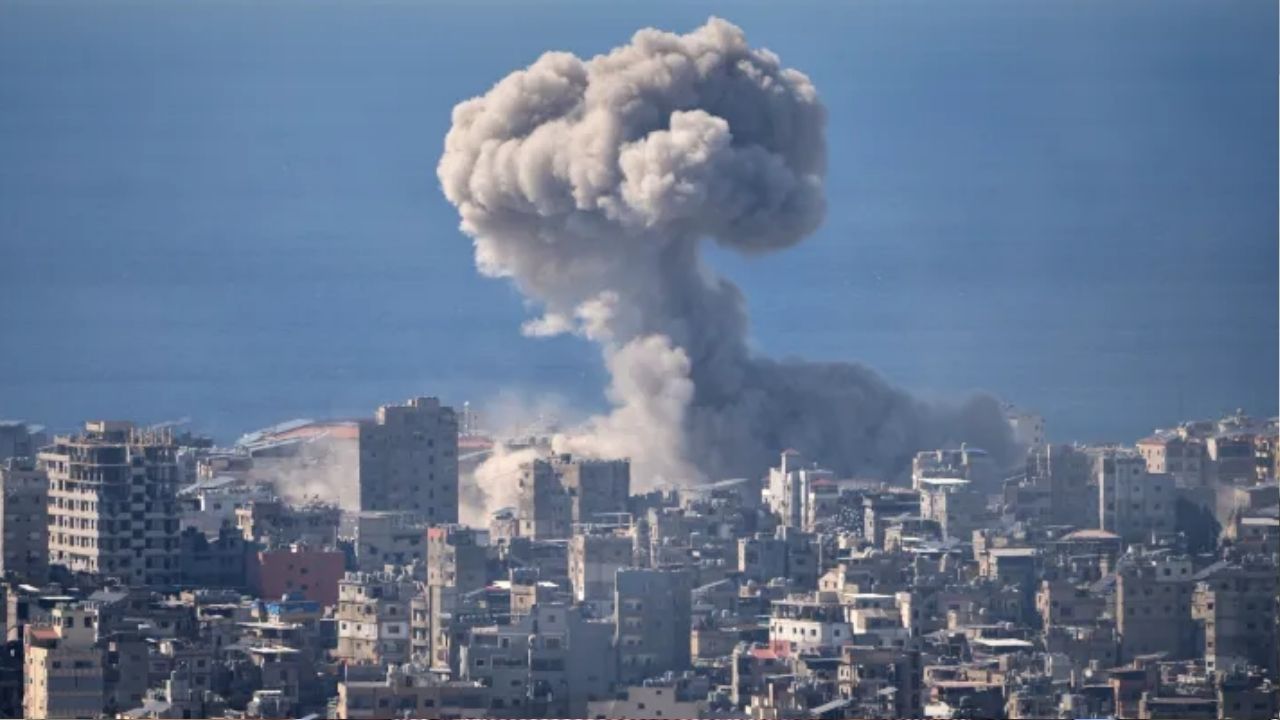
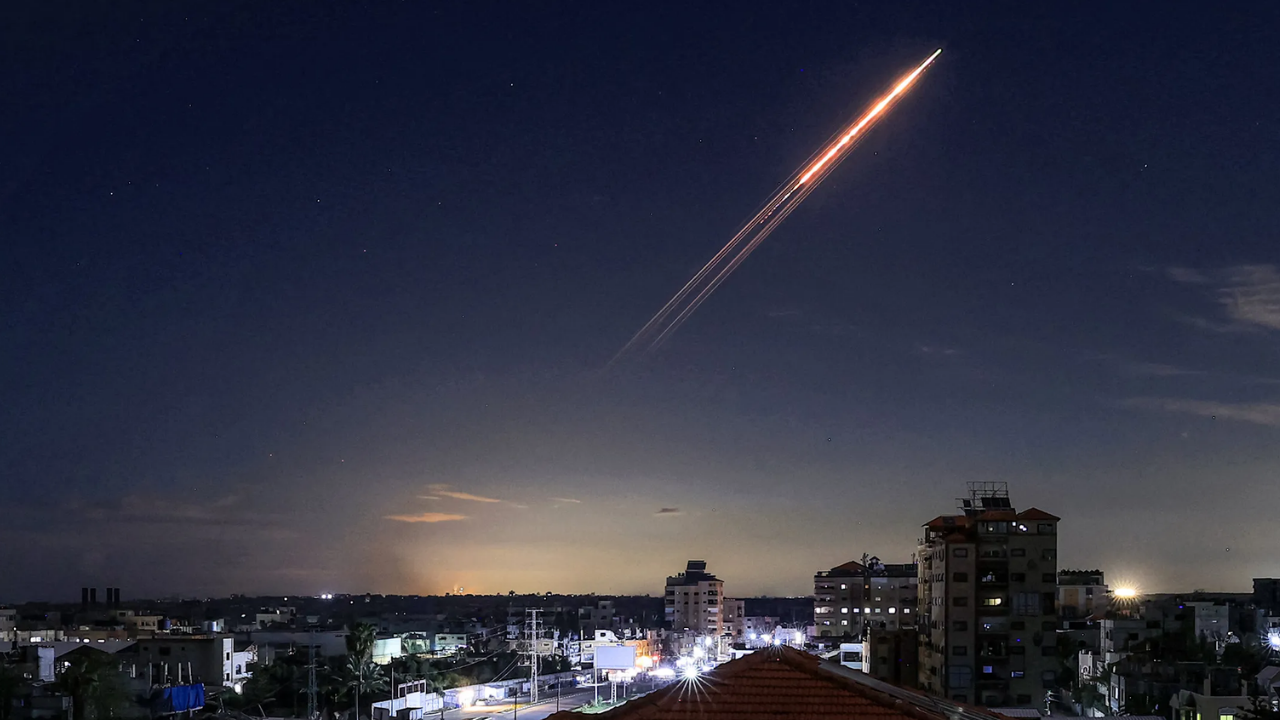
    The warning came as Iranian forces reportedly launched the 40th wave of strikes under Operation True Promise 4, targeting the US Fifth Fleet base in Bahrain and Israeli positions. Iranian media reported that the Revolutionary Guards carried out coordinated missile operations alongside Tehran’s Lebanese ally, Hezbollah. Israel’s military said multiple waves of Iranian missiles were intercepted by air defenses while it conducted “wide-scale” strikes on Tehran and a Hezbollah stronghold in Beirut.

    The conflict has significantly affected maritime and energy security. An attack on two oil tankers off the coast of Iraq killed at least one crew member, an Indian national, while 38 others were rescued. Separately, China imposed an immediate ban on refined fuel exports for March, including gasoline, diesel, and aviation fuel, in response to potential domestic shortages linked to the ongoing conflict.

    In the Gulf, tensions have spilled into civilian areas. Kuwait reported material damage after drone strikes at its international airport, while authorities in Dubai confirmed a “minor drone incident” in the Al Bada’a area. Saudi Arabia intercepted a drone approaching the district housing foreign embassies. Similar explosions were reported in Qatar’s capital, Doha, prompting authorities to instruct residents to remain indoors.

    Citibank announced it would close branches in the UAE following threats from Iran targeting financial institutions in the region. 

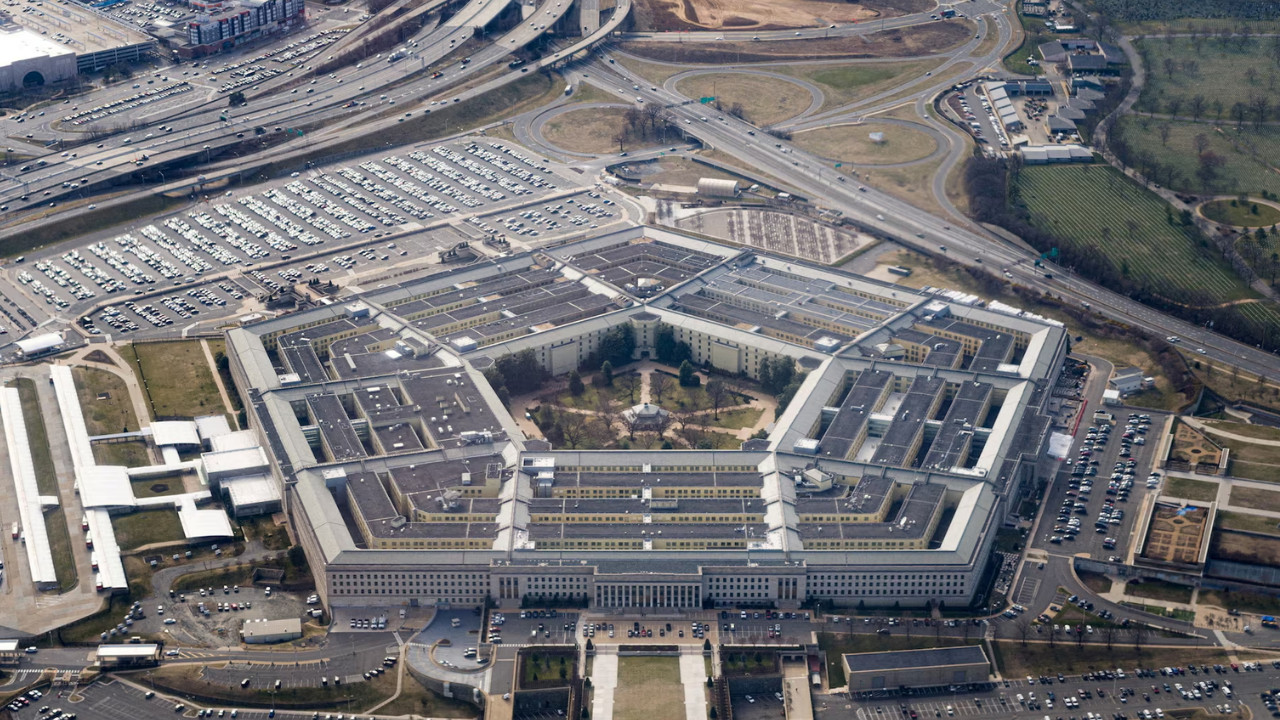
    The conflict’s human toll continues to rise. Unicef reported that more than 1,100 children have been killed or injured. The Pentagon confirmed that around 140 US service members were wounded during the first ten days of operations.

    Energy markets have reacted sharply. Brent crude surged above $100 per barrel, and West Texas Intermediate rose to $94.92, following strikes on regional oil infrastructure. The International Energy Agency reported a disruption of nearly 10 million barrels per day in crude and petroleum product output across Gulf states.

    US President Donald Trump said Iran is near defeat, asserting that strikes could escalate to a point where the country would be “almost impossible” to rebuild. He added that the United States had knocked out 58 Iranian naval ships and emphasized that American forces would stay in the region to “finish the job.”

    Meanwhile, internal unrest in Iran has intensified. Police chief Ahmad-Reza Radan warned that protesters aligned with foreign interests would now be treated as combatants. The Khatam Al-Anbiya operational command announced plans to target US and Israeli economic centers and banks in the region, urging civilians to maintain distance from such facilities.

    Diplomatic measures are underway as countries respond to the regional escalation. Australia closed its embassies in Abu Dhabi and Tel Aviv, as well as its consulate in Dubai. Italian Foreign Minister Antonio Tajani condemned an attack on an Italian military base in Erbil, where no injuries were reported.

    The war, which began with US and Israeli strikes on Iran, shows no sign of de-escalation, with Iranian officials ruling out negotiations.

  • ‘Brain-dead’ woman comes back to life after ambulance hits pothole

    ‘Brain-dead’ woman comes back to life after ambulance hits pothole

    A 50-year-old woman from Uttar Pradesh (UP), India survived against medical odds after an ambulance ride appeared to have revive her, days after doctors had declared little hope for her recovery.


    Vineeta Shukla, a resident of Pilibhit, had been discharged from a hospital in Bareilly after doctors reported no brainstem reflexes. Her family had begun preparing for her funeral. 


    On February 24, while her husband was transporting her home, the ambulance hit a pothole on the Bareilly-Haridwar National Highway (NH-74), producing a sudden jolt that appeared to trigger breathing.


    “I told my family to prepare for her last rites. She was not breathing, there was only a sinking heartbeat. As the ambulance reached Hafizganj, it struck a large pothole and the vehicle moved violently,” her husband, Kuldeep, told an international media outlet on Tuesday. 


    Following the impact, Vineeta began breathing normally. “I immediately informed my family to suspend all the funeral preparations,” Kuldeep said. He rushed her to Neurocity Hospital in Pilibhit for emergency treatment.


    After receiving critical care, Vineeta gradually recovered and returned home. She has regained consciousness and is speaking with family members.


    “Conquered her death,” Kuldeep said. “She is now not just awake, but talking to us.”

    Doctors at Neurocity Hospital reviewed her earlier diagnosis before starting treatment. Dr. Rakesh Singh, a neurosurgeon at the hospital, said that he consulted with Bareilly-based doctors and conducted a thorough examination.


    Singh noted that Vineeta’s previous assessment indicated severe neurological impairment. Her brainstem reflexes had been absent, and her Glasgow Coma Scale score had dropped to three out of 15, showing complete unresponsiveness. 


    “The examination of her eyes showed mydriasis, indicating the death of her brain and constantly sinking signs of life. During a series of quick tests, heavy neurotoxins were detected in her bloodstream and lymphatic system. The diagnosis and treatment helped remarkably in her recovery,” he said.


    Family members said Vineeta, who works as a senior assistant in the copy section at the judicial courts in Pilibhit, fainted on February 22 while doing household work. She was initially taken to Autonomous State Medical College in Pilibhit and later referred to a facility in Bareilly, where her condition worsened and doctors had little hope of her survival.

  • Americans aren’t buying FBI’s warning of potential Iran drone strike on California

    Americans aren’t buying FBI’s warning of potential Iran drone strike on California

    The Federal Bureau of Investigation (FBI) has warned law enforcement agencies in California that Iran is considering launching a drone attack on the United States (US) West Coast in response to American military action, according to an alert reviewed by ABC News.

    The bulletin, circulated to police departments toward the end of February, said that the information suggested Iran had explored the possibility of carrying out a strike using unmanned aerial vehicles from a vessel positioned off the United States coastline.

     “We have no additional information on the timing, method, target, or perpetrators of this alleged attack,” the notice said.

    The warning came as the administration of US President Donald Trump launched military strikes against Iran. Tehran has since responded with drone attacks targeting sites across the Middle East.

    According to a senior law enforcement official cited by ABC News, the intelligence about the possible West Coast attack was obtained before the United States and Israel began bombing Iran. The official said the 12-day bombardment is believed to have reduced Iran’s ability to carry out such an operation.

    US intelligence agencies have also been monitoring the growing use of drones by Mexican drug cartels and the risk that the technology could be used against American forces or law enforcement personnel near the US-Mexico border.

    A separate bulletin from September 2025 reviewed by ABC News said: “An uncorroborated report suggested that unidentified Mexican cartel leaders had authorized attacks using UAS (drones) carrying explosives against US law enforcement and US military personnel along the US-Mexico border.”

    The notice added: “This type of attack against US personnel or interests inside the United States would be unprecedented but exemplifies a plausible scenario, although (cartels) typically avoid actions that would result in unwanted attention or responses from US authorities.”

    California Governor Gavin Newsom’s office said the state was coordinating with security agencies in response to the threat environment.

    The Los Angeles Sheriff’s Department said it had increased preparedness in light of developments abroad

    “Out of an abundance of caution, and in recognition of current religious observances, the Department has continued increased patrols around places of worship, cultural institutions, and other prominent locations throughout the County,” the department said.

    ABC News contributor John Cohen, former head of intelligence at the Department of Homeland Security, said authorities should remain alert to the possibility of drone threats approaching the United States from both the Pacific Ocean and Mexico.

    “We know Iran has an extensive presence in Mexico and South America, they have relationships, they have the drones and now they have the incentive to conduct attacks,” Cohen said.
    The FBI alert has also sparked diverse reactions online, with some questioning its credibility. One user commented: “Another False Flag from Zionist master of US Government.” 

    Another said: “This is such bullshit. If there is an attack it will be a false flag. Ironically, this comes JUST as US firms finished replicating Iranian drones. What a coincidence. Our Gov is a criminal enterprise taking orders from Israel.”

    Some social media users suggested intelligence might be misrepresented or used politically. One post read: “In other words, the FBI is going to launch offensive drones against the west coast and tell us it’s Iran.” 

    Another questioned the source: “You mean Mossad? We won’t believe this is Iran, we are voting out all AIPAC politicians, this has to end!” Others expressed frustration over repeated warnings of false flags. “False flags, an old trick the Zionists keep going back to under pressure,” wrote one user, while another added, “In the entire human history of false flags this flag is the falsest.”

    The FBI alert did not outline how vessels carrying drones could approach close enough to the US mainland to launch an attack, though intelligence officials have previously raised concerns about equipment being positioned in advance on ships at sea or on land in case the United States or Israel targeted Iran.

  • War on Iran pushes petrol prices up in 85 countries

    War on Iran pushes petrol prices up in 85 countries

    Motorists worldwide are facing higher fuel prices following the illegal war imposed by United States (US) and Israel on Iran. 

    In the US, the average price for a gallon of regular petrol rose from $2.94 in February to $3.58, according to data from AAA Fuel Prices. Some states have reported prices above $4 per gallon, with California exceeding $5 per gallon for the first time in more than two years.

    Data from Global Petrol Prices shows that at least 85 countries have raised petrol prices since the initial attacks on Iran on February 28. Some nations announce changes only at the end of the month, suggesting further increases in April.

    Vietnam recorded the largest rise, nearly 50 percent, from $0.75 per litre of 95-octane on February 23 to $1.13 on March 9. Laos saw a 33 percent increase, Cambodia 19 percent, Australia 18 percent, and the US 17 percent.

    Asian countries are among the most affected due to their reliance on the Strait of Hormuz, the main passage connecting the Gulf to the Gulf of Oman. Japan imports 95 percent of its oil from the Gulf, while South Korea imports 70 percent.

    Japan instructed its oil reserve sites to prepare for a possible release of strategic reserves on March 8. South Korea introduced a maximum price cap on petrol and diesel on March 9 for the first time in 30 years.

    In South Asia, countries with smaller financial buffers and limited reserves are feeling the impact more severely. Bangladesh has ordered all public and private universities to close.

    In Pakistan, government offices are operating a four-day workweek, schools are closed, and a 50 percent work-from-home policy has been implemented.

    In Europe, Group of Seven finance ministers held an emergency meeting on rising prices. French President Emmanuel Macron raised the possibility of releasing 20-30 percent of emergency strategic reserves to ease pressure on consumers.

    Rising oil prices are also driving up food costs, affecting fertilisers, transportation, and logistics. Economist David McWilliams told Al Jazeera, “The lifeblood of the global economy is transport. It’s getting stuff from A to B – it’s a logistics problem, a supply chain problem, and ultimately transportation is the energy of the global economy.”

    Economists warn of stagflation, increasing inflation and rising unemployment, pointing to past oil shocks in 1973, 1978 and 2008 that were followed by global recessions. In lower-income countries, higher oil prices could quickly lead to food shortages as populations spend a larger share of income on essentials.

  • Iran war puts US arms giants at centre of multibillion-dollar weapons push

    Iran war puts US arms giants at centre of multibillion-dollar weapons push

    The war involving Iran has pushed demand for weapons systems used by the United States (US) military, placing major defence contractors at the centre of production and supply chains linked to the conflict.

    Data from the Stockholm International Peace Research Institute (SIPRI) shows that US companies dominate the global defence industry, accounting for $334 billion of the $679 billion generated by the world’s top 100 defence firms in 2024. The United States hosts 39 companies on SIPRI’s list of the top 100 defence contractors, compared with eight from China.

    The largest US defence contractors include Lockheed Martin, RTX, Northrop Grumman, General Dynamics and Boeing. These firms manufacture aircraft, missile systems, space technology and other military equipment used by the US armed forces.

    Lockheed Martin, the world’s largest defence contractor, generated $68.4bn in revenue in 2024. The company produces systems including the F-35 Lightning II stealth fighter, F-22 Raptor jets, THAAD missile defence systems, M142 HIMARS launchers, MGM-140 ATACMS missiles and the Precision Strike Missile (PrSM).

    RTX, created through a 2020 merger between Raytheon and United Technologies, reported $43.6bn in defence revenue in 2024. Its Raytheon division manufactures Tomahawk cruise missiles and MIM-104 Patriot missile systems used in missile defence.

    Northrop Grumman reported $37.9bn in defence revenue in 2024 and produces systems including B-2 stealth bombers and radar technology used in E-3 Sentry airborne warning and control aircraft.

    General Dynamics reported $33.6bn in defence revenue in 2024 and develops nuclear submarines, battle tanks and armoured vehicles.

    Boeing, founded in 1916, reported $30.6bn in defence revenue in 2024 and manufactures aircraft and military systems including the B-1 bomber, F-15 fighter jets, EA-18G Growler aircraft, P-8A Poseidon surveillance aircraft and RC-135 reconnaissance platforms.

    According to SIPRI, global defence spending increased by 9.4 percent in 2024 to $2.7 trillion. NATO members have also pledged to raise defence spending from 2 percent to 5 percent of their gross domestic product by 2035.

    The expansion in military spending has coincided with the escalation of the war involving Iran. The United States has already spent billions of dollars on weapons linked to the conflict.

    US President Donald Trump met the chief executives of major defence companies at the White House. Executives from RTX, Lockheed Martin, Boeing, Northrop Grumman, BAE Systems, L3Harris Missile Solutions and Honeywell Aerospace attended the meeting.

    Following the meeting, the companies agreed to “quadruple production” of what Trump described as “exquisite class” weaponry.

    The United States already allocates close to $1 trillion to military spending in 2025, exceeding the combined total of the next nine countries. Trump has proposed increasing this spending to $1.5 trillion by 2027.

    Stock prices of major defence companies have also risen during the conflict. Shares of Northrop Grumman increased by five percent, RTX rose by 4.5 percent and Lockheed Martin gained three percent during the past week.

    The United States military has deployed multiple weapons systems in operations targeting Iranian facilities. According to US Central Command, Operation Epic Fury has involved more than 20 weapons systems across air, land, sea and missile defence operations.

  • Iran police chief warns protesters will be treated as ‘enemies’

    Iran police chief warns protesters will be treated as ‘enemies’

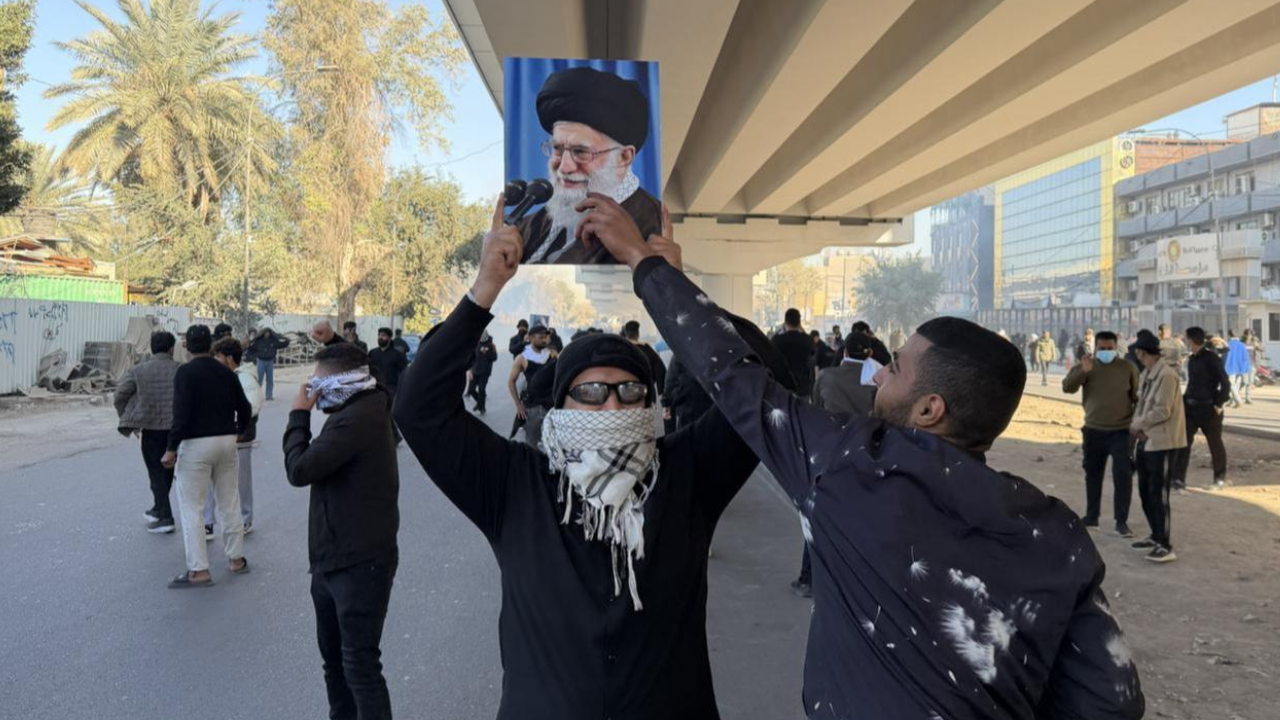
    Iran’s national police chief Ahmad-Reza Radan has warned that protesters who support the positions of the country’s “enemies” will now be treated as combatants. In comments aired by state broadcaster IRIB, Radan stated that authorities will no longer distinguish between demonstrators and military foes. 

    “If anyone comes forward in line with the wishes of the enemy, we will no longer see them as merely a protester, we will see them as an enemy. And we will do to them what we do to an enemy,” Radan said. He added that security forces are “ready, with their hands on the trigger.”

    The internal crackdown comes as Iran’s military expands its regional threats. The Khatam Al-Anbiya central operational command announced it will target US and Israeli economic centers and banks in the region following reports of an overnight strike on an Iranian bank. The military urged civilians to stay at least one kilometer away from such financial institutions.

    The spillover into neighboring Gulf states has intensified. In Dubai, drones fell near the international airport, injuring four people including two Ghanaian nationals, one Bangladeshi, and one Indian national. While air traffic continues, the UAE’s defense ministry confirmed its air defenses are responding to a new wave of Iranian missiles and drones. 

    Similar explosions were reported in the Qatar’s capital, Doha, where the interior ministry has ordered residents to remain indoors.

    On the diplomatic front, Australia has closed its embassies in Abu Dhabi and Tel Aviv, along with its consulate in Dubai. Foreign Minister Penny Wong told parliament that Iranian reprisal attacks are occurring at an unprecedented scale and the conflict is “likely to intensify.”

    Despite the escalating violence, Yousef Pezeshkian, son of the Iranian president, dismissed reports that new Supreme Leader Mojtaba Khamenei was incapacitated. While the New York Times reported Khamenei suffered leg injuries and is sheltering at a secure location, Pezeshkian claimed he is “safe and sound.”

    The maritime crisis in the Strait of Hormuz has also worsened. A third vessel, a bulk carrier, was struck by an unknown projectile 50 nautical miles northwest of Dubai this morning.

    This follows an earlier strike on a cargo ship in the Strait that forced a crew evacuation due to fire. The Iranian Revolutionary Guard Corps (IRGC) maintained that any nation expelling US and Israeli ambassadors will be granted freedom to navigate the waterway, which they currently blockade.

    The humanitarian and military toll continues to climb. The Pentagon confirmed that approximately 140 US service members have been wounded in the first 10 days of the campaign. In Sri Lanka, a court ordered the bodies of 84 Iranian sailors, killed when a US submarine torpedoed the IRIS Dena, be handed over to the Iranian embassy.

    International leaders have called for restraint. Turkish President Recep Tayyip Erdogan warned the war must be stopped before it “engulfs the entire region in flames,” citing the rising cost to the global economy. Pope Leo expressed “profound sorrow” for the victims, including a Maronite priest killed in Lebanon.

    In US, the Trump administration’s strategy has faced bipartisan criticism. Democratic Senator Chris Murphy described the war plans as “incoherent and incomplete” following a classified briefing, suggesting the conflict will cost hundreds of billions of taxpayer dollars without toppling the regime in Tehran.

    The conflict, which has already seen US Central Command strike over 5,000 targets, shows no sign of de-escalation. Iranian Foreign Minister Abbas Araghchi has dismissed the possibility of negotiations, stating that talking to the US is “no longer on the agenda.”

  • ‘Pretty, caramel-coloured women’: US soldier slammed for comments about Iranian women before possible deployment

    ‘Pretty, caramel-coloured women’: US soldier slammed for comments about Iranian women before possible deployment

    A video posted online by a US soldier about his potential deployment to Iran has sparked widespread criticism before being deleted. In the post, the soldier said he will not be deployed, claiming he would be an operational security (OPSEC) risk in a country “filled with pretty, caramel-coloured women.” 

    He added, “She’s going to be like, ‘What’s an OPORD?’ and I’m going to be like, it’s hard to explain, it’d be easier if I just grab one and show you.”

    The post drew a variety of reactions online. Some users highlighted historical context, noting, “Oh my God. Just think about the Iraq War—what they did to the women and young girls.” 

    Others criticized the soldier’s focus on women, saying, “All they have in their minds is only women & others’ wealth” and “So these are the saviors of Iranian women???”

    Several users interpreted the statement as a confession of potential misconduct, with one commenting, “Am I understanding this right? He cannot go because a pretty, caramel lass would immediately steal his heart and ability to keep national secrets?” Another wrote, “He might be saying: ‘If attractive local women talk to me, I might spill secrets, so I’m a security risk.’”

    Other reactions mocked the post, including, “When someone is manufactured in Epstein lab,” “She might ask you what Epstein files are ,” and “It’s amazing how he feels so free to confess to this nonsense.” Some questioned the soldier’s character and professionalism: “Is he confessing he’s a grapist?” 

    Some netizens framed the post as a reflection of broader military culture, with one user writing, “Some soldiers grape… this is one,” while another noted, “A perfect American.” Others speculated on the intended meaning, saying, “What he meant was that they behave in a way that makes me fascinated by them.” One comment referenced Donald Trump’s leadership, adding, “I’m not shocked, his head of the state was his example.”

    The soldier’s remarks come amid ongoing tensions in the Middle East. Iran has carried out drone and missile attacks targeting US and Israeli positions, while the US and Israel have conducted retaliatory strikes on Iranian-backed facilities. The situation has raised concerns over regional escalation, though no official deployment of US forces to Iran has been confirmed.

    Officials continue to monitor developments, and analysts say the security environment remains fluid, with both military and diplomatic measures being considered in response to the ongoing Iran-Israel-US confrontations.