Category: Opinion

  • Anti-democracy rules

    Anti-democracy rules

    “Our democratic dispensation now rests on the courts to strike these draconian rules down, on the Parliament and especially the opposition parties to walk the talk of protecting democracy, and on the government to prove its sincerity to its digital dreams. Or should we stop pretending?”

    If the internet offers an open space for citizens to freely express themselves, the newly notified internet rules seek to clampdown on those very freedoms in an autocratic manner. Whether one considers the process by which they were drafted, or the substantive matter of the tules, they flout democracy.

    In a democracy, rules relating to the internet would at the very least be well-informed in terms of the functioning of technology; take input of the technology sector, human rights experts, the companies that these rules would impact, students, as well citizen groups; and follow a consultative process where multiple drafts were shared with stakeholders and discussed and revised before being notified.

    What we saw instead was surprise news early on in the year that rules had been notified by the federal cabinet. No consultation was held or stakeholder input sought.

    After national and international outcry by human rights groups, consortium of technology companies such as the Asia Internet Coalition (AIC), and multistakeholder forums such as the Global Network Initiative (GNI), the PM said he will “suspend” the rules and hold more consultations. Except legally, a cabinet notification can only be “taken back” — denotified — by the cabinet itself, and not the PM, as held in the Mustafa Impex case in the Supreme Court, as well as the rules of business.

    However, the cabinet never denotified the previous set of rules, and has recently notified yet another set.

    For the new set of rules, consultations were an eyewash as expected, as not only are the new ones any less draconian than the last, but also make several additions that raise several questions.

    For one, in an attempt to include safeguards and protections, they give the powers of judge, jury, and executioner to the PTA where the authority, which is clearly not above pressure of the federal government, has the power to order social media companies to block or restrict content on the internet, decide what content is unlawful, and also review appeals against such a decision. The stipulation for appeal at high court comes after all of these steps. This goes against the separation of powers that the Constitution outlines and forms the basis of democratic governance.

    “The important question is who is making these decisions? Is the PM sincere in his wishes for a Digital Pakistan?”

    That is all the more problematic when one sees the exceptions to freedom of speech that the rules stipulate. They empower the PTA to not only interpret Articles of the Constitution but also sections of the Pakistan Penal Code (PPC) relating to the blasphemy laws for defining “glory of Islam”, “obscenity and decency”, and “public order” where powers under section 144 are cited as the yardstick for determining what online content can be deemed illegal.

    Most problematic is the rule regarding “integrity, security and defence of Pakistan” whereby it goes on to not only give PTA the powers to interpret Article 260 of the Constitution with regards to defining these terms – which is a function of the higher judiciary – but also expands it to “also mean and include the dissemination of an information which intimidates or harms the reputation of federal or provincial government or any person holding public office” and “brings or attempts to bring into hatred or contempt, or excites or attempts to excite disaffection towards the federal or provincial government”, effectively covering any criticism of the government on the internet to be restricted or blocked on the orders of the PTA as it wishes.     

    Additionally, the rules also go against the parent legislation – PECA – by making intermediaries, i.e. internet companies and internet service providers liable for content regulation and data sharing, hence privatising censorship. Section 38 of PECA explicitly limits intermediary liability. No company is going to agree to implementing a government’s rules over its own detailed community standards, as obvious form the AIC statement that signaled that internet companies may exit Pakistan if these rules are to remain. Rules also expect the companies in face of these orders to open an office in Pakistan, establish local databases, and offer the FIA unrestricted access to user data.     

    The important question is who is making these decisions? Is the PM sincere in his wishes for a Digital Pakistan? Or is the vision to make it like China where the country is cut off from the rest of the world, capacity for which is lacking here exactly because of years of similar shortsighted policymaking mistakes, lack of state investment in encouraging a robust IT ecosystem, and ad-hoc policy of censorship and privacy violations that discourage potential investment and growth?

    Our democratic dispensation now rests on the courts to strike these draconian rules down, on the parliament and especially the opposition parties to walk the talk of protecting democracy, and on the government to prove its sincerity to its digital dreams. Or should we stop pretending?

  • Another Faraz, Another Era

    Another Faraz, Another Era

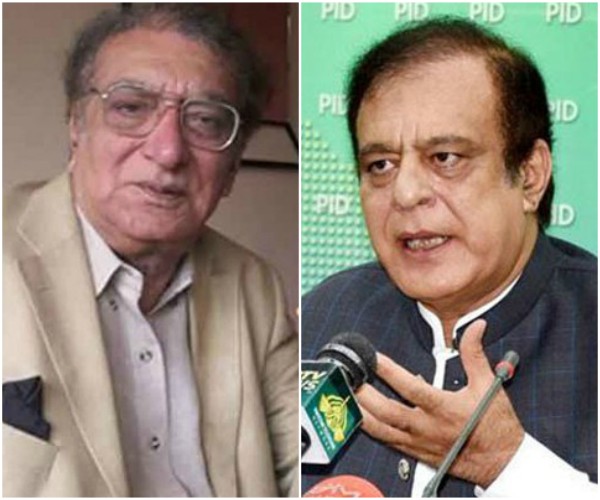
    Today Faraz’s son speak for a regime that is often described as ‘hybrid’

    Pakistan’s information minister is seen more and more on the TV screen nowadays. There he is on nearly every channel, —giving briefings, answering questions and being interviewed, cool and collected, smirking his way through the questions as he talks of PTI’s political opponents and assures journalists that his government is doing amazing things for the country.

    It is, of course, commendable that the minister is so accessible to journalists and so happy to dominate screen time, but every time I see him on the box I cannot help but wonder if his father would’ve supported such a regime.

    Ahmed Faraz was one of the greatest Urdu poets of the twentieth century. And along with poets like Faiz Ahmed Faiz and Habib Jalib his poetry has also documented the political and social struggles of the the time. One particular poem of Faraz did become very controversial and reportedly there was a period in which he denied that it was his work. The reason is because that particular work (“…Tum Sipahi Nahin”) is extremely critical of martial tyranny and bloodshed and harks back to the attitude of the army during the bloody civil war which resulted in the secession of East Pakistan and the creation of Bangladesh.

    That poem is chilling. Read it (or listen to a recital) today and your blood will run cold. Through verse the poet tells of a terrible disillusionment and declares that his pen will not write lies or propaganda as it is not a weapon to be used by tyrants but rather is the instrument of the people, the awam. “Mera Qalam tow amanat hai meray logon ki.” He talks of a military that uses force  against its own people, of tyrants who talk of justice but practise cruelty and encourage hatred. The poem harks back not just to the civil war but to numerous political upheavals and regime changes and conflicts — and the words are spine chilling.

    Listen to the verses and it is not difficult to see why Faraz was forced to deny the poem and why at one time it was circulated secretly by people. I’m not sure if he ever spoke, on the record, about what the repercussions were for him of writing that poem, but I imagine the consequences could not have been pleasant. And perhaps it was these consequences that convinced his family members that such lofty principles are simply not paying such a high price for.

    Today Faraz’s son speak for a regime that is often described as ‘hybrid’ and represents a government that works very closely with the institution whose very attitudes and actions are criticised in this poem. It seems the fact is indeed stranger than fiction. Or perhaps we should just call this ‘progress’.

    But listen to this particular poem in the context of present day Pakistan and one thing becomes clear: it doesn’t matter what compromises people like Faraz might make in later life if they are able to leave behind them such creations, creation that lives on long after they are gone and reverberate so strongly still. This is art but it is also social history and a lasting testament to political struggle and the fight for justice, it is the reminder of a dark night and of the people who fight for the dawn of justice and for an end to oppression and division. The poem is also an acknowledgement of the duty of the writer, a reiteration of the poet’s responsibiltity to document and resist tyranny “aaj shayir par yeh qarz matti ka hai” — he says the situation is serious and his words are written not with ink but in blood “aaj is qalam may lahu hai siyahi nahin”.

    Today Faraz’s son speak for a regime that is often described as ‘hybrid’ and represents a government that works very closely with the institution whose very attitudes and actions are criticised in this poem. It seems the fact is indeed stranger than fiction. Or perhaps we should just call this ‘progress’.

  • The Silencing Act

    “The biggest threat to gender justice right now are defamation laws and the FIA.”

    “Women are harassed and so we must introduce a law to protect them,” went the PML-N narrative in favour of enacting the Prevention of Electronic Crimes Act (PECA), 2016. This line peddled was mainly by the then minister for state for information technology and telecom, Anusha Rahman, to shut down critique levelled at the draconian provisions of the law, criminalising various forms of speech in an overbroad manner.

    Criticism of the law was deflected by making wild accusations and false imputations against critics, what actually qualifies as defamatory statements: foreign-funded agents working against the interests of the country and religion. As recorded in the House Debates on August 11, 2016, the day PECA 2016 was passed into law, dismissing all concerns raised regarding the violation of rights, Rahman remarked women were committing suicide as a result of online harassment, ‘what about them?’

    In 2017, news broke of Sindh University student, Naila Rind’s death. According to reports, she “committed suicide due to exploitation and blackmailing by a man who had befriended her on WhatsApp.” She was found hanging by the neck in her hostel room. Just last month in September 2020, a woman who had filed a complaint with the Federal Investigation Agency (FIA) committed suicide. Reportedly, she had contacted the investigation officer just hours before deciding to end her life. A law purportedly enacted to shield women from harassment and provide them with legal recourse has done no such thing.

    PECA In Practice

    While much haste was made to pass PECA, once enacted it took over a month to designate FIA as the investigation agency. It was not until March 2017 that courts to try PECA cases were notified. Meanwhile, complainants and litigants were left hanging. Many women who attempt to file a complaint through the online web form say it does not work or they do not hear back. Several women who visit FIA offices to file in-person complaints talk about the misconduct of investigation officers. Among the complaints that do make it to court, some complainants are advised – and at other times coerced – to withdraw and settle. Compromises are facilitated even in non-compoundable cases, which the law does not allow. Women who wish to see their cases through to the end are punished.

    In a case registered in 2016, FIA “lost” the evidence file. It was only after the complainant petitioned the Sindh High Court against the FIA that the file was “recovered.” Four years after the registration of the case, the trial has not concluded because the FIA’s investigation officers, who are required to appear as prosecution witnesses in order to complete evidence, do not show up. This is routine. Case diaries are replete with show-cause notices, bailable and non-bailable warrants to compel FIA officers to attend court hearings. But this has little effect on them.

    Women who participated in the Aurat Marches and were targeted online, women journalists who filed complaints with the FIA and are consistently attacked online, share the experience of so many others: the FIA does nothing about their complaints. Instead, the priority for the FIA is to register cases when men complain their reputation has been damaged by women alleging harassment. On September 29, 2020, an FIR was registered against singer Meesha Shafi and eight others under Section 20 of the PECA read with Section 109 of the Pakistan Penal Code. This FIR comes after a spate of summons issued last year by the FIA in response to a complaint made by singer Ali Zafar. Section 20, referred to as the criminal defamation section of PECA, has been weaponised by the state to silence journalists but also private complainants against women alleging sexual harassment or violence.

    In July 2019, several people received a summon by the FIA requiring their attendance in Lahore. Many received summons once the date for appearance written on it had already passed. The summons themselves were vague. They contained no details about what the investigation pertained to or the section of the law it was under. Requests for a copy of the complaint were met with yet another summon. In violation of the law and investigation Rules under PECA, “sources” within the FIA leaked names to the press during the 2019 investigation, even though the law requires confidentiality to be maintained and the Rules bar disclosure of identities of both the complainant and accused.

    Despite responding in writing and, in the case of some, appearing in person at the FIA office, an FIR was registered. Those summoned earlier and now named in the FIR include those who have spoken up in support of Shafi, spoken of their own experiences and covered the cases in a journalistic capacity. Many found out about the FIR through news reports. While a civil defamation trial was already underway, now a criminal case has also been lodged, not only against Shafi but also witnesses in her case. The purpose and intent of this exercise is nothing but to further harass and intimidate. It is also a tactic to scare away witnesses and diminish their credibility in the court of law.

    The Chilling Effect

    An FIR in another city entails contacting a lawyer, applying for protective/transitory bail. The amount is decided by the court and typically can be anywhere between Rs. 30,000-100,000. This is usually granted for a period of a week in which time arrangements have to be made to travel to the city the FIR is registered in — in this case, Lahore. A second lawyer, in the city where the FIR was lodged, must apply for pre-arrest bail. Then the investigation has to be joined which essentially means going to the FIA office and giving a statement that is included in the investigation report. This is all at the pre-trial stage. The trial itself has no specified time frame and can go on for years. As an accused in a criminal case, it is mandatory to attend hearings unless a special exemption is granted by the court. All this adds up to monetary expenses, time and psychological strain, affecting work, life and mental health. The cost of ostensibly one or a few social media posts.

    It is a myth that the FIA does not act in a coercive manner against women. This is not the first time an FIR has been registered by the FIA against a woman after she levelled an allegation of sexual violence and harassment. There are other cases in which the FIA obtained search and seizure permissions and moved arrest applications at the investigation stage, while a petition against harassment by the investigation officer and validity of the search and seizure order was pending before the High Court.

    The immediate fall out of summons by the FIA and now an FIR, is a chilling effect. Not only do people stop speaking about issues and self-censor to protect themselves, but those implicated in cases, depending on the level of support they enjoy and resources at their disposal, end up settling by retracting and apologising. This then serves as a narrative win for the other party. In the public domain, the outcome – retraction or apology – becomes the subject of debate, useful also to vindicate in ongoing legal proceedings. Hanging a criminal case over someone’s head to force certain terms and extract such an outcome never becomes public knowledge or the subject of discussion – for obvious reasons.

    What Next?

    A statement released by the Women’s Action Forum – Karachi chapter in August 2019, pointed to an emerging pattern of criminal defamation laws being used as a silencing tool against those speaking about sexual harassment and violence, both in relation to online calls outs but also against women who filed cases of harassment before legal forums. In September 2019, this issue was taken up with the Senate’s Functional Committee on Human Rights. The committee was apprised of the illegal and unconstitutional manner in which the FIA acts against citizens — in this case women. Proposals to repeal criminal defamation laws – 499 and 500 of the PPC and Section 20 of PECA – were laid before the committee and recommendations on fixing the civil defamation procedure in relation to cases of harassment, were also made. Since then, summons and investigations have turned into challans and FIRs. The onus lies on parliamentary committees to take this up again. The MeToo movement, women’s marches and more recently, the motorway rape has sparked conversations around everyday misogyny, harassment and a culture that enables harassment and rape. Laws and the criminal ‘justice’ system are being weaponised against women and their supporters, to suppress disclosures of harassment and sexual violence. Especially, PECA.

    The biggest threat to gender justice right now are defamation laws and the FIA. Repealing Section 20 of PECA, 499 and 500 of the PPC, fixing civil defamation law and procedures to prevent their misuse, and holding the FIA to account for its excesses is imperative.

  • Misogyny is the norm

    The country’s leadership has set the tone.”

    As if the incident when a woman in a stopped car by the motorway was attacked in front of her children wasn’t horrific enough, the behaviour of the Lahore Police chief, CCPO Umar Sheikh, and his remarks about the incident were even more horrific — so shockingly medieval and misogynistic were these. 

    Is there anything one can say about the remarks of this police ‘officer’? Unfortunately, what one must say is that his remarks are not shocking to a large section of Pakistani society. And by this, I mean that his remarks reflect the mindset of not just a certain class but the thinking of a great many people who have a vested interest in keeping women dependent and sexually subjugated in society.

    The idea that a woman must have a male ‘guardian’ persists because it is preached and disseminated with impunity. Women are killed by their male relatives simply for behaving as independent beings and exercising independent choices. And these men get away with murder. If there is a natural disaster like an earthquake or flooding, women’s ‘shameless’ behaviour is blamed. If a woman is raped, she is to blame rather than her rapists.

    “The country’s leadership, notably the present government, is comprised of misogynists. Imran Khan may have had a westernised upbringing, studied at Oxford, but his public statements about women have all been regressive.”

    This primitive notion of a woman being a symbol of family honour and a slave to patriarchy is promoted openly in Pakistan. We have seen similar incidents (most notably the horrific Delhi bus rape and murder) in India, so let’s just say this is a chauvinist South Asian concept tinged with convenient references to your religion of choice. It has been almost four decades since the repressive Zia era and the brave resistance by the Women’s Action Forum (WAF) with so many other movements for social justice and democracy. Yet today you have the police chief of the main city of the majority province openly victim-blaming in the most misogynistic way, and you have the prime minister —  a leader who promised change and progress and social justice – not even bothering to condemn the remarks or order the sacking of this offensive (and very un) civil servant. 

    And therein lies the main problem: the country’s leadership, notably the present government, is comprised of misogynists. Imran Khan may have had a westernised upbringing, studied at Oxford, but his public statements about women have all been regressive. His government has not put gender equality or women issues on their list of priorities and it rarely talks about misogyny. The PM is surrounded by people who, like the Lahore police chief, are both habitually rude and habitually chauvinistic. And they get away with it. The PM himself is extremely rude and offensive when speaking about opposition politicians so, in a way, he has set the tone for the present. No surprise then if he were soon to express the Musharaffian view that ‘rape cases are the fault of women and journalists, and are a conspiracy to get visas by defaming Pakistan’…

    “What exactly is PTI’s concept of justice? And what steps have they taken to implement a system based on this concept? Perhaps this incident might be a good time to reflect on this.”

    Will he sack the ‘officer’ making the remarks? Probably not, because for some reason this ‘officer’ is well ensconced in the Punjab capital. And so he seems to have some sort of mysterious immunity and can get away with saying stupid things like women should not go out on their own, support patriarchal repression and just continue with his victim-blaming and misogyny.

    Lots of issues here: a misogynist society, power structures that fear female emancipation, religious regressivism that preaches the evils of the ‘loose woman’ or ‘temptress’ — and a government that doesn’t seem to be at all interested in issues of equality and justice or law and order. The PM issuing a statement condemning the incident is not enough because that is just lip service. What is needed now is that action is taken and lessons are learnt. And perhaps it might also be nice to have a minister for human rights who is actually concerned about the rights of the citizens of Pakistan instead of just making irrelevant statements about human rights violations in distant lands….

    Imran Khan’s party calls itself a justice movement. What exactly is PTI’s concept of justice? And what steps have they taken to implement a system based on this concept? Perhaps this incident might be a good time to reflect on this.

  • Karachi’s rain mess: A case of governance failure, corruption and political turf wars

    Karachi’s rain mess: A case of governance failure, corruption and political turf wars

    “The curious case of this city is that it is administered by a mix of federal and provincial controlled landholding associations, cooperative housing societies, military-run cantonments, the navy, the railways and the industrial area authorities to name a few.”

    A commercial port city with more than 20 million residents, Karachi has continued to suffer decades of civic mismanagement, gaps in urban planning and development given the lack of adequate governance, corrupt civic agencies and political parties vying for power. None of the myriad agencies that control resources and management in this city have honestly bettered the city and the lives of its people.

    Take the tussle between the PPP and the MQM that has not only brutally destroyed the socioeconomic fabric of districts such as Lyari, a sprawling slum settlement turned into a hotbed of violence, guns and drugs when rival gangs were patronised by the city’s two political parties, but also resulted in turf wars affecting the running of civic institutions. The political bifurcation of jurisdictions within this city has, therefore, resulted in a complete breakdown of basic service provision over years – lack of clean drinking water, electricity, housing, security are just a few municipal services that should be under the local government system but this is not the case. Even an elected mayor has no jurisdiction over certain areas of this city. When a city’s history is rooted in ethnic and identity-based politics building urban infrastructure, providing municipal services, or even intervening in areas that are essentially administered by a particular political party is near to impossible.

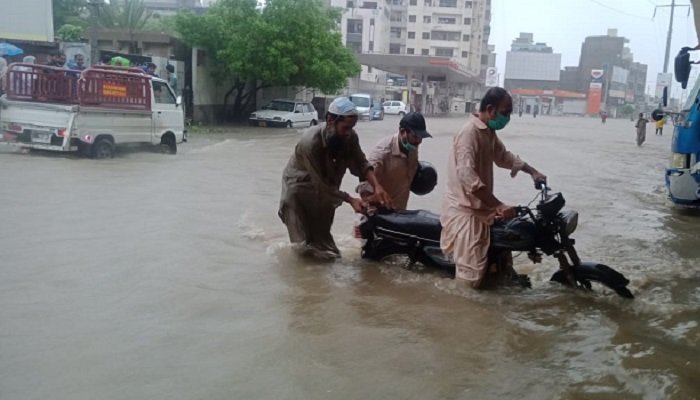
    Last week, Karachi was submerged in 230mm of rainfall in less than 12 hours, the most ever recorded, according to the Pakistan Metrological Department, exposing again glaring gaps in urban development, especially in low-income and vulnerable communities. Wealthy residential areas were not spared where drainage channels were choked. One such densely populated urban settlement with poor access to water and sanitation, Lyari is located about 15 minutes from the city’s business hub at I.I. Chundhrigar Road where you’d find most of the banking sector is headquartered. Streets were inundated with rain and sewerage water for days and later cleared up by residents because no government assistance reached these communities. Similarly, homes, businesses and streets in the city’s old quarter of Kharadar – a symbol of pre-colonial history which becomes the centre for Muharram processions (near Mithadar where the Edhi main office is located and adjacent to Jodia Bazaar) – literally drowned in a mix of rain, putrid sewerage water and floating garbage, increasing the risk of diseases, such as dengue and malaria. Some commercial/residential areas remain flooded with no electricity almost a week after the downpour in this city; sewerage water has collected in empty plots according to residents in different areas of Karachi where gutters are broken.

    First let’s be clear here: vulnerable neighbourhoods with already inadequate urban and social infrastructure have long been neglected by the ruling political powers and whomsoever authority is in charge of a given district. Then, the urban poor in Karachi are like none other. I recently read on Twitter: ‘The Lebanese people are like kids who’ve had to raise themselves because the parents were never around to take care of them.’ Now apply that to Karachi and it makes sense. Migration from rural to urban, and from the north has meant living in overcrowded, unsafe environments with little access to education, health, or sanitation, and with the COVID-19 crisis having reduced livelihood opportunities even further because of mobility restriction and decreased economic activity, natural disasters have the potential to decimate lives and homes. So why no focused body that can fix Karachi? The curious case of this city is that it is administered by a mix of federal and provincial controlled landholding associations, cooperative housing societies, military-run cantonments, the navy, the railways and the industrial area authorities to name a few. Many question the absence of the relevant authorities responsible for civic provisions, such as drain clearing before the annual monsoons, sewerage repairs and garbage collection. In fact, it was army personnel, volunteer rescuers, and even volunteers from the Islamist group Tehreek-e-Labbaik who rescued and evacuated people from many inundated residential neighbourhoods — some using boats for rescuing residents living in the newly constructed Naya Nazimabad area while some families waded through waist-high water. 

    Floating cars and destroyed homes: an apocalyptic sight

    Moreover, substandard construction in the city and informal settlements, built close to water draining channels or nullas, were perilously flooded or sunk during these rains given their poor physical infrastructure. This kind of urban flooding is to be expected as climate patterns change experts warn. And we have witnessed urban flooding in the past in Karachi. Warnings from the late Perveen Rahman, Orangi Pilot Project’s director, of the possibility of urban flooding if the mangrove plantation was removed on either side of Mai Kolachi because it served as a catchment area that could prevent flooding, were never heeded.

    The human toll of the recent rain tragedy has left Karachi’s residents reeling with more anger than ever and rightly so. I use the term tragedy here because rain in Karachi is hardly romantic or calls for a relaxing cup of tea and pakoras – rather it’s become synonymous with loss of lives, homes and livelihoods that could have been avoided had the concerned authorities prioritised rain preparations by declogging stormwater drains beforehand or constructing drainage facilities where none exist. Hundreds of people were forced to take shelter in the homes of relatives while scores of cars and other vehicles caught in the torrential downpours either remained submerged in water, many seen floating away as the water began flowing akin to a river developing rough currents. Scenes captured and shared as photographs and videos on social media were as if this city had been hit by a passing meteor and destroyed with a vengeance. Main thoroughfares and all seven newly constructed underpasses were submerged under several feet of water; children and motorcyclists drowned in waterlogged underpasses; young men slipped into storm drains (nullahs); 21 bodies were pulled out of just one water channel near Korangi; cars were seen stranded or floating everywhere in the city; underpasses resembled swimming pools turned nasty, and electricity was cut in areas for over five days to save people from getting electrocuted because this city has a surplus supply of unnecessary wires dangling on electric poles or lying unattended on roads and pavements. All this while empty shipping containers placed to block streets during the ninth and tenth of Muharram were seen dangerously floating down Zaibunissa street in Saddar jostling calmly for space with cars and buses. In the case of a police van caught in moving water currents on the main Sharah-e-Faisal thoroughfare that leads to Jinnah International airport – images of which went viral on social media – around five policemen were rescued by passersby who threw a rope ladder at them. Where were the authorities, the rescue services other than volunteers such as Edhi and Chippa to help in this disastrous monsoon deluge is a question we need to ask the provincial/federal government.

    And it was not just Karachi that witnessed the monsoon rains this year but images from the interior of Sindh are heartbreaking – entire villages have drowned, mud homes entirely washed away with families having lost their meagre belongings, hungry children huddled together under the open skies – and these are communities that persistently suffer from drought, malnutrition, lack of healthcare, unemployment. Again, why has this government neglected its most vulnerable people needing protection, shelter and food? According to the NDMA, troops using boats evacuated 300 people from the rain-hit district of Dadu in Sindh, while 1,245 people were evacuated from Karachi’s rain-hit areas last week, where residents lost their life’s savings when businesses were destroyed and homes flooded with sewerage water, especially where the city’s outdated drainage and waste systems were overwhelmed by an unprecedented spell of heavy rain. That is not to say urban flooding was unexpected. Although flood warnings were issued, it appears authorities in charge of overseeing the city’s basic services and infrastructure were at their usual lethargic best without formulating any kind of preemptive response.


    When DHA drowned in sewerage water

    This year’s monsoon rains did not distinguish between slum settlements and the wealthy Clifton and Defence Housing Authority (DHA) neighbourhood. Given DHA is a housing authority for the rich and famous, in the aftermath of these rains that didn’t appear so – the sprawling area that comprises DHA was inundated with water as aerial views shared on social media revealed not a dry patch. Originally founded in 1953 as Pakistan Defence Officers Housing Authority, Zia-ul-Haq passed a Presidential Order in 1980 to create DHA, a civic authority run by the powerful military controlling five per cent of urban land in this city. It is a private enterprise given a governing body run by chiefs of defence institutions, essentially administered by serving brigadiers under the direct command of corps commanders. It was decided then that DHA would have its own rules and essentially not adhere to the local government system that oversees the municipal provisions of the city. This Presidential Order divided the Karachi Cantonment – the southern side named Clifton Cantonment that was given DHA Phase 1. In other words, DHA and Cantonment Board Clifton (CBC) do not come under the mayor of the city who cannot control the drainage, water supplies and planning for this area.

    Residents from DHA, one of the largest landholding bodies in this city, were hard hit this year when scores of houses were flooded in the city’s posh district home to politicians, ministers, entrepreneurs and industrialists. No one from this authority emerged to apologise for the putrid mess that was open gutters and collected rainwater measuring over five feet in certain areas and no one attempted to provide assistance for those vulnerable residents trapped in their homes without electricity, food, water and medicine; some even at the risk of drowning. Many took to twitter cussing the electricity supplier, the Sindh government and the DHA authorities, as they witnessed green streets drowning mercilessly with such rainwater intensity that gated homes were left in utter disarray; heavy metal gates flung wide open with currents of the free-flowing water, expensive cars floating aimlessly or submerged and basements of homes flooded with expensive paintings and books destroyed in some homes. The urban middle-class deprived of basic amenities, clean water and electricity for years intermittently, say they watched this side of the Clifton bridge as they term the elite, drowning and waited for a reaction. The point being if you pay your taxes, water taxes included, and get nothing in return, because you’re compelled to buy your water, electricity and security, something has to give – and these rains meant no one was going to sit back and take the callousness suffered over years.

    Residents mobilised over Facebook and protested outside the office of the CBC, DHA’s sister organisation, to register their anger at having paid taxes for years but not having received any services, such as solid waster management disposal – the city actually has no plan for waste disposal – or running water without having to purchase water tankers and pay a whopping Rs 7,000 for one tanker. Furthermore, the stormwater drains clogged with garbage in DHA and elsewhere in the city, have not been removed as a preemptive move before the summer rainfalls. Hundreds of residents protested outside the offices of the CBC demanding the authorities clear the water hours, and present their audit for the past five years. Despite a legitimate right to protest, the organisers are now faced with police charges for rioting — and for shaking the CBC head out of his lethargic stupor. Fed-up with the city administration, other protests happened, in the days to follow, including all Karachi residents irked by years of neglect. A friend who said she’d stopped the water from seeping into her dining room and flooding her house, calling the city a disaster zone, a death trap. I can’t worry unless something hits me in the face, she said. Or else I’d die of anxiety. And I forgot to mention if you have a generator, which most Karachiites at home and for their businesses would do, finding a petrol station at 4 am was a nightmare when you ran out of petrol or diesel. 

    In certain residential and commercial areas of this city, even as I write this, electricity is yet to return; roads are filled with water, and sewerage, despite the Sindh government’s representatives, including the chief minister rolling up their sleeves and supervising water drainage. Draining the water from main roads has largely been left to volunteers and the Sindh government (read Sen Murtaza Wahab’s twitter updates) when the concerned authorities were unable to move in swiftly and do their job. Businesses have been gutted; supplies worth hundreds of thousands lost all over this destitute city, but who is listening to these troubles? Who will work or represent the interests of this city and its people? All of Karachi deserves greater attention because it has suffered years of neglect and economic hardship despite generating maximum revenue. No city can function with multiple agencies and multiple service provision jurisdictions. According to a paper on landownership in Karachi authored by Arif Hasan, Noman Ahmed and others, this city is governed by 13 different land management authorities which resultantly means no consensus is achieved and there is no coordinating mechanism, because of clashing interests. Over the years this has translated into a lack of low-income housing, amenities and utilities.

    Making Karachi liveable

    So while it is critical for megacities like Karachi where urban sprawl has not been able to keep up with the growing population needs to focus resources on immediate management and response to natural disasters or an urban crisis, attention must be paid to how long-term measures can be implemented to build a more sustainable and liveable city. This approach is imperative after an intensely destructive monsoon season countrywide that has revealed how unprepared and clueless we are when it comes to managing disasters of this unprecedented scale – natural disasters intensifying over the years as unusual weather patterns emerge clearly warning of the impact of climate change (Karachi’s extreme heatwave in 2015 is yet another example) If climate change is not addressed adequately by this government, without a disaster management infrastructure and expertise to match, severe weather will cause loss of lives and livelihood. Mitigating the effects of climate change  (on agriculture, for example) is imperative, especially in vulnerable areas, rural districts in Sindh, even KP and Balochistan, where the capacity to sustain climate change shocks is non-existent, and where disaster prevention is unaddressed.

    Karachi’s woes require a serious reorganisation of administrative duties so whomsoever civic agency is responsible gets the job done without political and commercial interference (especially in the use of land to their own advantage) while keeping at the fore the impact of climate change (droughts, floods, rain intensity will adversely affect water and food security in the near future) Governance must no longer be compromised because of conflict between stakeholders at the expense of the people. Strengthening local bodies is critical. As a party, the PPP has never allowed for that because it becomes a political issue whereas the PML-N gets voted on its governance track record in Punjab, so it must keep to a standard when it comes to civic services.
  • May the force be with you

    “Are elected governments regarded as inconvenient guests?”

    Thirty years ago, troops rolled into Islamabad and took up positions around ‘key installations’ and buildings in the Capital. Just over an hour later, around 5 pm, the elected government had been dismissed and the National Assembly dissolved. Benazir Bhutto, who had been prime minister for just twenty months, was sent packing. 

    Two years before that particular dismissal, another prime minister, Mohammad Khan Junejo, had been dismissed in a similarly humiliating manner: while he was addressing a press conference on his return from a foreign tour, the journalists there started leaving and hurrying over to the presidency where they had been told they would hear some big news. There the president, General Ziaul Haq had announced dismissing the government. Junejo was also sent packing without completing his term.

    By the time Bhutto was dismissed on August 6, 1990, General Zia was dead but the idea that elected civilian leaders could be unceremoniously dismissed had become something of a conviction in the minds of General Zia’s army leadership. In the eleven years between 1988 and 1999, five governments were toppled in this manner: Junejo, Bhutto, Sharif, Bhutto, Sharif. Of these PMs, Sharif and Bhutto were popularly elected, Junejo was elected in Zia’s non-party based polls but even though he had been handpicked by the general, he refused to be a puppet PM and once in office, began making all sorts of decisions to try to establish civil supremacy. Bhutto would later be assassinated while campaigning in a bid to be elected a third time while Sharif, though later able to be PM yet again, was forced to step down in a haze of allegations regarding his wealth and offshore accounts. He was charged, convicted and incarcerated. 

    Talking to various people about the 1990 dismissal brought to the fore just how difficult a time this was for civilian politicians to function in government. The main problem was, of course, a hostile establishment — a military and bureaucracy steeped in the Zia era thinking who regarded these elected politicians as troublesome outsiders, to be allowed into government for as long as they could be tolerated — and booted out as soon as they started trying to assert themselves or do anything at all that was not in line with what the forces wanted. The way in which elected leaders were treated as intruders and interlopers — almost as enemies — is instructive. Kamran Shafi, who was Butto’s press secretary at the time, recalls how her speechwriter Farhatullah Babar had to go out and get her speech printed from elsewhere because obstructive bureaucrats refused to sanction ink for a printer. It was such a hostile environment that everything was a struggle and there was a feeling that half of the administration and the staff were actually working against the PM and the government. 

    Benazir Bhutto came to power after a long period of incarceration and exile following the overthrow and execution of her father by General Zia, and she was always regarded with distrust by the military establishment but what is very interesting is that any PM (of any political hue) who tries to be a PM and implement any policy that challenges defence interests in any way is similarly despised and disposed of.

    Here, the example of Nawaz Sharif is very interesting: groomed politically and elevated during the martial law years, Sharif was the generals’ man in Punjab, extremely useful to the ‘powers that be’ as a cunning and aggressive opponent to Bhutto. However, once he came to power and tried to assert his own authority, Sharif suffered the same fate as Bhutto and he was sacked unceremoniously.

    His ‘mein dicatation nahin loonga’ (I refuse to take dictation) speech from April 1993 is a classic expression of this tussle between elected and martial forces in Pakistan. Unfortunately, that speech has disappeared from the archives and everywhere else. In his second stint as PM, Sharif actually fired the chief of army staff, one General Musharraf, and he replaced him with General Ziauddin Butt. The footage of the relevant ceremony was shown on only one PTV news bulletin because then Sharif’s government was overthrown and Pakistan Television Centre, taken over. While the video footage of the installation of the new army chief also disappeared, this process of enforced disappearances was actually quite useful in controlling the narrative.

    But what is important now is to try to prevent key chapters of the country’s political history from being disappeared from the records and erased from public memory. What happened in the 90s in Pakistan is, to some extent, still happening now.

    Because the idea that elected prime ministers are just short term visitors or inconvenient guests still prevails as does the process of constantly destabilising and smearing political governments. To fill in the gaps, we need to speak to people who were witnesses to key events, we need to question official histories and we need to search try to understand — through people’s experiences — how certain systems actually work.

  • Aviation in hot water

    Aviation in hot water

    “The cat is out of the bag and the current government faces another uphill task to make amends within the aviation industry.”

    The aviation industry has transformed due to various kinds of security threats that have emerged over time. Starting from 2001 after the 9/11 hijackings, airports around the world tightened their screening of passengers, and pilots began locking their cockpits. Ever since a detonator was caught inside a passenger’s shoes, passengers have been told to take their shoes off at security checkpoints. The increasing threats have led the United States (US) to spend nearly $100 billion on revamping airport security. A few years later, the second threat surfaced in the United Kingdom (UK) when a terror plot to smuggle explosive liquids on to planes was uncovered in 2006, after which the number of liquids allowed on flights was restricted.    

    The latest security threat that has wreaked havoc is the coronavirus pandemic that emerged in China in late 2019. The industry had been growing over the decade and was estimated to earn more than $800 billion in revenue until 2020 hit, and things took an ugly turn. Approximately seven million flights were canceled between January and July as people stopped booking flights and thousands of planes that needed to be grounded struggled to find parking spots. Many travelers and foreigners were left stranded in various countries around the world and even stuck at airports when countries closed their borders.   

    A century ago, when the Spanish Flu struck, air travel was in its infancy. As a result, the effect on flights was minimal. Now, air travel is the most popular mode of transport with approximately 40 million flights a year and billions of travelers.    

    The virus has bogged down the entire flying process and made it more painstaking because masks and social distancing are mandatory. Airlines now need to follow new protocols such as leaving seats between passengers to ensure social distancing — this adds to the losses being faced by many airlines.

    “The virus, however, is not the only problem the industry will be facing this year thanks to Pakistan’s Federal Aviation Minister, Ghulam Sarwar.”

    The devastating impact of COVID-19 will not dissipate until a few years. The damage has compelled airlines to seek multi-billion-dollar bailouts from their respective governments. Airlines such as Lufthansa and Thai Airways were saved through bailouts.

    The virus, however, is not the only problem the industry will be facing this year thanks to Pakistan’s Federal Aviation Minister, Ghulam Sarwar.   

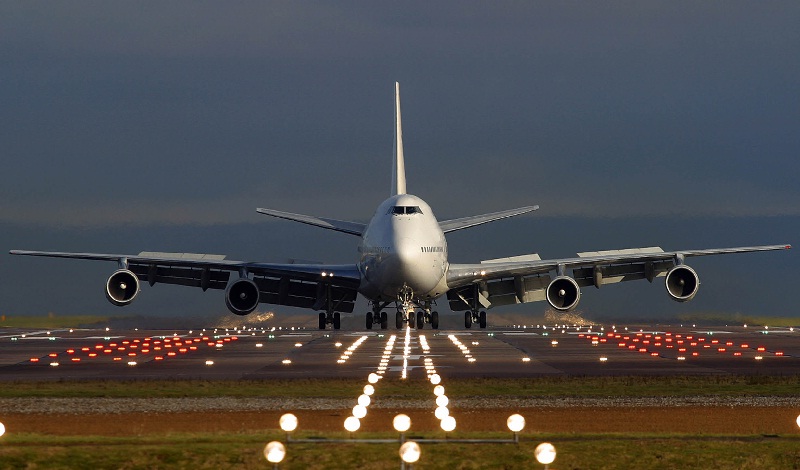
    On May 22, an Airbus A320, operated by Pakistan International Airlines (PIA) and en route from Lahore to Karachi, crashed moments before attempting a second landing, which led to the death of 97 passengers. Luckily, two passengers managed to survive the crash. The damage did not end there. When the aviation minister was expected to present the crash report, he went on to bring to light the pilots’ licensing issue that was still under investigation.    

    The revelation by Pakistan’s aviation minister unveiled a new type of security threat that jolted the entire aviation industry. Speaking on the floor of the National Assembly, the minister announced that 262 out of 860 Pakistani licensed pilots, who are working within Pakistan and abroad, had fake licenses and certificates. He repeated the number in a press conference the next day but added that the 262 pilots’ credentials were “suspected” to be fake.    

    This unprecedented revelation made frontlines, astonished the entire aviation industry, and damaged whatever little credibility the Civil Aviation Authority (CAA) had, since it is responsible for providing legitimate licences and certifications, hence ensuring travelers’ safety.

    “[Aviation minister’s] announcement rang alarm bells and dealt a heavy blow to the faltering national carrier. Now, not only PIA, but the entire CAA, needs to prove that it is capable of ensuring that its pilots are airworthy.”

    As soon as the news broke out, the European Union (EU) and the United Kingdom (UK) barred Pakistani commercial planes from entering their airspace. The European Union Air Safety Agency (EASA) issued letters to airline operators in member countries to suspend PIA’s authorisation to operate in the EU for six months. The US Department of Transportation also revoked the PIA’s authorisation to conduct flights to and from the country due to safety concerns.    

    The announcement rang alarm bells and dealt a heavy blow to the faltering national carrier. Now, not only PIA, but the entire CAA, needs to prove that it is capable of issuing legitimate licences and certificates while ensuring that its pilots are airworthy. It will definitely take a long time to recover, but the fact that such a thing could occur has alerted aviation authorities around the world. 

    Pakistan has been struggling to improve its image in the international world while being scrutinised by the Financial Action Task Force (FATF) and monitored by the International Monetary Fund (IMF). This incident might lead to the country being closely investigated by other organisations, such as the International Civil Aviation, which will be liable for ensuring that trained and certified pilots are flying planes around the world. With the Pakistani passport already being ranked among the worst in the world, the repercussions of this announcement will only cause its ranking to drop further, wiping out whatever efforts had been made to improve the country’s global image in the past. 

    It is heartbreaking to see PIA, which helped set up Emirates by leasing its aircraft and training its staff, in such a dilapidated state. Even though the coronavirus had pushed a large number of airlines towards bankruptcy, PIA’s poor global image and tarnished reputation will solely be responsible for its ill fate. The cat is out of the bag and the current government faces another uphill task to make amends within the aviation industry.

  • An ordinary budget in extraordinary times

    An ordinary budget in extraordinary times

    The federal budget for 2020-21 has been approved amid protests by the opposition and criticism by economic analysts. Is it really that bad a budget? Not at all. In fact, if anything, it might be incrementally better than the previous years’ budgets in many ways.

    For instance, budget 2020-21 can be termed as pro-business as it did not introduce any new taxation measures and instead included a reduction in custom and regulatory duties in a number of areas. In addition, there is no provision for any foreign loan repayment on the account of debt moratorium granted to us by our international lenders. Power and petroleum subsidies have been reduced by more than Rs100 billion, which, if reflected in energy pricing, can very well reduce the financial pressure on the government.

    “Despite all the talk of ‘corona budget’, ‘structural reforms’ and an ‘expansionary fiscal policy’, this was truly an ordinary budget but in extraordinary times, falling short of people’s expectations and exhibiting a meek response to the enormous challenge at hand.”

    Most importantly, for the very first time, the budget included statements on contingent liabilities, fiscal risks and tax expenditure, setting a new standard of information disclosure and budget transparency. These statements might not be perfect and may need substantial improvements, but nevertheless it is the first time any government has opted for such measures in Pakistan.

    The government also restrained from financing its deficit from the State Bank of Pakistan (SBP), albeit under IMF pressure. The development budget does not exhibit the kind of cuts that one would have expected, and last but not the least, the Public Sector Development Programme (PSDP) did not include any unapproved projects, setting a good practice for public investment management.

    If all this is true, then what is the fuss really about? Why are people not appreciating government’s efforts?

    First and foremost, despite all the talk of ‘corona budget’, ‘structural reforms’ and an ‘expansionary fiscal policy’, this was truly an ordinary budget but in extraordinary times, falling short of people’s expectations and exhibiting a meek response to the enormous challenge at hand.

    At a time when the country truly needed a fiscal push through ambitious development spending, the budget ended up sticking to fiscal discipline that is usually required under the International Monetary Fund (IMF) programmes. Perhaps the government could not communicate its domestic priorities to the IMF well. But it is quite clear that in the contest of balancing the preferences, appeasing the IMF won by a wide margin over the goal of stimulating the economy.

    “When history would be written, budget 2020-21 would not be criticised for any excesses but for not doing enough to revive the economy in the wake of COVID-19.”

    Secondly, and even more importantly, it is an unrealistic budget. The Rs4.9 trillion revenue target for the Federal Board of Revenue (FBR) can never be achieved without new taxation measures and is likely to fall short by at least Rs500-600 billion. The Rs242 billion provincial surplus is also quite unrealistic, especially considering that both Sindh and Balochistan have posted a cumulative deficit of more than Rs100 billion. Notwithstanding the windfall gains on the account of interest rate cut leading to reduced markup payments and an increase in fuel prices resulting in an increase in petroleum levy, the overall revenue receipts will fall short of targets, and when that happens, it will happen at the cost of development expenditure.

    READ:Twitter loses it over Rs1.29 trillion budget for defence, Rs83.63 billion for education

    Lastly, a crisis generally brings in the appetite for bold and difficult decisions and a crisis of this unprecedented proportion should have led to a paradigm in our priorities. The next few years are going to be tough, leaving little room for fiscal leakages. If there was ever a time to fix the state-owned enterprises and to privatise them, to take decisions on circular debt and power sector reforms, to put a stop on the relentless expansion in government size, to manage the ballooning pension liabilities, or to create a balance between civil and military spending, that time was now. But unfortunately, none of this could be traced in the budget documents.

    When history would be written, budget 2020-21 would not be criticised for any excesses but for not doing enough to revive the economy in the wake of COVID-19.

  • I’m always right…

    I’m always right…

    Imran Khan’s recent Freudian slip reveals a lot.”

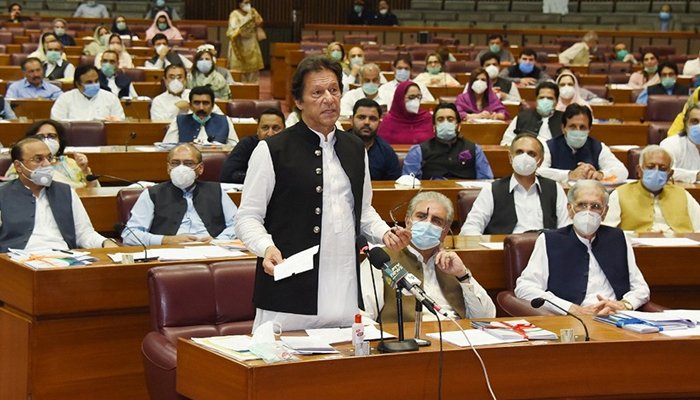
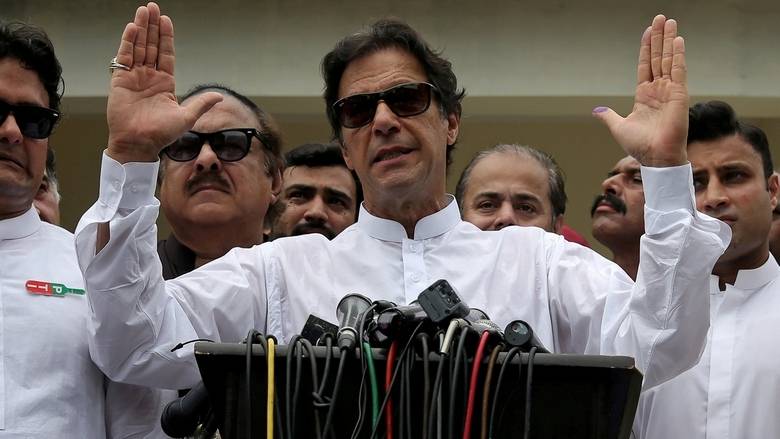
    Two interesting things happened recently in the chaotic drama that is Pakistani politics: one is that the prime minister (PM) actually deigned to show up in the parliament, and the second is that he referred to al-Qaeda founder Osama bin Laden as a “shaheed [martyr]” during his speech on the floor of the National Assembly.  

    Imran Khan, speaking in the context of his usual “the world has mistreated Pakistan” narrative, referred to the Abottabad raid saying, “One thing that happened was that the Americans came and killed Osama Bin Laden in Abbottabad… martyred him” — or in Urdu, “Abbottabad may aa kr maar diya… shaheed kar diya.” People picked up on this quickly and social media erupted in astonishment and dismay.

    This was then followed by the very amusing attempts of IK apologists to clarify what “he actually meant”. One of his advisors attempted to fudge the facts by tweeting that the PM “twice used the word  ‘killed’ for OBL” and that all the ensuing hoo-ha was actually a conspiracy “with clear attempt to make his remarks controversial unnecessarily”.

    But the fact is that his remark is controversial. His slip of tongue reflects possibly his true political leanings and seems to be the logical continuation of the position he has taken on various issues over the years.

    “He [Imran] is the man who despite (or maybe because of ) his elitist Lahori upbringing and western education, has always taken very right-wing and regressive political positions.”

    He is the man who tried to portray the Taliban to western media as “misunderstood freedom fighters”, who was in favour of “negotiating” with militants, and who advocated for them being allowed to open an office — as if to suggest that they were a serious political group rather than a group of armed religious extremists responsible for the bloody attacks and bombings that resulted in the killing of thousands of Pakistanis (civilians, uniformed personnel, school children, teachers).

    He is also the man who despite (or maybe because of ) his elitist Lahori upbringing and western education, has always taken very right-wing and regressive political positions. After his return to Pakistan, he became something of a born-again Muslim and also something of a born-again Pashtun, and his closest political allies over the decades have been right-wing and religious parties.

    Apart from official spokespersons trying to clarify and defend the PM’s choice of words, there were also several others, including some non-official ones like the TV news anchor who describes himself on Twitter not as a ‘columnist’ but as a ‘prominent columnist.’ This gentleman tweeted repeatedly in defence of the great leader and he came out with a few gems about the leader’s slip of tongue, even bringing puja, idols and Modi into the conversation! He also remarked that “the discussion was not about OBL” but about how IK’s government “has improved communication and engagement with the US & the world”.

    The way the Pakistan Tehreek-e-Insaf (PTI) government has reacted to this matter, illustrates both the way that it functions as well as the way in which Imran himself conducts his politics. For one thing, IK does not seem to believe in any sort of political dialogue of any kind of engagement that might lead to consensus.

    “‘I am right’ could easily be his motto in life (inching even further towards the far right). You can call this either immense self-belief or insufferable arrogance…”

    His approach seems to be that when he talks, everybody else should listen. His speeches are a mixture of pseudo-Islamic nationalism and political self-righteousness, peppered with abuse for opposition members. His contempt for parliament is evinced by his poor attendance record as well as the fact that he has not bothered to do any legislative work in parliament or do anything on any committees or in any other way be part of the community of parliamentarians. But when he talks, people should listen, and people who disagree with him are wrong.

    “I am right” could easily be his motto in life (inching even further towards the far right). You can call this either immense self-belief or insufferable arrogance — but the problem with this tendency is that it is often an impediment in the process of learning and developing.  Which raises the question that: after 22 years in the field has Imran Khan evolved politically? Will he ever be able to?

    The answer to this question is unclear but it is a sad fact that a man who so many Pakistanis wished so well because he was a national cricket hero (and eye candy) has become a divisive, rude and arrogant leader. He has some good ideas generally perhaps and also has the persistence to keep going, but the “I am right” mantra will only get you so far in life.

  • The Sher I knew

    The Sher I knew

    “Rest in peace Khalid Sherdil. You are loved beyond measure, and we will miss you terribly.”

    They say things happen for a reason. There wasn’t a reason why on Friday, May 22, I felt the need to check if Khalid had reached Karachi. Strange that my phone buzzed in my hand the exact moment I wanted to check his whereabouts. I had received a text message from a friend that something was not quite right; Khalid’s plane had bumped on the runaway a few times and taken off again. In those few moments, I knew something was wrong.

    Moments later, flight PK-8303 crashed. My first thought: this is not happening. The plane was too close to the runway. Khalid will be okay. He had to be okay. You can’t joke with a person the night before their flight and not have them be alright. It didn’t work that way.

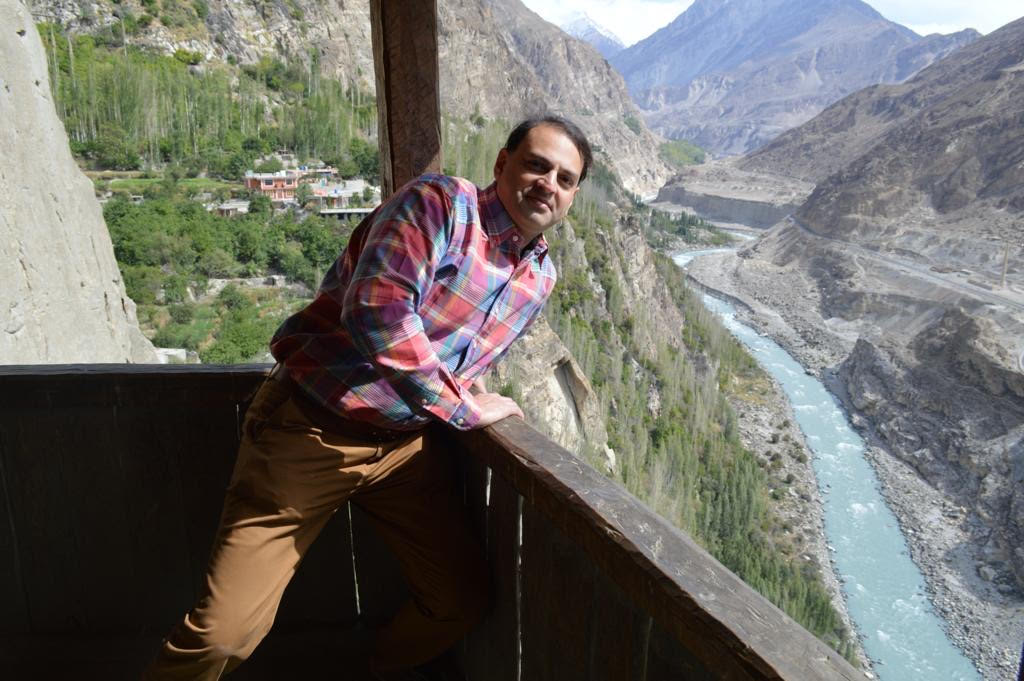
    Khalid at Altit Fort in Hunza in October 2019.

    The day worked its way, getting ready to deliver the knockout punch that Khalid was gone. People gathered, wept and stayed with us. I remember the quiet, the horrid gut-wrenching silence when people run out of words.

    Strangely no one from Pakistan International Airlines (PIA) ever came. Everyone who was anyone in the bureaucratic machinery reached out to help us, to somehow get Khalid’s body back to us. For days we didn’t even know if there was a body. Would we get one back? If we did, would it be Khalid’s? Worst still, what if someone had mistakenly claimed his body? These questions, nauseatingly real and unimaginable, simultaneously ate through my family.

    “Khalid was all around us and yet I knew that the Almighty had played His final hand and he was gone. We were awash with grief, the kind that gnaws inside bones and never leaves.”

    For days we didn’t have Khalid’s body and yet we had so much of him around us. I sat every day in his room, looking at the feature stone wall which he had put up with so much love. He had sent photos of the tiles to everyone in the family to see if we approved. Outside his giant, floor to ceiling window lay the sprawling lawn where he played endless hours of soccer with my children. If it wasn’t soccer, it would be chess or games that Khalid invented with their own hilarious rules. Even the house cat had some role to play in his playtime with the children. I was waiting for the moment that Khalid would walk in, chapstick in hand and start some silly game.

    Khalid was in a hurry to get someplace all the time. He had boundless energy and the soul of an adventurer. He loved his bold and beautiful belts, his colourful sunglasses and chocolate. I’ve never met a kinder soul than his, his smile always saying more than his words. Khalid was kind, magnanimous, spirited and gentle beyond belief. He helped others without ever thinking about it. Khalid even helped me find a new home for my dog because he knew I just couldn’t give it away to anybody. You’d never think a man in that dark suit would know how to love so much.

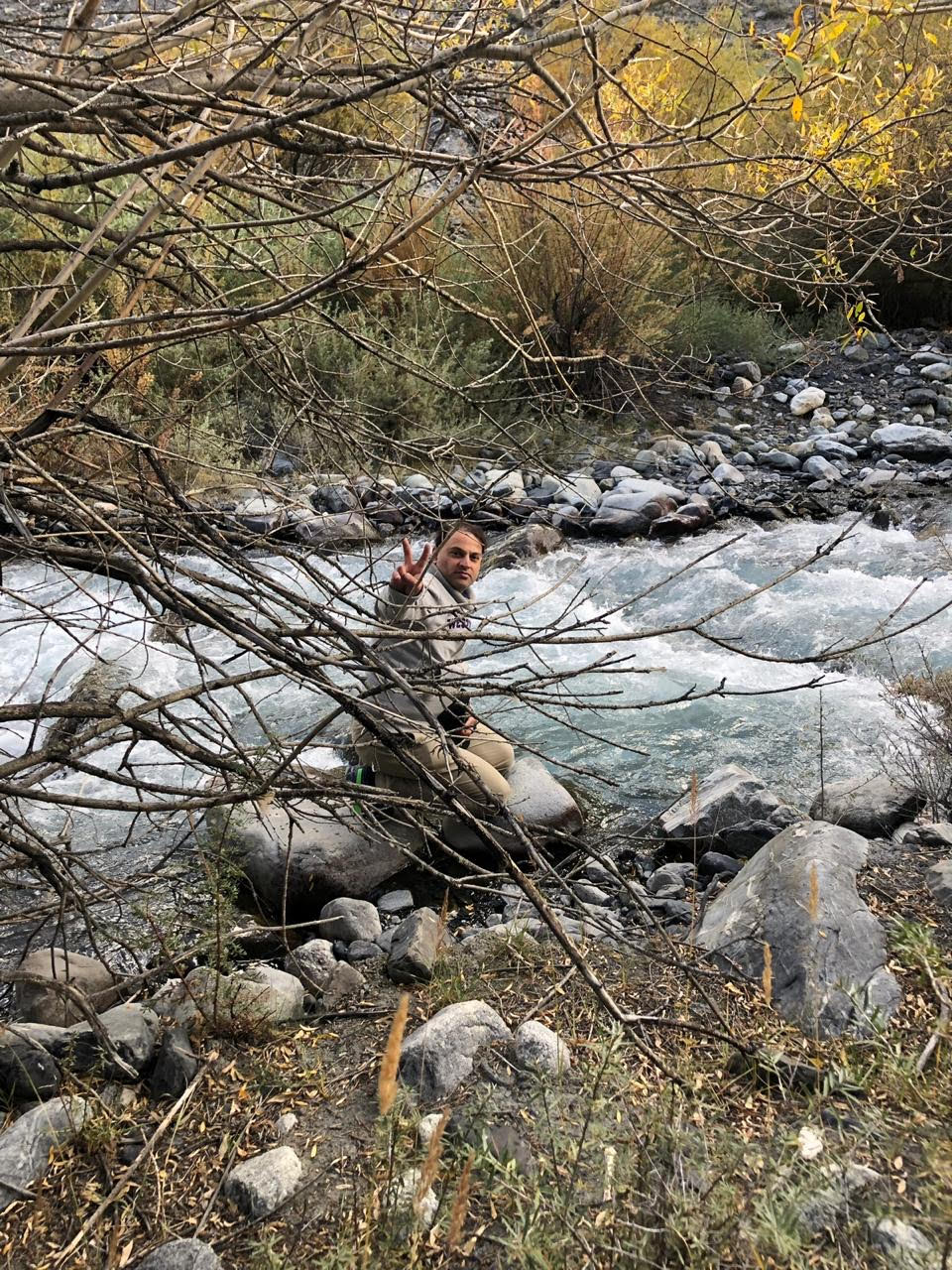
    Khalid at Khunjerab National Park in October 2019.

    Khalid was all around us and yet I knew that the Almighty had played His final hand and he was gone. We were awash with grief, the kind that gnaws inside bones and never leaves.

    Grief, as it so happens, at least according to the Kubler-Ross Cycle, has five stages: denial, anger, bargaining, depression and acceptance. Thanks to PIA, which incidentally offered no assistance to locate Khalid’s body or help in the least in any humane way, my husband’s grief cycle jumped straight to acceptance. There was no room for denial or anger as he got down to the business of getting his brother home.

    “I can only hope for the best but somehow I’m reminded of a famous quote at the conclusion of The Shawshank Redemption, where Andy Dufresne says to his friend, ‘Remember, hope is a good thing, maybe the best of things, and no good thing ever dies.’”

    It wasn’t easy. Four days later, Khalid’s DNA matched and he was on his way home. PIA was still absent, behaving like a child who throws away a toy after it’s broken.

    As an on-again-off-again writer, I like to get to the bottom of things. I wanted to distill all the information in my wrecked brain and re-create what happened that day. PIA didn’t even bother to have a press briefing as to what may have happened to flight PK-8303. A grieving mind will settle for any information that provides closure. I watched video after video on YouTube to make sense of what might have happened. And still, silence from the airline that could make sense of it all.

    Adventurous, determined and committed to helping humanity.

    They say the smallest coffins are the heaviest. After receiving Khalid’s coffin draped in our national flag, it could not have been heavier. Khalid loved wearing the Pakistani national flag lapel pin on his suit collar, and as fate would have it, he was buried with our flag. Khalid was a true patriot and he loved his country. His friends, fellow Pakistan Administrative Service (PAS) officers and family helped bring him home. An airline bearing our national flag perished with 97 souls on board and all the PIA could offer was a compensation cheque after everything was done. Keep your money PIA; don’t use it as a means to absolve yourself of guilt.

    As days pass by, my friends and family offer words of comfort. I can only hope for the best but somehow I’m reminded of a famous quote at the conclusion of The Shawshank Redemption, where Andy Dufresne says to his friend, “Remember, hope is a good thing, maybe the best of things, and no good thing ever dies.” Something pure and good died on flight PK-8303.

    Rest in peace Khalid Sherdil. You are loved beyond measure, and we will miss you terribly.