Category: Business

  • PSX touches record high with 174,000 points amid UAE investment optimism

    PSX touches record high with 174,000 points amid UAE investment optimism

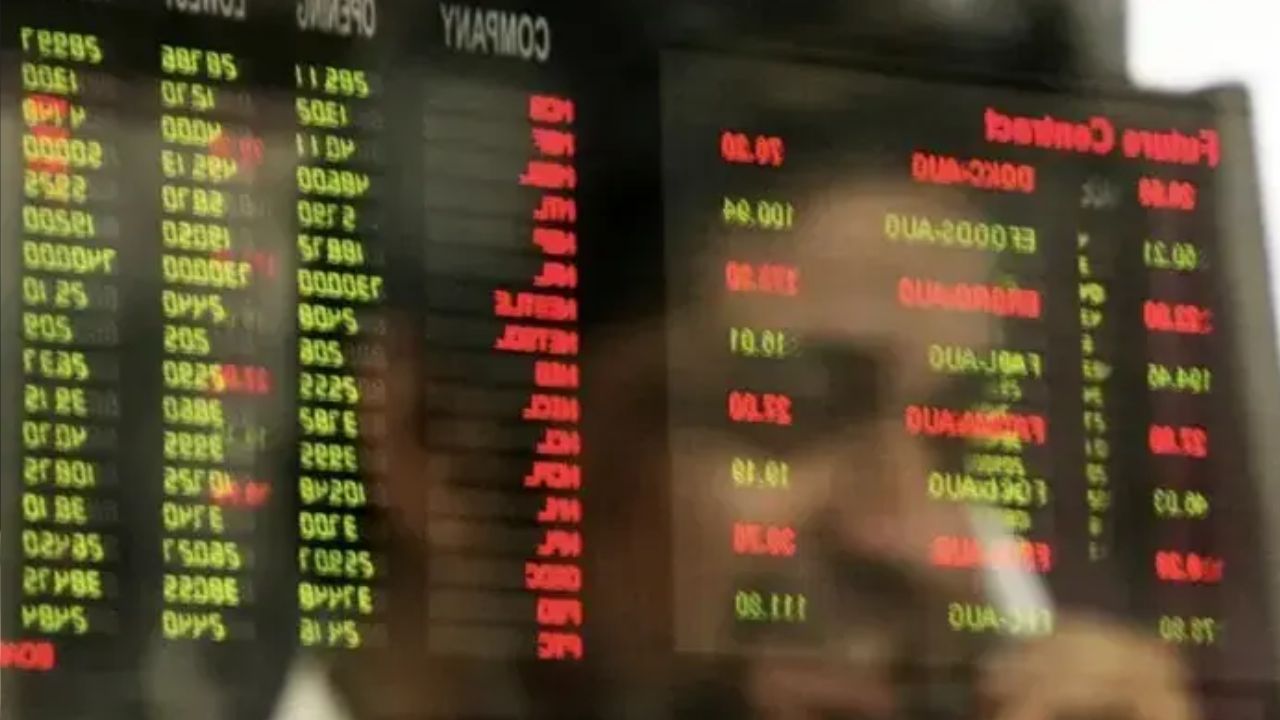
    Pakistan’s stock market opened the final week of the year on a strong note, with the KSE-100 Index surpassing the 174,000 mark during Monday’s early trading.

    This happened as optimism over a potential United Arab Emirates (UAE) investment in Fauji Foundation, along with a $1 billion rollover liability settlement, boosted investor sentiment and pushed the market to a new all-time intraday high.

    The benchmark displayed robust momentum throughout the session, reaching an intra-day high of 174,411.72 points. By 11:30am, it was trading around 173,669.86, up 1,269.13 points or 0.74% from the previous close.

    Investor demand was particularly visible in major sectors, including automobile assemblers, cement, commercial banking, fertilisers, oil and gas exploration, OMCs (Oil Marketing Companies), and power generation and refinery companies. Heavyweight stocks such as ARL (Attock Refinery Limited), HUBCO (the Hub Power Company Limited), MARI, OGDC (Oil & Gas Development Company Limited), PPL (Pakistan Petroleum Limited), POL (Pakistan Oilfields Limited), HBL (Habib Bank Limited), MEBL (Meezan Bank Limited), and MCB were all trading in positive territory.

    According to Arif Habib Limited’s report, “Pakistan Investment Strategy 2026: The Equity Edge Continues,” the PSX is expected to remain the top-performing asset class in 2026, underpinned by improving macroeconomic conditions, easing inflation, and steady domestic liquidity.

    According to Khurram Schehzad, advisor to the Finance Minister, the Pakistani equity market has produced almost 50% gains in US dollars since January 2025, placing it among the best performers in Asia.

    “Since January 2025, the PSX has delivered 50%+ returns in US dollar terms, making it one of the best markets in Asia, with 2025 being another year of strong gains for investors,” said Advisor to Finance Minister, Khurram Schehzad. “Investor participation is rising fast – the equity investor base has crossed 450,000, up 120,000+ investors (+37%) in 18 months. 

    “These record levels reflect growing investor confidence, supported by continued macro stability, key reforms, and improving prospects for more sustainable, higher future growth,” he added.

    Last week, the KSE-100 Index concluded at a record 172,400.73 points, marking a 0.6% weekly increase and extending its year-end rally to all-time highs.

    Globally, Asian markets opened at six-week highs, while the US dollar hovered near three-month lows amid expectations that the Federal Reserve could cut interest rates next year, fueling gains in precious metals.

    Geopolitical developments also influenced sentiment. On Sunday, US President Donald Trump indicated that he and Ukrainian President Volodymyr Zelenskiy were “getting a lot closer” to reaching a potential agreement to end the Ukraine war.

    MSCI’s (Morgan Stanley Capital International) broad Asia-Pacific index climbed 0.27%, reaching its highest level since October 3, as the region kicked off the final week of the year on a strong note. The index has surged more than 25% this year, driven largely by technology stocks amid ongoing AI enthusiasm.

    South Korea’s Kospi jumped 1.5% to near a two-month high, bringing its annual gains to an impressive 74%, on track for its strongest yearly performance since 1999.

    Meanwhile, Japan’s Nikkei fell 0.4%, while Taiwan stocks inched up 0.3% to set a new record high.
  • FBR exempts Chinese imports to Gilgit-Baltistan from sales, income taxes

    FBR exempts Chinese imports to Gilgit-Baltistan from sales, income taxes

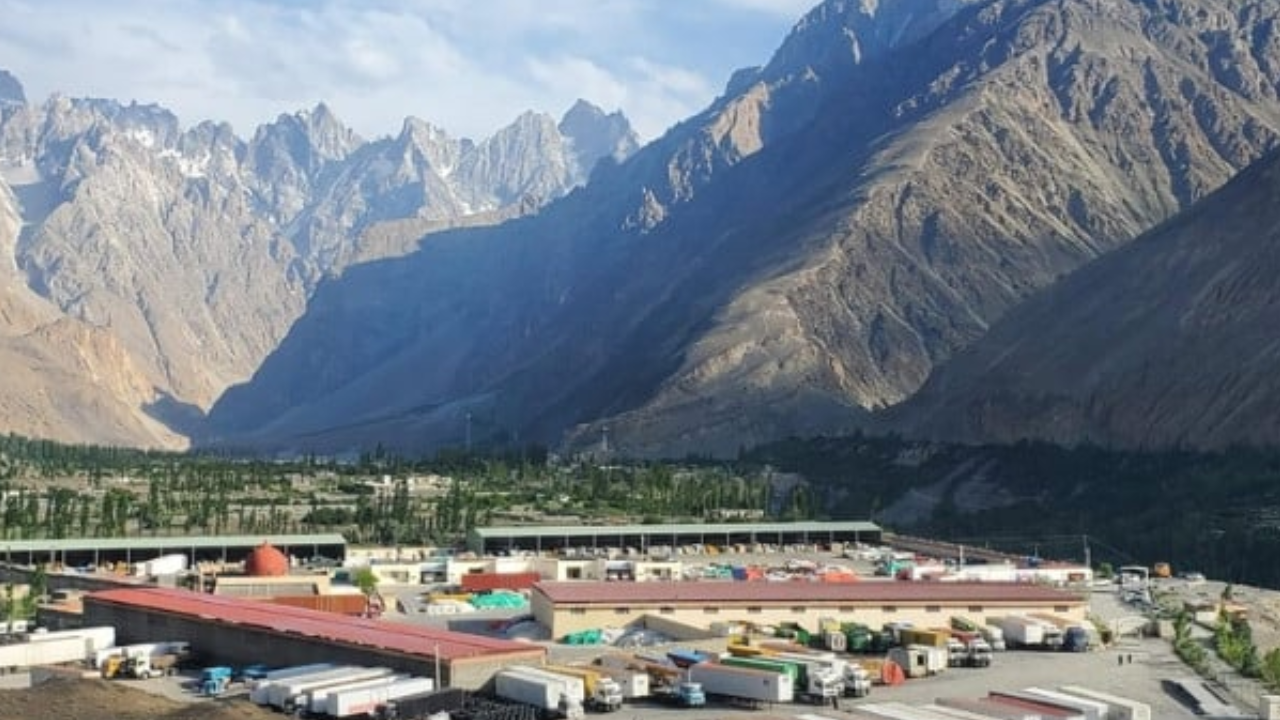
    The Federal Board of Revenue (FBR) has granted a tax exemption for Chinese products imported for use in Gilgit-Baltistan through the Customs Dry Port in Sost, eliminating the need for sales or income taxes as well as federal excise duty.

    As per the details, the exemption, effective immediately, has been formalised through a notification, which details a unique procedure for clearing goods imported from China.

    The notification includes over 2,403 Chinese products identified by particular Pakistan Customs Tariff (PCT) codes as eligible for this exemption.

    According to the outlined procedure, eligible imports will not incur taxes, provided that an online consignment-wise authorisation is obtained through the Customs Computerized Clearance System. This authorisation must be issued by an authorised representative of the Government of Gilgit-Baltistan using the designated format in the system.

    The notification states that the non-levy of taxes will be granted by the collector of Customs on a first-come, first-served basis within the specified quota. Any goods brought in for use in Gilgit-Baltistan that exceed the allocated quota will be liable for the applicable sales tax, income tax and federal excise duty.

    The Government of Gilgit-Baltistan is responsible for ensuring that all goods imported under this notification are exclusively used within the region’s boundaries.

    Additionally, the notification includes measures to prevent tax-exempt goods from being transported outside of Gilgit-Baltistan.

    In situations where Customs operations are hindered by protests or road blockages, the collector of Customs, may, in collaboration with the Government of Gilgit-Baltistan, suspend the exemption from sales tax, income tax and federal excise duty as stated in the notification.

    The collector of Customs also has the authority to deny tax exemptions in individual instances where there is significant misdeclaration that necessitates legal action under the Customs Act, 1969, or if goods cleared under this exemption are taken outside the jurisdiction of Gilgit-Baltistan.

    The board will also establish a special procedure to differentiate, monitor and clear goods imported via Sost intended for consumption in other regions of the country from those cleared under the exemption for Gilgit-Baltistan.

    All relevant laws and regulations under the Imports and Exports (Control) Act, 1950, the Import Policy Order and the Customs Act, 1969, will still apply to all goods imported through the Sost Dry Port, regardless of whether they are meant for use in Gilgit-Baltistan or other areas of the country.

  • Pakistan gold prices go up amid global spike

    Pakistan gold prices go up amid global spike

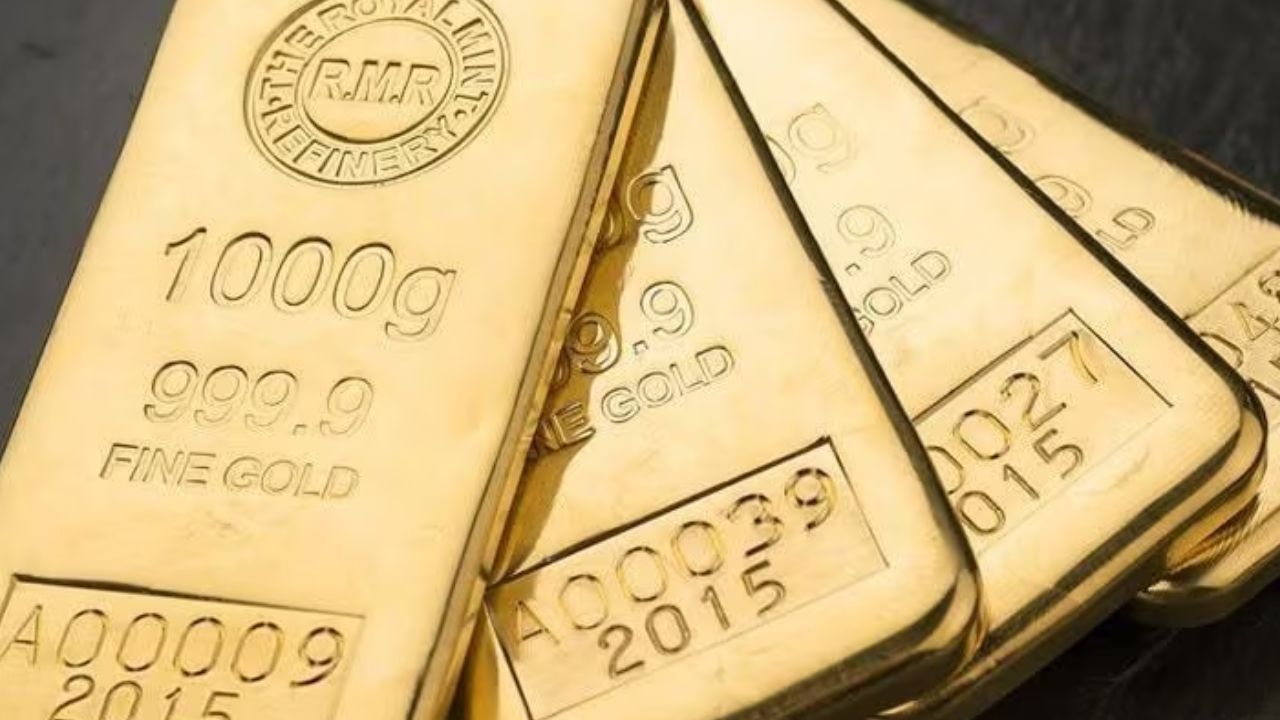
    Gold prices in Pakistan increased on Friday as gains were recorded in the international market, rates released by the All-Pakistan Gems and Jewellers Sarafa Association (APGJSA) revealed.

    In the local market, the cost of gold per tola rose by Rs500, bringing it to Rs473,362 for the day. Similarly, the price for 10-gram gold went up by Rs429, reaching Rs405,831.

    Earlier this week, gold prices on Wednesday reached a new all-time high, with the per tola rate increasing by Rs2,000 to hit Rs472,862.

    In the international market, gold prices rose by $5 and now stand at $4,510 per ounce, which includes a premium of $20.

    Meanwhile, silver prices also experienced a rise, with the per tola rate increasing by Rs240 to close at Rs7,945.

  • Pakistan, ADB seal $730m financing package to strengthen power transmission network

    Pakistan, ADB seal $730m financing package to strengthen power transmission network

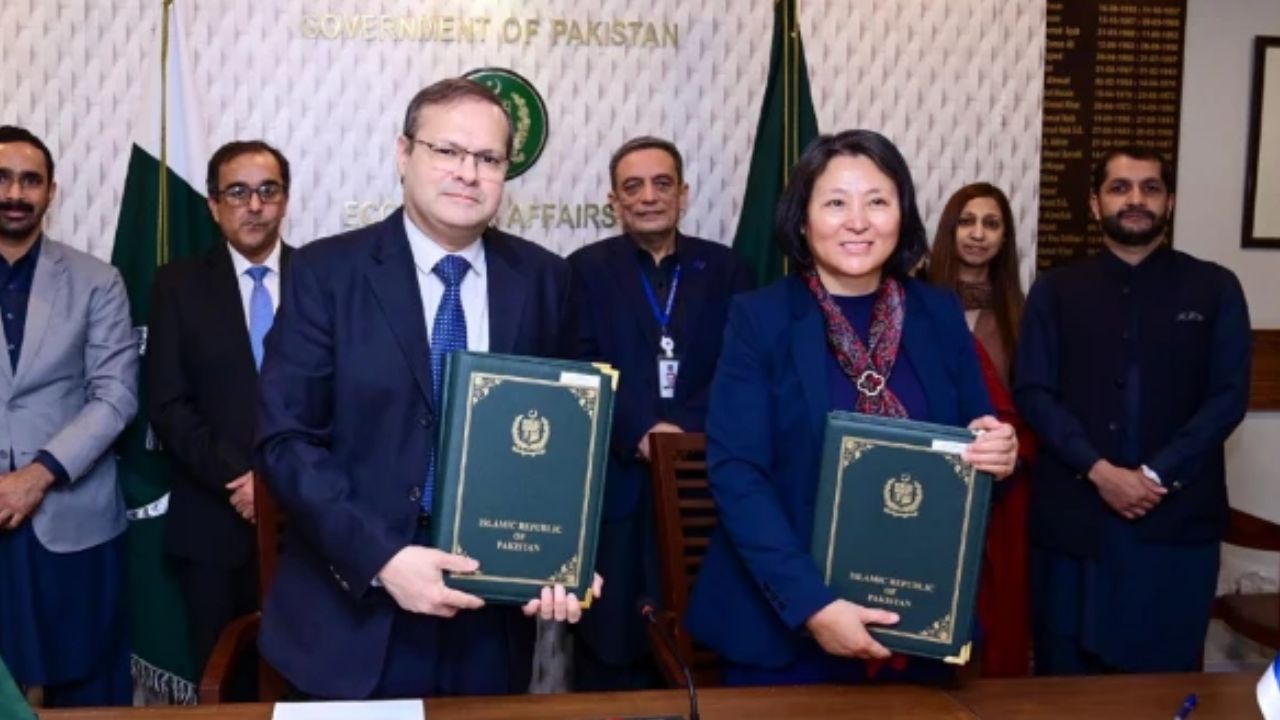
    Pakistan and the Asian Development Bank (ADB) have signed two financing agreements worth a combined $730 million to strengthen the country’s power transmission network and push forward reforms in state-owned enterprises (SOEs), officials said on Thursday.

    An official statement released after the signing ceremony stated that the agreements include a $400 million program to speed up SOE transformation and a $330 million second power transmission strengthening project.

    The initiatives aim to encourage long-overdue governance reforms across important public-sector enterprises, enhance operational efficiency, and relieve pressure on overburdened transmission lines.

    ADB Country Director Emma Fan welcomed the latest agreements, praising Pakistan’s commitment to structural reforms and underscoring the strategic importance of investment in the power sector. She said the SOE transformation programme comes at a critical time and would further strengthen reform efforts, according to the statement.

    As part of broader efforts to stabilize and modernize the national grid, the ADB approved two loans totaling $330 million last month for the building of a new transmission line connecting Islamabad with Faisalabad, a significant industrial hub in Punjab.

    However, analysts warn that until underlying structural concerns are addressed, finance and project design alone might not be sufficient.

    The $730 million package, according to Dr. Khalid Waleed of the Sustainable Development Policy Institute (SDPI), is a significant step, but he cautioned that its success will depend on addressing long-standing inefficiencies across SOEs.

    He cited the Bi-Annual Report on Federal SOEs for FY2025 from the Ministry of Finance, which reveals cumulative losses of more than Rs5.8 trillion. The National Highway Authority accounts for nearly Rs2 trillion of these losses, largely due to debt-driven expansion and an unsustainable toll-revenue model.

    “This is not a sector-specific problem; it is systemic,” Dr Waleed said.

    In infrastructure, NHA’s rising debt stock reflects asset creation divorced from cash-flow realism. In energy, the situation is arguably worse. Once subsidies are stripped out, power distribution companies (DISCOs) are estimated to be bleeding close to Rs600 billion annually due to high technical losses, poor recoveries, and governance failures, losses that feed directly into circular debt and escalating capacity payment obligations upstream.

    Analysts argue that while strengthening transmission infrastructure is necessary, it risks being only a partial solution if distribution-level problems remain unresolved. Dr Waleed likened reforming generation or transmission without fixing distribution to “installing a smart meter on a leaking pipe”.

    There have also been complaints that the SOE Transformation Program’s current scope may be too limited. While reforming the NHA is seen as a logical starting point, experts say it must go beyond incremental efficiency improvements to include deeper restructuring, such as asset recycling, toll securitisation and concession-based highway operations.

    Similarly, analysts argue that energy-sector SOEs particularly DISCOs need to be explicitly incorporated into the reform framework through options such as privatisation, long-term concessions or performance-based management contracts, supported by aggressive loss-reduction targets.

    The discussion also touches on Pakistan’s more general energy transition challenges. The power industry is dealing with rising capacity payments and growing underutilization of generation assets, which is made worse by rooftop solar’s explosive rise. This dynamic is expected to intensify as export-oriented industries seek cleaner power in response to the European Union’s Carbon Border Adjustment Mechanism.

    According to experts, ADB should support an energy transition mechanism in addition to grid upgrades. Dr. Waleed proposed that an organized, financially supported early transition of loss-making thermal plants, beginning with the Jamshoro coal power plant sponsored by the ADB, might reduce the strain on circular debt and future capacity payments.

    “The transmission project strengthens the backbone of the grid, but it does not resolve the contradiction between surplus capacity and mounting fiscal stress,” he said.
    Analysts warn that without politically difficult but economically necessary reforms, the $730 million package risks adding new assets to a system still burdened by losses, debt and weak governance.

  • New Cultus prices will blow your mind

    New Cultus prices will blow your mind

    Suzuki Pakistan has announced the latest prices for its popular hatchback, Cultus.

    As per the details, the top-of-the-line Suzuki Cultus VXL Auto Gear Shift (AGS) variant now carries a price tag of Rs4,591,460. The variant features automatic gear shift system, two airbags, Anti-lock Braking System (ABS), alloy wheels, fog lights, power windows, power steering and power side mirrors.

    Suzuki Cultus VXR (manual) will now cost Rs4,089,490, while the Suzuki Cultus VXL (manual) will retail at Rs4,359,160.

    All three variants run on a 998cc petrol engine, which offers better fuel economy and low maintenance costs.

    It is important to note that withholding tax will be charged separately, and final prices may vary for filers and non-filers.

    In a release, the company said that all variants of the Suzuki Cultus are currently available in the market with immediate delivery.

    Pak Suzuki Motor Company Limited introduced the current generation Suzuki Cultus at a launch event in Lahore on April 22, 2017. The new Cultus VXR initially carried a price of Rs1,250,000 while the Cultus VXL was priced at Rs1,391,000.

  • Arif Habib consortium emerges victorious in PIA auction

    Arif Habib consortium emerges victorious in PIA auction

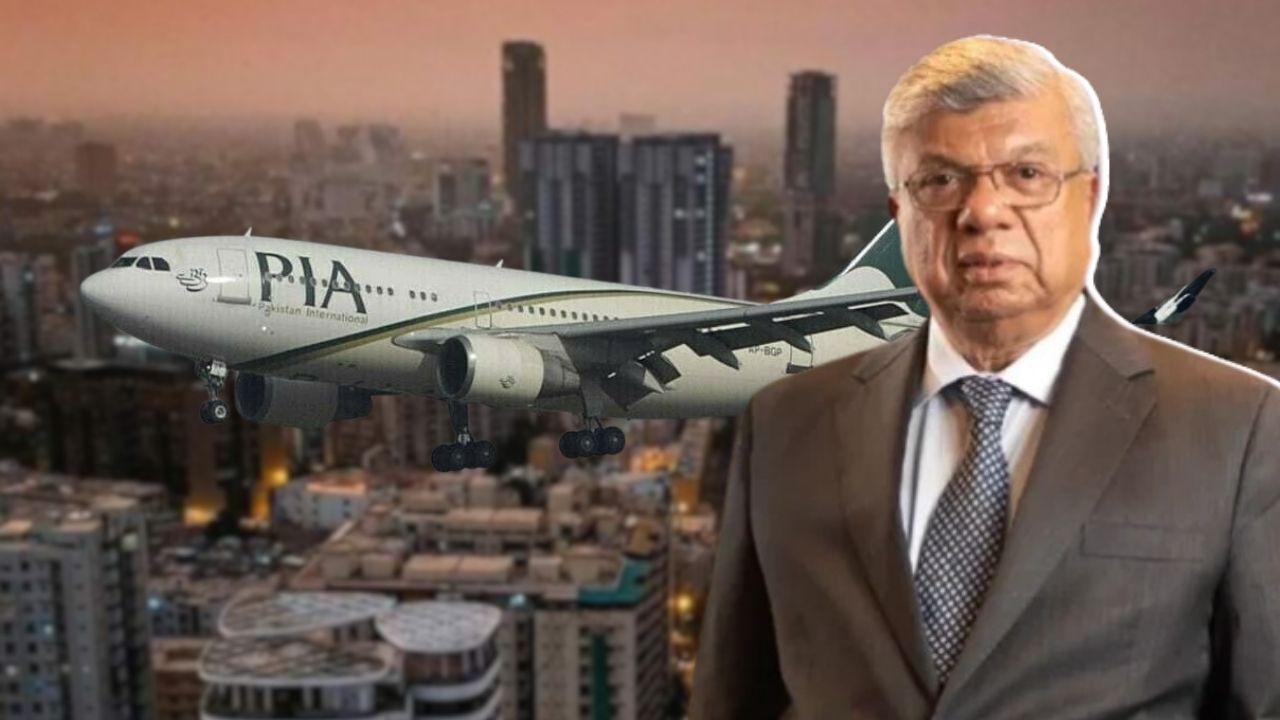
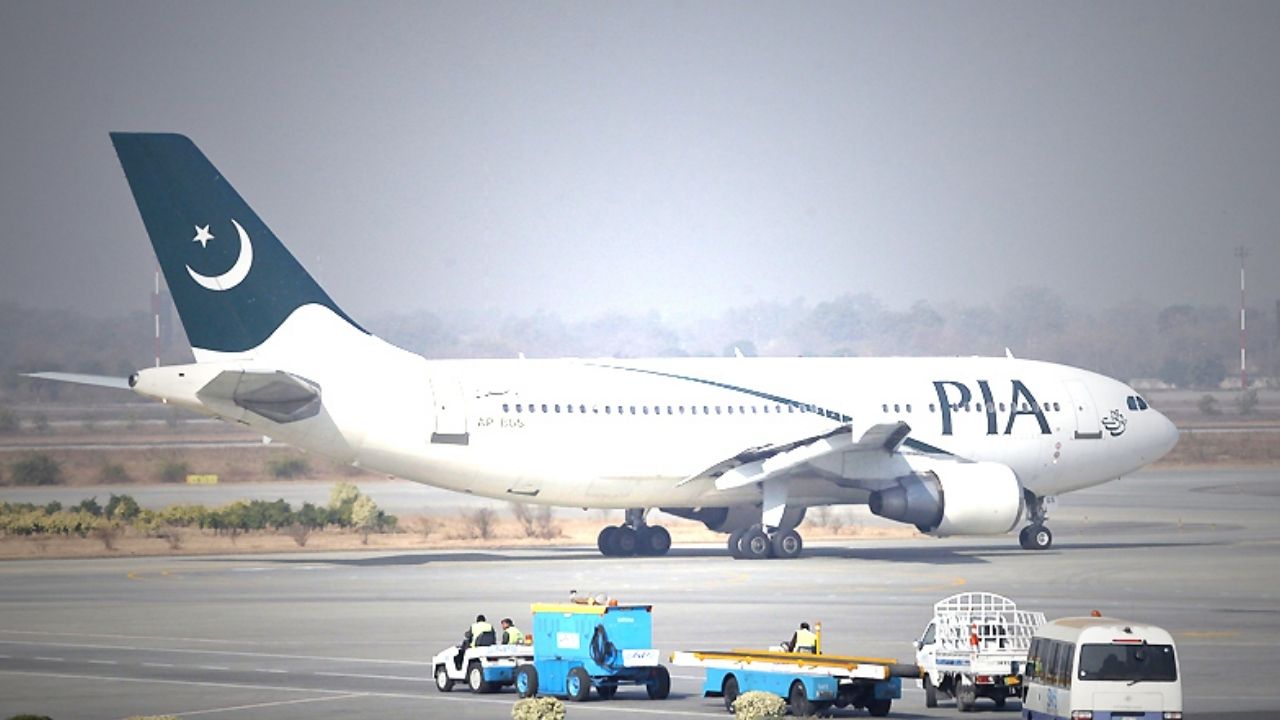
    Arif Habib Consortium on Tuesday won the auction for Pakistan International Airlines Corporation Limited with a successful bid of Rs135 billion, securing a 75% stake, after the privatisation process entered an open auction round at a ceremony in Islamabad.

    The result marked Pakistan’s first major privatisation in nearly two decades.

    Earlier in the day, pre-qualified bids came from Lucky Cement, private airliner Airblue and the Arif Habib consortium.

    In the first round of bidding, Lucky Cement offered Rs101.5 billion, Airblue submitted Rs26.5 billion, while the Arif Habib consortium placed the highest bid at Rs115 billion. 

    Airblue exited the race as its bid fell short of the reference price of Rs100 billion, which was announced by authorities after the completion of the first round.

    Officials then allowed a 30-minute break for consultations between the two highest bidders. After the break, the auction entered its second round that opened with a base bid of Rs115 billion — based on the highest first-round offer by Arif Habib.

    The bidding rules set the minimum increment at Rs250 million as Arif Habib and Lucky Cement engaged in competitive bidding during the open auction. 

    Lucky Cement raised its offer to Rs134 billion before Arif Habib responded with a bid of Rs135 billion.

    Following the move, Lucky Cement withdrew from the auction and congratulated Arif Habib.

    The entire auction was broadcast live on TV and streamed across official social media platforms.

  • Gold hits record $4,383 as silver surges 138 percent this year

    Gold hits record $4,383 as silver surges 138 percent this year

    Gold prices surged to an all-time high of $4,383.76 per ounce in early trading, eclipsing its previous peak of $4,381.52 set in October. The rally follows a series of US economic data releases last week that strengthened expectations of further monetary easing by the Federal Reserve.

    Spot silver also soared high, rising 2.7 percent to a historic $69.23 per ounce, marking another milestone in a year of unprecedented gains.

    So far in 2025, gold has climbed 67 percent, breaking multiple records, including the $3,000 and $4,000 per-ounce thresholds for the first time. Silver has outperformed gold spectacularly, surging 138 percent year-to-date, fueled by strong investment demand and ongoing supply constraints.

    “With December typically delivering positive returns for gold and silver, seasonality is working in their favour,” said Matt Simpson, senior analyst at StoneX. “However, with gold already up about 4 percent this month and year-end approaching, lower trading volumes could increase the risk of profit-taking.”

    The price surge has been bolstered by gold’s longstanding reputation as a safe-haven asset in the face of geopolitical and trade uncertainties, consistent purchases by central banks, and expectations for reduced US interest rates in 2026. A weaker US dollar has also contributed to rising prices by making gold more accessible for international buyers.

    Markets are currently pricing in two US interest rate cuts next year, despite the Fed maintaining a cautious stance. Non-yielding assets such as gold typically benefit in a lower interest rate environment. Simpson added that expectations of additional rate cuts, coupled with a slower US employment growth and a more dovish Fed, could further propel gold prices.

    In other areas of the precious metals market, platinum rose by 4.1 percent to $2,054.25 per ounce, reaching its highest point in over 17 years, while palladium gained 4 percent to $1,781.32, nearing a three-year peak.

  • IT exports soar to $1.8 billion, driving Pakistan’s economic growth

    IT exports soar to $1.8 billion, driving Pakistan’s economic growth

    Pakistan’s digital economy is entering a golden era as the country’s IT exports, driven by effective policies and facilitation by the Securities and Exchange Commission of Pakistan (SECP), have a set new record.

    According to the State Bank of Pakistan (SBP), IT exports increased by 19 percent during the first five months of the current fiscal year, with the total volume from July to November reaching a whopping $1.8 billion.

    November alone accounted for $356 million, underscoring the sector’s rapid expansion.

    According to officials, SECP’s facilitation and strategic actions have increased confidence among global investors, allowing the IT sector to grow more quickly.

    Experts highlight that the increase in IT exports is important for employment, digital sovereignty and overall economic stability in addition to being a significant source of valuable foreign exchange.

    The rise positions Pakistan as a competitive player in the global digital economy, signaling long-term benefits for national development and investor confidence.

  • PepsiCo Launches PepsiCo Rise Together Initiative in Pakistan to Help Rebuild Livelihoods for Flood-Affected Food Cart Vendors

    PepsiCo Launches PepsiCo Rise Together Initiative in Pakistan to Help Rebuild Livelihoods for Flood-Affected Food Cart Vendors

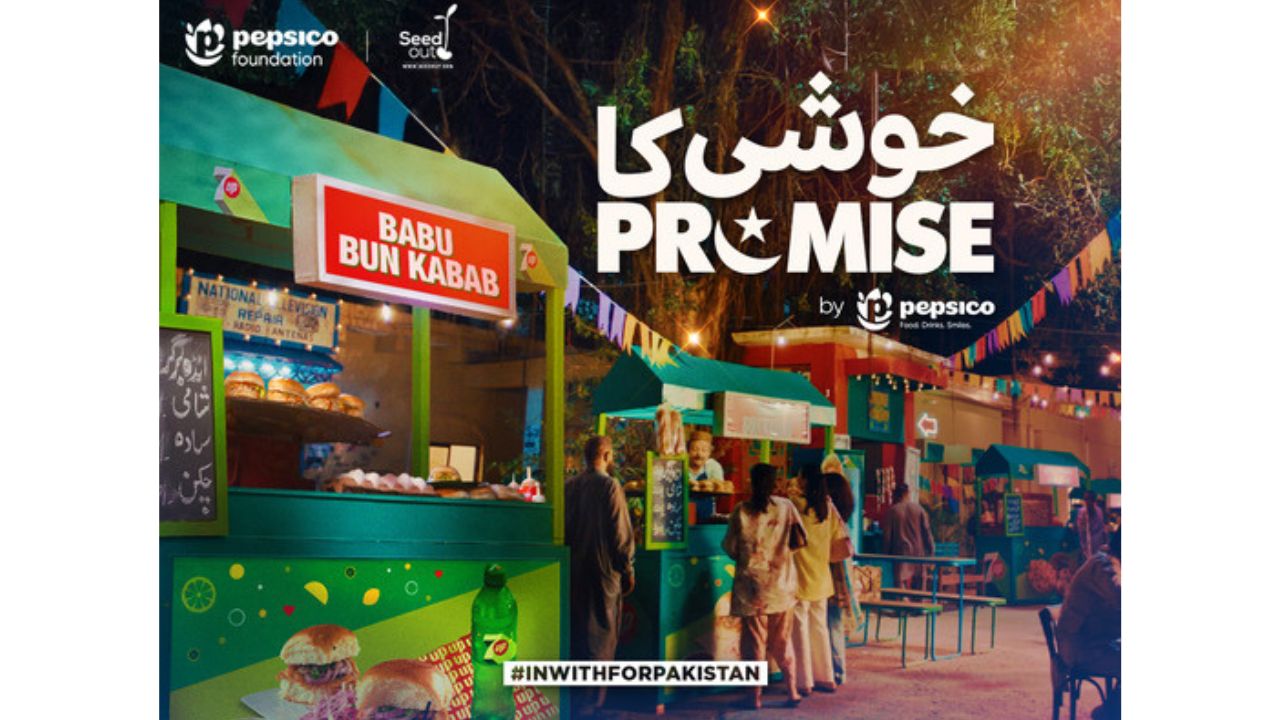
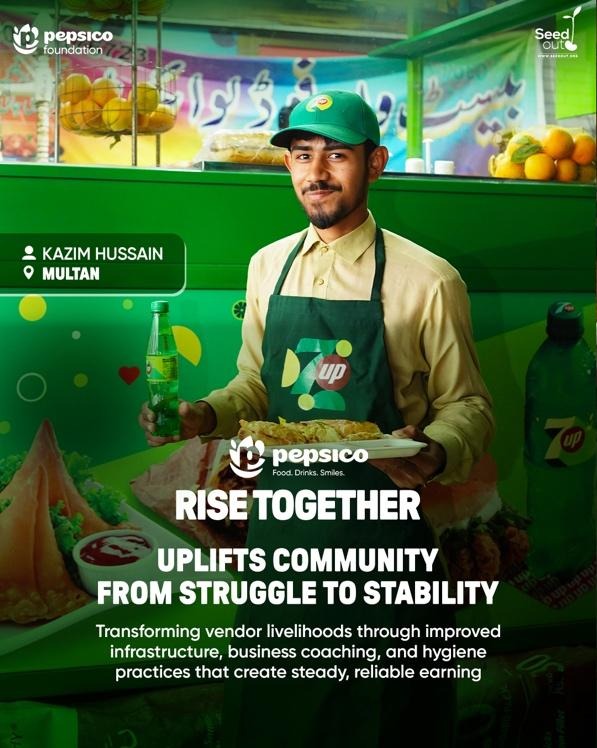
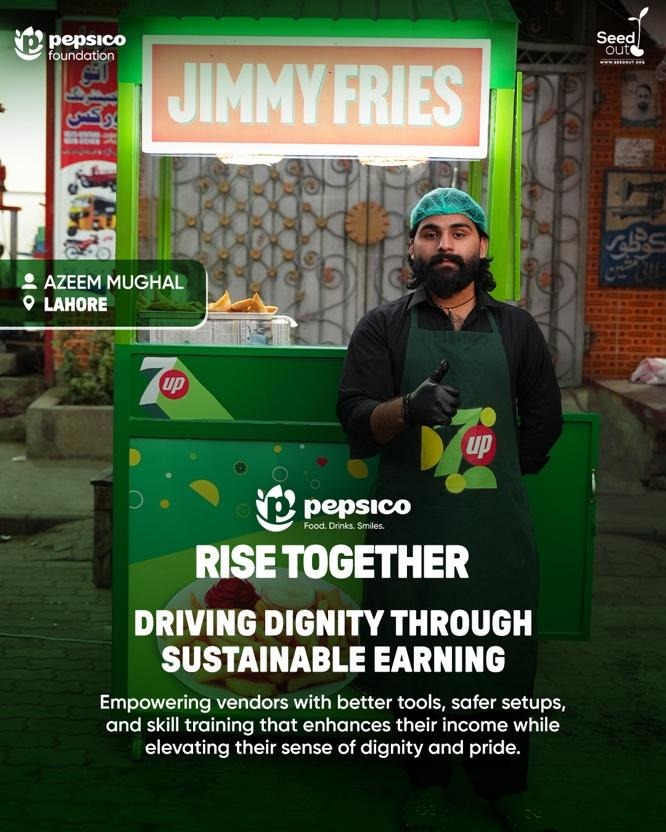
    PepsiCo Pakistan, in partnership with the PepsiCo Foundation and leading micro-entrepreneurship nonprofit SeedOut, has launched the PepsiCo Rise Together Program, Economic Empowerment Program a flagship social and economic empowerment initiative designed to help restore livelihoods and strengthen community resilience across Pakistan.

    For decades, Pakistan’s street-food culture has been more than a culinary tradition, it has been a source of income for hundreds of thousands of micro-entrepreneurs whose carts bring flavor, familiarity, and vibrancy to city streets. But rising inflation, declining consumer spending, and the devastating 2025 floods have pushed this vital sector to the edge, leaving many vendors without carts, savings, or the means to support their families.

    Against this backdrop, PepsiCo Pakistan and its iconic brand 7UP, with support from the PepsiCo Foundation, have stepped forward with a program that blends economic recovery with human dignity. This two-year economic empowerment program aims to reintegrate over 200+ street-food vendors in year 1, positively impacting more than 1,600+ individuals, by providing modern food carts, interest-free microfinancing, and formal training in food hygiene, financial literacy, customer service, and business planning. Implemented by SeedOut, the initiative combines global corporate standards with community- level expertise, helping ensure support reaches the households most affected by recent economic and environmental shocks.


    7UP’s leadership in this effort builds naturally on its long-standing connection to Pakistan’s vibrant food culture. 7UP will amplify the stories of participating vendors through a 360-degree storytelling campaign, spotlighting their resilience, their challenges, and their journey back to stability. The initiative reinforces PepsiCo Pakistan’s broader #InWithForPakistan focus on uplifting communities and contributing to sustainable national recovery.

    “Street-food vendors are an essential part of both our culture and our economy,” said Furqan Ahmed Syed, Chief Commercial Officer, PepsiCo International Beverages & General Manager, PepsiCo Pakistan Beverages. “Helping them rebuild their livelihoods is the need of the hour, and this programme reflects our belief that corporations must play an active role in strengthening the communities they serve. Street food shapes the pulse of our youth and our culture, and with this program, PepsiCo together with 7UP is proud to help uplift the vendors who keep that heartbeat alive every day.”

    “True recovery begins when families regain dignity and the ability to earn sustainably. Through the PepsiCo Rise Together Program, we are not only restoring livelihoods, but rebuilding confidence, resilience, and long-term economic stability at the community level. At SeedOut, we believe sustainable impact comes from empowering people with opportunity, not dependency,” said Zain Ashraf Mughal, Founder & President, SeedOut.


    This sentiment is shared by the PepsiCo Foundation. “This effort goes far beyond financial assistance, it is about restoring confidence, dignity, and opportunity,” said Hatim Khan, Senior Director, PepsiCo Foundation.

    The PepsiCo Rise Together Program is a testament to the power of collaborative, purpose-led action. By rebuilding one cart, one vendor, and one family at a time, the initiative aims to support sustainable economic recovery while helping preserve the flavors and traditions that define Pakistan’s street-food heritage.

  • Most proceeds from auction to be reinvested in PIA

    Most proceeds from auction to be reinvested in PIA

    The government is set to auction a 75% stake in Pakistan International Airlines (PIA) with a commitment to reinvest most of the proceeds back into the national carrier struggling with financial troubles, reports said Friday.

    According to reports, officials have briefed a Senate panel about the plan as Prime Minister’s (PM) Adviser on Privatisation Muhammad Ali said 92.5% of the bidding proceeds would be reinvested in PIA to support its turnaround.

    He added that the airline would still require an additional Rs80 billion in financing after privatisation to stabilise operations and fund growth.

    Ali told the Senate Standing Committee on Privatisation, chaired by Senator Afnan Ullah Khan, that PIA currently operates 18 aircraft and needs fresh investment to induct new planes. He said the reference price for the bidding has not yet been finalised.

    Only the airline’s core aviation business is being privatised. Assets such as the Roosevelt Hotel in New York will remain under government ownership and will be developed through a joint venture instead of privatisation.

    Privatisation Commission Secretary Usman Bajwa informed the committee that the government could sell up to 100% of PIA shares depending on investor interest and final approvals.

    He said major obstacles that undermined a previous privatisation attempt have been removed including Rs33 billion in liabilities that investors were earlier required to assume. Tax-related issues including those linked to sales tax have also been resolved.

    Bajwa noted that the reopening of routes to Britain and Europe has strengthened PIA’s commercial outlook. Negotiations with investors over final commercial terms have entered the last stage and are expected to conclude soon.

    Following privatisation the airline will immediately need about Rs80 billion in financing to sustain operations.