Category: Business

  • Pakistan accepts 23 IMF conditions covering energy, finance, and currency

    Pakistan accepts 23 IMF conditions covering energy, finance, and currency

    Pakistan has accepted 23 stipulations put forth by the International Monetary Fund (IMF) that pertain to energy, finance, social, structural, monetary, and currency issues as part of the loan agreement.

    The IMF report indicates that Pakistan and the Fund have come to an agreement to reduce development projects. Among the stipulations are an increase of five percent in excise duty on fertilizers and pesticides, implementing excise duty on high-priced confectionery items, and expanding the sales tax base by transitioning selected goods to the standard rate.

    The government has pledged to the IMF that the sugar industry will be completely deregulated. Tariff modifications in the electricity sector will continue, along with commitments to lower system losses and reduce expenses.

    A nationwide Point of Sale (POS) system for 40,000 major retailers is set to be implemented within two years. All four provinces will progress towards a unified sales tax system.

    The IMF report highlights that provinces “have consented not to provide any new subsidies on electricity and gas.” Pakistan is also restricted from entering into new external agreements for additional RLNG. The OGRA will be instructed to establish tariffs within 40 days, after which the formal notification will be released.

    As part of the conditions, no investment initiative or company will be provided with financial benefits or guarantees. No fuel subsidies will be given, and no cross-subsidy programs will be initiated. The government will not establish targets for sectoral loans or distribute such loans.

    The phase-out of government securities from the State Bank has been prolonged. Market purchases have been halted. Throughout the program, the State Bank will refrain from launching new lending initiatives, and the currency will maintain its flexibility.

    Federal and provincial governments are prohibited from setting a support price for wheat procurement. They are also restricted from imposing new regulatory duties on imports. The Special Investment Facilitation Council (SIFC) will not recommend incentives, and the government will not provide tax benefits or guarantees. All investments channeled through the SIFC will adhere to the Public Investment Management Framework.

    The IMF has also mandated that no new special economic zones or similar zones be established. Existing concessions for these zones will not be renewed, and no new concessions will be issued.

    As the payments deficit continues to rise following the end of the previous Fund-supported program, during which the deficit reached 3.3 billion dollars, Pakistan has consented to increase tax rates on fertilizers, pesticides, and confectionery items, as well as raising the GST on selected goods to the standard 18 percent.

  • Pakistan receives $1.2 billion from IMF

    Pakistan receives $1.2 billion from IMF

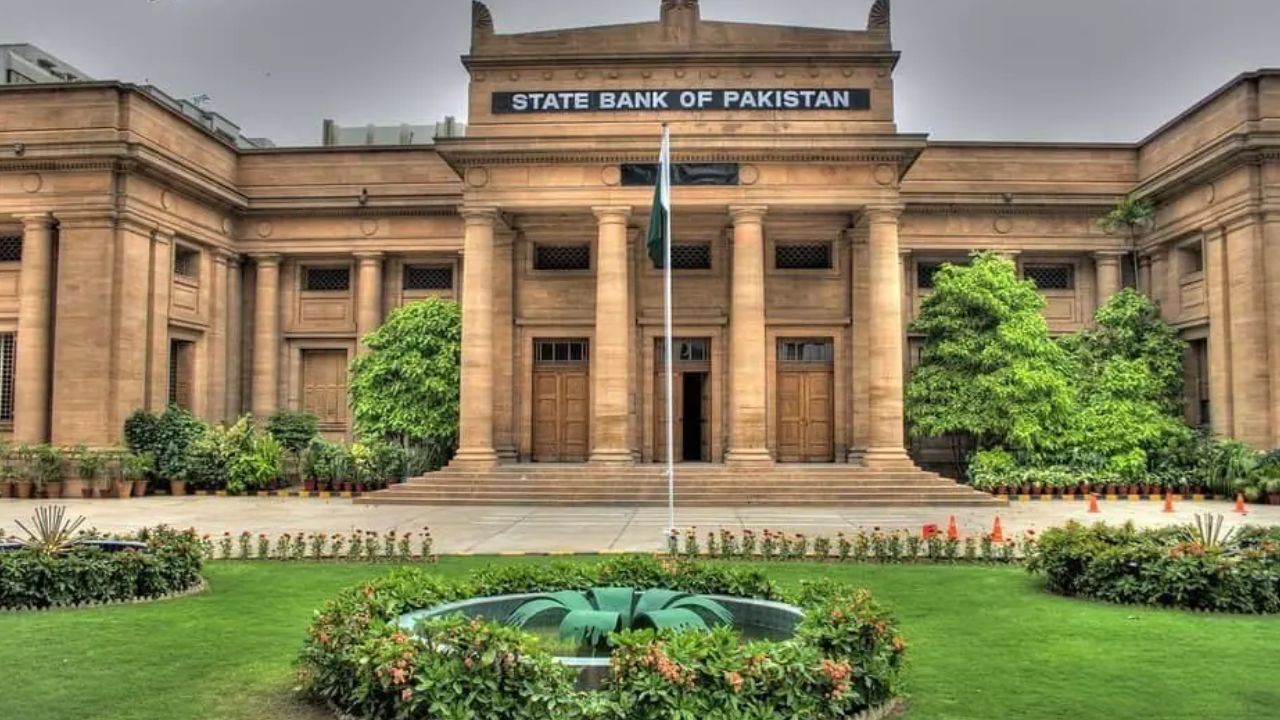
    The State Bank of Pakistan (SBP) on Thursday received $1.2 billion from the International Monetary Fund (IMF) as the global lender approved the review of the country’s loan programme.

    The central bank, in a statement, said that the Fund’s Executive Board had completed the second review of the Extended Fund Facility (EFF) and the first review of the Resilience and Sustainability Facility (RSF) during a meeting in Washington earlier this week.

    “SBP has received SDR 914 million (equivalent to about $1.2 billion) under the EFF and RSF in value on December 10, 2025, from the IMF,” the central bank said.

    It added that the amount will appear in SBP’s foreign exchange reserves for the week ending on December 12.

    The IMF approved the fresh disbursement under its dual-track bailout. The 37-month EFF focuses on macroeconomic stabilisation while the climate-focused RSF addresses long-term climate challenges.

    This tranche brings total disbursements to Pakistan under the EFF and RSF to approximately $3.3 billion.

    Earlier, the IMF had approved the fresh disbursement.

    The executive board, in a statement, highlighted that “Pakistan’s strong programme implementation, despite the recent devastating floods, has maintained stability and improved financing and external conditions”.

    It stressed that the country’s policy priorities remain centred on maintaining macroeconomic stability and advancing reforms to strengthen public finances, enhance competition, raise productivity and competitiveness, bolster the social safety net and human capital, reform state-owned enterprises (SOEs) and improve public service provision and energy sector viability.

  • No more PTA tax? National Assembly body sets deadline for report on possible revisions

    No more PTA tax? National Assembly body sets deadline for report on possible revisions

    The National Assembly’s Standing Committee on Finance and Revenue on Tuesday directed the Federal Board of Revenue (FBR) and Pakistan Telecommunication Authority (PTA) to prepare a detailed report on mobile phone taxes with instructions to include policy options, economic impact, international comparisons, and proposed revisions.

    Chairing the meeting, MNA Naveed Qamar voiced his concerns about increasing mobile phone taxes, arguing that these devices have been misclassified as luxury goods. “I am not pleased with the current designation of mobile phones as luxury items,” he remarked. Mr. Qamar directed both the FBR and the Tax Policy Office to reassess the existing tax rates applied to the import of mobile phones under personal baggage and registration programs. He indicated that the report should be finalized by March 2026, enabling the committee to review the situation ahead of the upcoming budget.

    MNA Qasim Gilani pointed towards the impact on consumers, emphasizing that taxes are levied again if phones are lost or stolen. “Individuals are utilizing smartphones for content creation, video sharing, and e-commerce,” he noted, mentioning that the taxes for older iPhone 6 models can soar to Rs35,000, whereas imports of iPhone 12 can incur taxes up to Rs100,000.

    MNA Sharmila Faruqi highlighted the expense associated with newer models. “The latest iPhone retails for Rs350,000, with an additional tax burden of Rs190,000,” she stated. Officials from the FBR clarified that taxes are based on the prices of devices rather than specific models.

    MNA Mirza Ikhtiar Baig emphasized the necessity for the government to establish a clear taxation system and dismissed the idea that smartphones are exclusively for affluent individuals.

    The PTA Chairman informed the committee that only six percent of premium phones are imported, while the majority are produced domestically. He also mentioned that 5G licenses are anticipated to be granted between February and March of the following year.

    FBR Chairman Rashid Mahmood Langrial noted that, in general, smartphone prices and taxes have declined, with the exception of certain major brands. He added that the mobile phone sector generated Rs82 billion in tax revenue during the last fiscal year.

    The committee proposed placing smartphones under the Eighth Schedule to provide relief for consumers. Tax officials explained that the Ninth Schedule currently governs telecom items, whereas the Eighth Schedule offers concessions. They also highlighted that except for Apple, most smartphones are now produced locally.

  • IMF confirms $1.2bn release as Pakistan meets programme targets

    IMF confirms $1.2bn release as Pakistan meets programme targets

    The International Monetary Fund (IMF) has sanctioned an additional disbursement of approximately $1.2 billion for Pakistan through the Extended Fund Facility and the Resilience and Sustainability Facility. This approval came after the Fund’s Executive Board meeting in Washington, D.C., where the second review of the EFF and the first review of the RSF were finalized. 

    With this release, the cumulative disbursements under these two arrangements have reached around $3.3 billion. 

    In its statement, the Board highlighted that Pakistan’s “strong programme implementation, despite the recent catastrophic floods, has preserved stability and enhanced both financing and external conditions.”

    It noted that the focus of policy priorities remains on macroeconomic stability, reforms in public finance, enhancing competition and productivity, reforms involving state-owned enterprises, and improvements in the energy sector.

    Pakistan recorded a primary surplus of 1.3 percent of GDP in FY25, which the IMF stated aligned with programme goals. At the conclusion of FY25, gross reserves were $14.5 billion, an increase from $9.4 billion the previous year. The Board noted that inflation had risen due to the impact of floods’ on food prices, yet deemed this increase temporary.

    IMF Deputy Managing Director and Acting Chair Nigel Clarke stated that Pakistan must uphold policies that foster stability. “Given the unpredictable global environment, Pakistan needs to maintain prudent policies to solidify macroeconomic stability while speeding up the reforms required for stronger, private sector-led, and sustainable growth in the medium term,” he remarked.

    Regarding revenue enhancements, Clarke indicated that Pakistan must “progress with reforms to boost revenues through the simplification of tax policy and broadening the tax base,” stressing that this is crucial for fiscal sustainability and for creating opportunities for climate resilience, social protection, human capital, and public investment.

    Clarke emphasized that energy reform is pivotal to the programme. He mentioned that timely adjustments in power tariffs have “contributed to reducing the accumulation and flow of circular debt,” and stated that the following phase should focus on “sustainably lowering electricity production and distribution costs while tackling inefficiencies in the power and gas sectors.”

    The IMF noted that the RSF tranche will aid Pakistan’s climate initiatives. Clarke explained that the RSF supports efforts to “enhance natural disaster response and financing coordination, optimize the use of limited water resources, incorporate climate considerations in project selection and budgeting, and improve the comprehension of climate-related risks in financing decisions.” He pointed out that the recent floods highlighted the pressing need to progress on climate reforms.

    The IMF remarked on Pakistan’s release of the Governance and Corruption Diagnostic Assessment, noting that additional efforts are necessary regarding the governance of state-owned enterprises, privatization, the business climate, and enhancements in economic data and statistics.

  • Gold prices rise again in local, international markets

    Gold prices rise again in local, international markets

    Gold prices rose in Pakistan on Monday, tracking gains in the international market.

    As reported by the All-Pakistan Gems and Jewellers Sarafa Association, the cost of gold per tola rose by Rs. 1,600, bringing the price to Rs. 443,762. The price for 10 grams of gold increased by Rs. 1,372, reaching Rs. 380,454.

    This increase came about after a decrease noted on Saturday, when the per tola rate fell by Rs. 2,300, resulting in a new price of Rs. 442,162.

    In the global market, the price of gold climbed by $16 per ounce, now at $4,214, which includes a $20 premium. Spot gold was listed at $4,212.70 per ounce as of 0319 GMT, while US gold futures for delivery in December were priced at $4,241.30 per ounce. This rise was influenced by the US dollar approaching levels last seen on December 4, making gold more affordable for international purchasers.

    Local silver prices also saw an increase, rising by Rs. 30 to a rate of Rs. 6,102 per tola.

  • IMF board meets today as Pakistan awaits $1.2bn approval

    IMF board meets today as Pakistan awaits $1.2bn approval

    The International Monetary Fund’s (IMF) Executive Board is set to meet today (Monday), withPakistan’s loan reviews expected to be taken up, potentially clearing the way for about $1.2 billion in fresh financing at a crucial moment for the economy.

    Pakistan’s case is formally on the agenda for the IMF board meeting scheduled for December 8–14. The recent staff-level agreement with Islamabad under the Resilience and Sustainability Facility (RSF) and the Extended Fund Facility (EFF) will be evaluated by the Fund.

    Pakistan might get $1 billion under the EFF and an additional $200 million as the first tranche of the RSF, which promotes climate-resilience activities, if the board approves the reviews. The final decision, however, rests on the board’s deliberations today.

    Today’s meeting follows a staff-level agreement that was reached in October after extensive discussions in Karachi, Islamabad, and Washington between September 24 and October 8. Pakistan’s fiscal performance, monetary policy stance, ongoing structural reforms, and advancements on climate-related commitments were the main topics of discussion during the negotiations, which were headed by Iva Petrova, the chief of the IMF mission.


    The IMF recognized Pakistan’s “strong progress” in reducing inflation, rebuilding external buffers, and fiscal consolidation in its previous review. Additionally, it gave credits to the State Bank of Pakistan (SBP) for upholding a strict monetary policy, which the Fund claimed has been essential in stabilizing inflation expectations.

    The Fund highlighted its ongoing dedication to structural reforms, such as strengthening the viability of the energy sector, boosting competition, improving public service delivery, and strengthening the governance of state-owned enterprises.

    The IMF also highlighted Pakistan’s efforts under the RSF to strengthen resilience against natural disasters, enhance the management of water resources, and update its climate information systems reforms that have become more urgent following the devastating floods that severely damaged crops, infrastructure and livelihoods.

    Pakistan might get $1 billion under the EFF and an additional $200 million as the first tranche of the RSF, which promotes climate-resilience initiatives, if the board approves the reviews. The final decision, however, rests on the board’s deliberations today.

    Ahead of the board meeting, officials confirmed that Pakistan had agreed to one of the IMF’s key conditions: a special audit of supplementary grants issued over the past decade. Islamabad has also accepted another requirement aimed at limiting the federal government’s discretionary power to issue such grants in the future.

    Sources said the digital Public Finance Management Assessment was examined during the talks, alongside oversight mechanisms for the digitized PFM master plan.

    If the Executive Board approves Pakistan’s reviews today, the disbursement could be made as early as tomorrow. Officials in Islamabad hope the inflow will strengthen external reserves, support the ongoing economic recovery and reinforce investor confidence in the government’s broader reform agenda.

  • Only one in five Pakistanis believe economy is strong: survey

    Only one in five Pakistanis believe economy is strong: survey

    Only one in five Pakistanis believes the country’s economy is strong, and just 16 percent feel confident about investing in the future, media reports said citing a new survey by Ipsos.

    According to the Q4 2025 Consumer Confidence Index Survey, national sentiment has dipped back to pre-Pakistan-India war levels with a brief surge in optimism following the conflict that temporarily united a politically divided population.

    While that momentum has since faded, reflecting growing public concern in line with recent official statements acknowledging the absence of a viable economic growth model, Ipsos reported that 18 percent of respondents view the economy as strong, with confidence higher among men, youth and affluent groups.

    The survey was released shortly after State Bank of Pakistan (SBP) Governor Jameel Ahmad stated that the current growth model cannot support a population of 250 million. National Coordinator of the Special Investment Facilitation Council Lt General Sarfraz Ahmad also noted the lack of a growth plan and called for an export-led strategy.

    While perceptions of economic strength have slightly improved since the last quarter, they remain low compared to the post-conflict peak.

    The survey also found that 89 percent of Pakistanis feel uncomfortable making household purchases. Men, urban residents and those in Khyber Pakhtunkhwa (KP) showed slightly more comfort, with 18 percent in KP compared to 10 percent elsewhere.

    Comfort with household spending has declined since May 2025 but is still better than the same period last year. Inflation remains the top concern with a six percent rise in its perceived impact since the previous quarter. Unemployment follows closely, echoing the findings of a recent labour force survey that recorded joblessness at a 21-year high.

    Ipsos Managing Director Abdul Sattar Babar said inflation has re-emerged as a major issue, leading to cautious consumer behavior. Only five percent of respondents feel comfortable making major purchases.

    Despite these challenges, the survey highlights a rise in personal financial optimism, especially among youth. This suggests potential for resilience and future growth. Three in ten Pakistanis believe the country is on the right track, with optimism strongest among men, rural residents, upper-income groups and those in Punjab.

    One in three respondents expects the economy to improve over the next six months, with youth, women, rural residents and middle-to-upper-income groups showing the most optimism. Sindh emerged as the most pessimistic province.

    Confidence in job security has also risen, with 22 percent of respondents feeling secure in their employment. This marks the highest level recorded by Ipsos since tracking began, apart from the 30 percent spike seen during the post-conflict optimism wave.

  • Govt eyes minimum 100mbps broadband speed for all users across Pakistan

    Govt eyes minimum 100mbps broadband speed for all users across Pakistan

    As part of a nationwide overhaul of the country’s digital infrastructure, the Ministry of Information Technology and Telecommunication (MoITT) has announced plans to ensure a minimum fixed broadband speed of 100mbps for all users across Pakistan.

    To achieve this target, MoITT will hire a consulting firm to develop Pakistan’s first National Fiberization Policy and Plan. The initiative is being launched under the World Bank supported Digital Economy Enhancement Project (DEEP) to expand fiber infrastructure, improve high-speed connectivity and advance the government’s broader digital transformation agenda.

    The new policy aims to expand fixed broadband coverage by deploying 8 to 10 million optical fiber-based house passes across the country. It also seeks to improve mobile network capacity and reliability by connecting 80 percent of telecom towers to fiber. These steps are considered vital for strengthening 4G networks and preparing Pakistan for future 5G rollout.

    The government hopes the effort will help Pakistan climb into the top 50 countries in Ookla’s global speed rankings.

    The consultant will conduct a national gap assessment that includes mapping the current fiber network, analysing service availability and identifying gaps in quality of service, coverage, latency, penetration and operator incentives.

    Pakistan’s fiber development will be benchmarked against the Fiber Development Index (FDI) and other international indicators to align with global best practices.

    Following the assessment, the consultancy will prepare a detailed National Fiberization Strategy and Operational Plan. This will outline investment options, financing models and governance structures to guide participation from both public and private sectors.

    Bankable feasibility studies will be developed to attract local and international investors through public private partnership models. The strategy will also highlight priority areas for new fiber deployment and recommend measures to strengthen network resilience against disasters and cyber threats.

  • Pakistan’s external debt-to-GDP falls to 26 percent as remittances hit record high: SBP

    Pakistan’s external debt-to-GDP falls to 26 percent as remittances hit record high: SBP

    The Governor of the State Bank of Pakistan, Jameel Ahmad, stated on Wednesday that the external debt-to-GDP ratio of the country has decreased to 26 percent in fiscal year 2025 (FY25), a reduction from 31 percent a few years prior. He credited the positive change to a lower reliance on foreign loans due to a substantial increase in remittances from overseas workers.

    Speaking to the media on the sidelines of the SBP’s celebration of “Pakistan Women Entrepreneurship Day 2025,” Ahmad noted that Pakistan’s total external debt “has stayed unchanged for the past three years at the June 2022 level,” contrary to the perception that it had increased. He added that all foreign financing obtained between FY22 and FY25 was used entirely to service old external debt rather than to build foreign exchange reserves.


    He noted that between FY15 and FY22, external financing grew by an average of $6.4 billion each year. At the same time, the domestic economy expanded to $407.10 billion in FY25, an increase from $375 billion in FY22.

    Ahmad mentioned that the rise in workers’ remittances over the last three years significantly contributed to reducing the country’s dependence on external borrowing. Remittances reached a record $38.3 billion in FY25, up from $30.3 billion in FY24, marking a 27 percent increase compared to the previous year. He also anticipated that remittances would surpass the $40 billion threshold in the ongoing fiscal year of 2025–26.

    In response to a question, the SBP chief confirmed that Pakistan’s imports had risen, totaling $5.2 billion in November 2025. However, he dismissed worries that the current account deficit would go beyond the estimated one percent of GDP. He noted that between FY15 and FY22, external financing grew by an average of $6.4 billion each year. At the same time, the domestic economy expanded to $407.10 billion in FY25, an increase from $375 billion in FY22.

    Ahmad mentioned that the rise in workers’ remittances over the last three years significantly contributed to reducing the country’s dependence on external borrowing. Remittances reached a record $38.3 billion in FY25, up from $30.3 billion in FY24, marking a 27 percent increase compared to the previous year. He also anticipated that remittances would surpass the $40 billion threshold in the ongoing fiscal year of 2025–26.

    In response to a question, the SBP chief confirmed that Pakistan’s imports had risen, totaling $5.2 billion in November 2025. However, he dismissed worries that the current account deficit would go beyond the estimated one percent of GDP. “The current account deficit will stay within the July 2025 forecast of 0–1 percent of GDP,” he stated.

    He additionally pointed out that bank lending to small and medium-sized enterprises (SMEs) had grown by Rs150 billion in the past year, reaching Rs700 billion. He remarked that this increase was stronger than expected. Pakistan previously aimed to double SME financing to Rs1.1 trillion over five years, compared to Rs550 billion the previous year.

    He additionally pointed out that bank lending to small and medium-sized enterprises (SMEs) had grown by Rs150 billion in the past year, reaching Rs700 billion. He remarked that this increase was stronger than expected. Pakistan previously aimed to double SME financing to Rs1.1 trillion over five years, compared to Rs550 billion the previous year.

  • Indian rupee among Asia’s worst performing currencies this year

    Indian rupee among Asia’s worst performing currencies this year

    The Indian rupee is among Asia’s worst performing currencies this year, slipping to a fresh record low of over INR90 per US dollar on Wednesday.

    Traders partly blamed delays in striking a trade deal with the United States.

    Early in the year, trade negotiations between Washington DC and New Delhi had raised hopes that foreign capital would flow into the world’s fifth-largest economy. This optimism helped push the rupee to a nearly six-month high of 83.75 against the dollar in May.

    However, setbacks in trade talks and weak corporate earnings have led overseas investors to sell more than $16 billion in Indian shares so far this year.

    On Wednesday morning, the rupee weakened by as much as 0.35 percent to 90.19, a symbolic new low, according to Bloomberg data.

    Dilip Parmar, an analyst at HDFC Securities, told a foreign media outlet that the fall in the rupee is primarily due to an imbalance of demand and supply, with foreign fund outflows and trade deal uncertainty adding pressure.

    He added that another factor is the lack of a strong and consistent intervention from India’s central bank. 

    Analysts say the Reserve Bank of India has occasionally supported the rupee this year through aggressive dollar sales but appears recently to be allowing more currency flexibility.