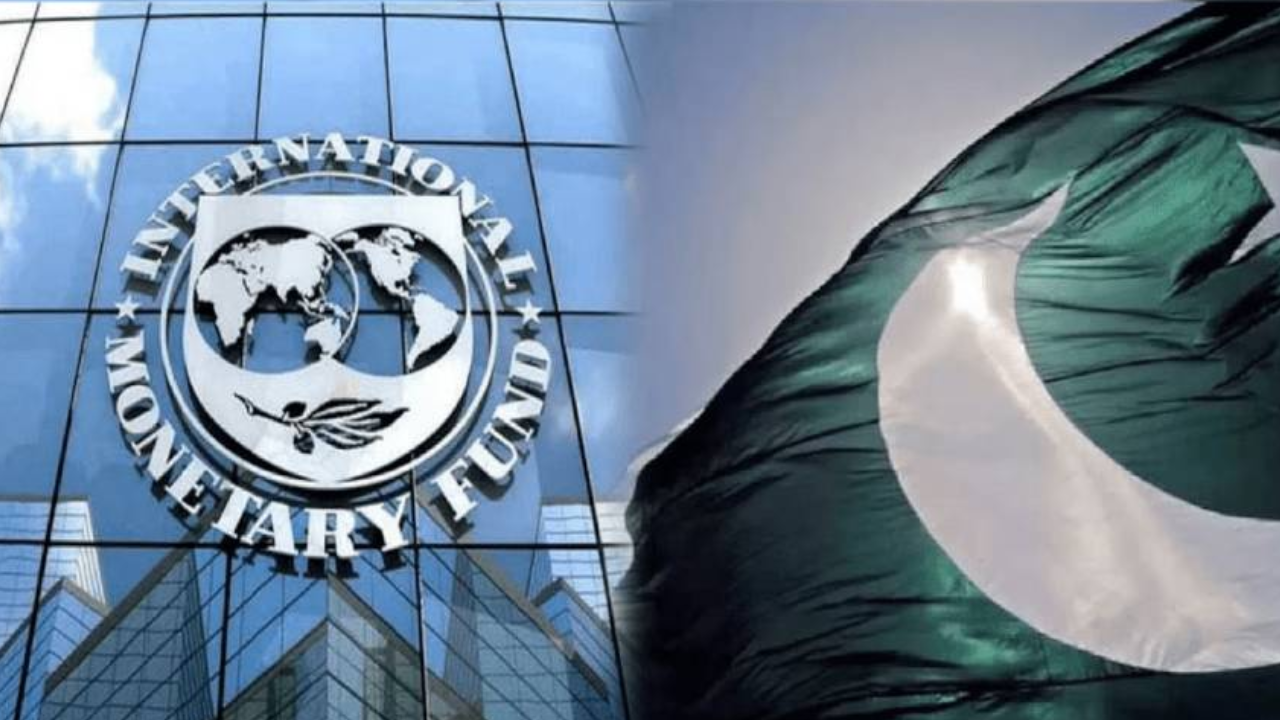
The federal government has begun internal discussions on developing a credible strategy to permanently exit the International Monetary Fund (IMF) framework once the ongoing $7 billion bailout package expires in September 2027, amid growing concern that weak economic buffers could push Pakistan back into yet another rescue package.
Government sources told a private media outlet that a high-level meeting has recently been held to assess whether Pakistan can sustain its economy without the IMF’s backing after the package ends. The discussion focused on the country’s capacity to manage external financing needs while transitioning from economic stabilisation to growth.
According to a Planning Commission report, Pakistan may be at risk of falling into another IMF program if deep-rooted reforms, including building adequate foreign exchange reserves and establishing complete industrial value chains to increase exports, are not immediately implemented.
When contacted, Ahsan Iqbal, Minister of Planning, stated that the commission had outlined specific requirements for the current bailout the country’s last.
“Our recommendation was that if we are to make the current IMF programme the last one, then we need to commit ourselves to $63 billion in exports by 2029; otherwise, we will face an external sector gap,” he said.
According to officials, the assessment assumes that if Pakistan shifts from stabilisation to growth mode, the current account deficit may momentarily increase to less than 2% of GDP, or more than $10 billion a year.
This would require additional external financing of $4 billion in 2027-28, $5.5 billion in 2028-29, and another $3 billion in 2029-30.
Despite these challenges, the Planning Commission thinks Pakistan can manage an external financing requirement of more than $12 billion between 2028 and 2030 and survive without IMF assistance if immediate structural changes are implemented.
According to the internal assessment, Pakistan could secure $3 billion in new foreign direct investment, increase exports by $4 billion, attract an additional $4 billion in remittances, and reduce imports through agriculture-based substitutes in order to meet its additional gross financing needs during the 2028–31 period.
According to sources, the commission believes that if Pakistan develops robust fiscal and external buffers, it can still avoid a 27th IMF program. However, because of the country’s low reserves and severe financial strains, whole-of-government ownership of reforms is crucial.
The commission has also advised the government to explore converting $14 billion in short-term bilateral loans into long-term financing to reduce external repayment stress. The Ministry of Finance spokesperson did not respond to questions on whether it agreed with the commission’s assessment or the feasibility of restructuring short-term loans.
Following recent public remarks by the State Bank of Pakistan (SBP) and the Special Investment Facilitation Council (SIFC), both of which acknowledged the flaws of existing development models, discussions regarding Pakistan’s long-term economic direction have become more heated.
The failure of government measures to significantly improve Pakistan’s macroeconomic prospects, leaving the nation dependent on the IMF and other creditors, has also been questioned.
A three-tier reform roadmap has been suggested by the Planning Commission. Fiscal management, energy sector reforms, governance, human resource development, and export alignment are the main topics of the first phase, which will last from the next year until 2027.
With a focus on industrialization, export expansion, technological adoption, and agricultural modernization, the second phase, which runs from 2029 to 2032, asks for faster investment-led growth.
In order to transform Pakistan into a techno-economy, the commission proposes moving toward high-quality growth drivers in the third phase.
Sources said Prime Minister Shehbaz Sharif has directed the Planning Commission to develop a results-based strategy to convert long-term plans into measurable outcomes, with the explicit goal of ending Pakistan’s reliance on the IMF.
The assessment presents a bleak image of Pakistan’s economic fundamentals. Public and private investment is declining, productive sectors remain underfunded, and there is poor alignment between investment decisions and strategic priorities.
Economic growth has averaged 3.9 percent since 2000, compared to six percent in regional economies, reflecting falling total factor productivity. Unemployment has risen sharply, increasing from 4.7 million in 2020-21 to an estimated six million by 2024-25. Pakistan now ranks 168 out of 193 countries on the Human Development Index.
Despite increasing resource transfers through the 7th NFC Award and devolution under the 18th Constitutional Amendment, regional disparities have grown.
The commission cautioned that, in contrast to the existing level of about 14 percent of GDP, sustainable growth requires investment surpassing 20 percent of GDP. Pakistan’s exports have grown only 4.1 times this century, while Vietnam’s expanded 26 times over the past 24 years.
Pakistan also has some of the highest tax rates across income brackets, with a top rate of 45 percent for high earners compared to 30 percent in India and Bangladesh, which need to be rationalised to encourage business activity.