Category: Business

  • Pakistan rupee recovers by one paisa against US dollar

    Pakistan rupee recovers by one paisa against US dollar

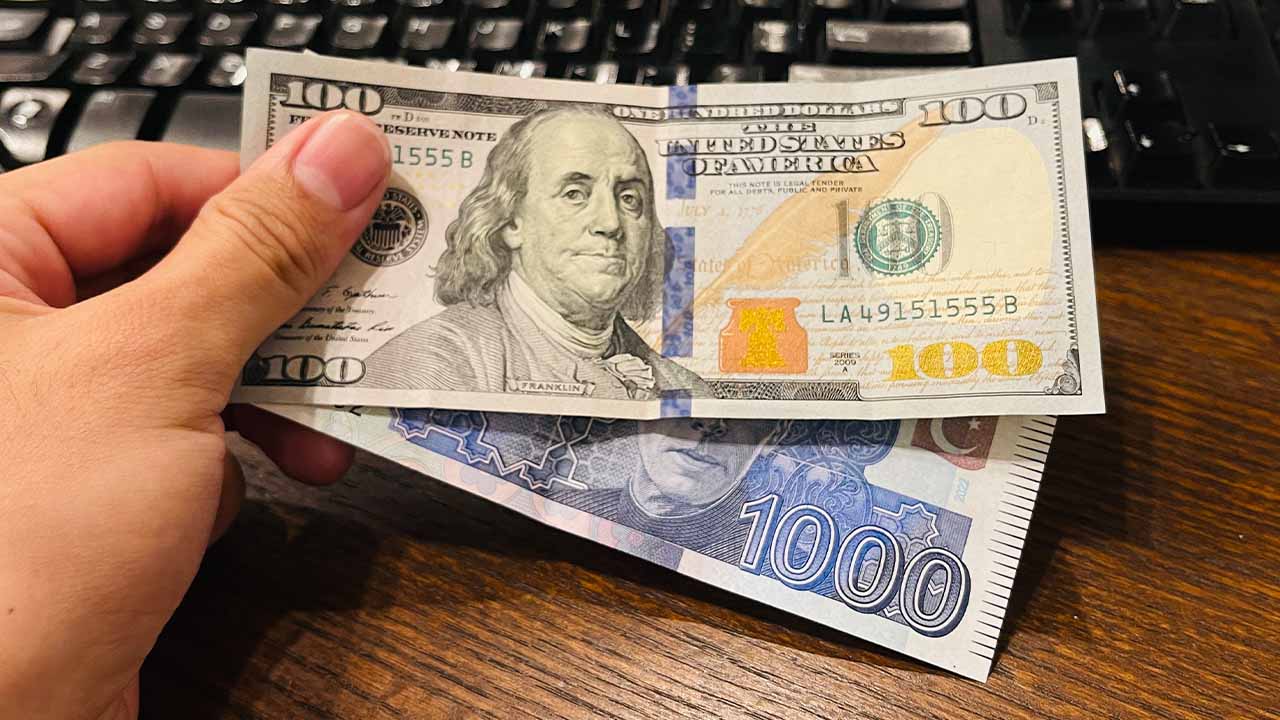
    According to the State Bank of Pakistan (SBP), the Pakistani rupee (PKR) strengthened by Rs0.01 against the US dollar in the interbank market on Tuesday.

    The local currency managed to recover and closed at Rs284.96.

    In contrast, the dollar is being traded at Rs290 in the open market.

    It’s worth noting that the rupee had reached a record low of Rs298.93 against the US dollar last week.

    Market speculation suggests that the rupee’s gains were further supported by reduced demand for foreign currency, resulting from a significant import payment between May 9 and 11, coinciding with the period of heightened political drama in the country.

    Reports indicate that the substantial dollar payment for imports had been arranged by the oil refineries. Oil imports constitute approximately one-fourth of the total import bill for a month.

    Earlier, the rupee experienced a sharp decline of 4.71 per cent or Rs14.09 in just two days (May 10-11), hitting a record low of Rs298.93/$ due to worsening political turmoil and deteriorating law and order following the arrest of former Prime Minister Imran Khan. However, the rupee managed to recover some of its losses after Khan’s release on May 12, as ordered by the court.

  • Punjab police allocates Rs400 million for police force healthcare

    Punjab police allocates Rs400 million for police force healthcare

    Inspector General Police Punjab, Dr Usman Anwar, announced that an estimated amount of Rs300 to 400 million will be allocated towards the healthcare welfare of the police force. This funding will cover all essential medical tests and treatments for conditions such as heart diseases, kidney ailments, and other vital organ disorders.

    Dr Anwar conveyed this message through a video addressed to the police force on Monday, emphasizing the importance of health screening and the provision of medical facilities. He informed that 50 per cent of the constabulary has already undergone health screening, with certain districts achieving 100 per cent completion. The Inspector General commended the District Police Officers (DPOs) responsible for ensuring the health screening of the constabulary in their respective districts.

    During the health screening process, employees were made aware of previously undetected diseases, including hepatitis B and C. Dr Anwar assured that a treatment for Hepatitis C has been discovered, and the department will provide free treatment to all affected employees suffering from the disease.

    Regarding hepatitis B, he mentioned that a permanent cure has not yet been found, but supportive treatment options are available to benefit affected employees. In order to safeguard the remaining police force and their families from this disease, it has been decided to administer vaccinations. The police department will bear all expenses associated with this initiative.

    Dr Anwar highlighted the safety of the vaccine, stating that he will personally receive the vaccination as a testament to its reliability. These measures are being taken to prioritize the health, well-being, and treatment of police personnel. He urged the police force to stand united as an impenetrable barrier against criminals, oppressors, and terrorists. The primary duty of the police force, as stated by the Inspector General, is to protect the lives, properties, and dignity of Pakistani citizens.

    In a separate development, a sum of Rs200,000 has been allocated from the welfare fund of Punjab Police for the medical treatment of the mothers of two martyrs from the Lahore Police, Constable Ghulam Murtaza and Constable Ali Raza. Additionally, a medical grant of Rs100,000 has been approved for ASI Qadeer Akhtar of Multan Police to cover the expenses of his brain surgery.

    Furthermore, the Inspector General has authorized an honorarium for the staff working in training colleges and schools throughout the province. An amount of Rs1.25 crore will be distributed among the staff members in training institutes located in Lahore, Sihala, Multan, Rawalpindi, Farooqabad, and Sargodha.

  • ‘When will Pakistan meltdown?’ Question shocks Pak minister, might approach China for help

    ‘When will Pakistan meltdown?’ Question shocks Pak minister, might approach China for help

    Pakistan is actively exploring alternative measures to prevent a full-fledged eruption of its balance of payment crisis, as the International Monetary Fund (IMF) continues to prolong the revival of the already-delayed $6.5 billion bailout programme.

    According to The News, Pakistan may have no choice but to turn to China to devise a mechanism for rescuing its ailing economy.

    “Amid the deepening political and economic crisis in the country, the IMF has adopted a wait-and-see policy, but this approach cannot be sustained indefinitely,” sources informed the publication. “Either the IMF programme must be revived through the completion of the ninth review, or the programme will be abandoned. We will not share any further data with the IMF until the ninth review is completed,” the sources asserted.

    Multiple reports indicate that Pakistan has already urged the Fund staff to conclude the review, warning that the budgetary framework for 2023-24 will not be shared otherwise.

    Sources recounted an incident where a diplomat from a Western capital questioned a minister about the expected economic meltdown in Pakistan. “This direct question from the dignitary shocked the minister, who assured the visiting diplomat that Pakistan would never default,” the sources narrated.

    It is noteworthy that the diplomatic community has also begun inquiring about “domestic political affairs.”

    Considering these developments, independent economists are now recommending that the government make last-ditch efforts to revive the IMF programme or turn to China for a potential bailout to support the struggling economy.

    Renowned economist Dr Hafiz A Pasha, a former finance minister, expressed that if the IMF fails to make progress, Pakistan would have no alternative but to request China’s assistance in devising a mechanism to avert a full-fledged crisis. He suggested utilizing the Asian Infrastructure Investment Bank (AIIB) as a potential instrument to aid Islamabad in navigating the balance of payment crisis, acknowledging that it falls outside the AIIB’s mandate but emphasizing the need for an institution to assume the role of an Asian IMF.

    When approached, Dr Khaqan Najeeb, a former finance ministry adviser, acknowledged the efforts taken by the country to achieve macro stabilization and pave the way for the completion of the ninth review. However, he pointed out the IMF’s cautious stance due to Pakistan’s weak State Bank reserves, which currently stand at just $4.38 billion, and the precarious balance of payment position. The IMF is taking extra care to ensure that financing needs are more than adequately met, despite efforts by authorities to convince the lender in this regard.

    Dr Najeeb also highlighted the relaxation of imports, with the IMF keen for Pakistan to build reserves and ease administrative restrictions. Notably, Pakistan’s imports in April (year-on-year) have been halved to $2.9 billion, as reported by the Pakistan Bureau of Statistics.

    “The advisable solution is for the IMF to show consideration, as a staff-level agreement can facilitate commercial and multilateral inflows,” Najeeb commented, adding that Pakistani authorities could do more to ensure a robust financing plan.

    He concluded that if an agreement is not reached, the country would have to persist with heightened import restrictions, a constrained economy, and borrowing and rollovers from friendly countries wherever possible. “This is not Pakistan’s preferred option to sustain a thriving economy,” he emphasised.

  • Petrol price expected to decrease by Rs10 per litre for the next fortnight

    Petrol price expected to decrease by Rs10 per litre for the next fortnight

    The prices of petroleum products are expected to decrease starting from May 16, as the coalition government intends to provide some relief to the distressed public amidst the severe economic crisis and record inflation.

    According to reports in local media, petrol price will see a reduction of Rs10 per litre for the rest of May.

    It has been reported that the Oil and Gas Regulatory Authority (OGRA) has recommended a decrease in the prices of petroleum products. Based on these reports, the price of petrol may be reduced by Rs10 per litre, while the price of diesel is anticipated to decrease by Rs8 per litre.

    OGRA has submitted a summary to the government, and Finance Minister Ishaq Dar and other officials will seek the input of Prime Minister Shehbaz Sharif on the recommendations. The final decision will be announced today.

    The revised prices of petroleum products for the upcoming two weeks will be implemented after midnight on May 15.

    Earlier this month, the federal government announced a reduction of Rs5 per litre in the price of diesel, while the price of petrol remained unchanged. Presently, petrol is being sold at Rs282, HSD at Rs288, kerosene oil at Rs176.07, and light diesel oil at Rs164.68 per litre.

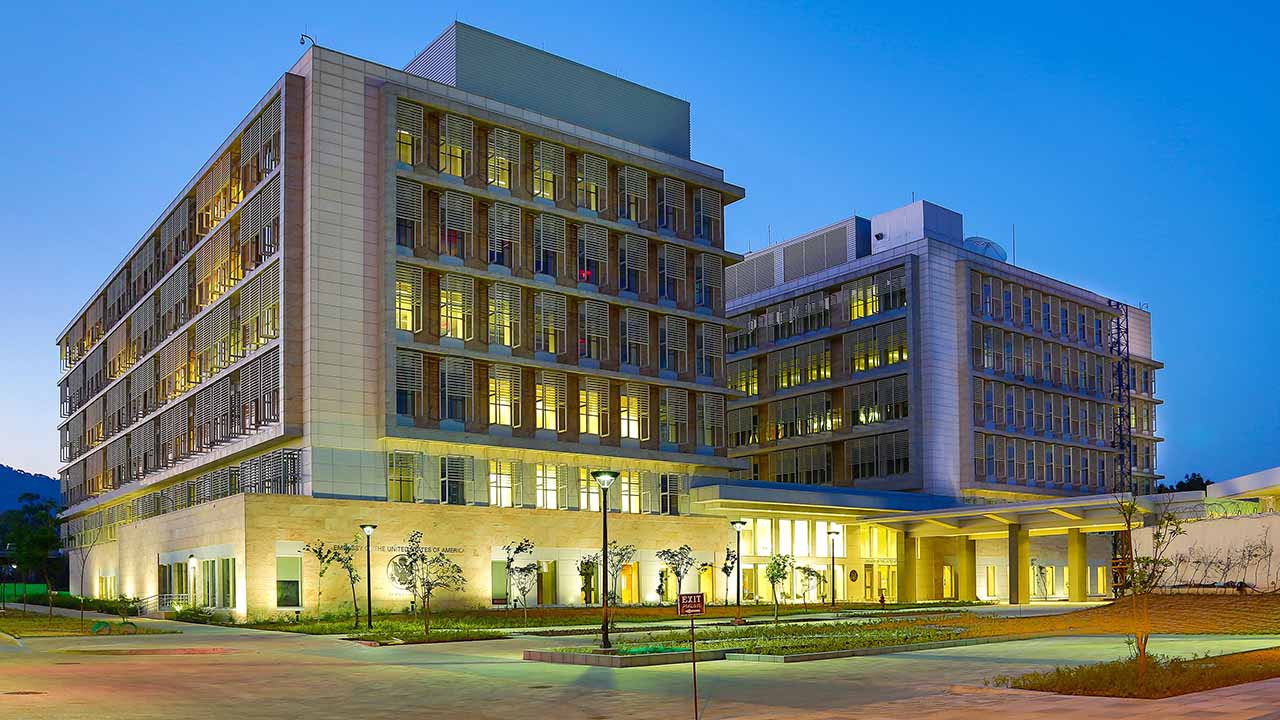
  • US embassy in Pakistan issues security warning, cancels appointments

    US embassy in Pakistan issues security warning, cancels appointments

    The US Embassy in Islamabad has announced the cancellation of all routine consular appointments scheduled for Monday due to security concerns. The embassy issued a security alert on Sunday, stating that there is a possibility of road closures and/or traffic delays, which could impede the movement of people.

    The alert clarified that although the embassy is still operational, it is limiting the movements of its personnel to official and mission-essential travel only. The US Consulates General in Karachi and Lahore, however, are open for routine consular appointments, according to the notification.

    US citizens who are traveling in-country are advised to be aware of potential disruptions to mobile phone service and have contingency communication plans in place. The embassy urges US citizens to remain vigilant and maintain good situational awareness of their surroundings. It also recommends that they pay attention to local media for security updates and planned road closures.

    Furthermore, the US embassy strongly encourages its citizens to avoid large gatherings, unnecessary travel, and comply with all established security checkpoints. It is essential to take the necessary precautions and maintain a high level of security awareness to ensure personal safety while traveling in Pakistan.

  • IMF denies seeking $8 billion fresh financing from Pakistan in bailout talks

    IMF denies seeking $8 billion fresh financing from Pakistan in bailout talks

    The International Monetary Fund (IMF) has denied recent reports that it is seeking fresh financing from Pakistan, stating that Pakistan’s external financing requirements have remained unchanged throughout talks with the Fund.

    The clarification comes after a report by the Express Tribune suggested that the IMF had increased its demand for additional financing to $8 billion, up from an unmet condition of $6 billion, in order to ensure debt repayments for the May-December 2023 period.

    According to Reuters, IMF Resident Representative Esther Pérez Ruiz confirmed that the country’s external funding requirements had not changed, and that discussions were centered around a review to unlock $1.1 billion in financing as part of a $6.5 billion IMF package.

    Despite ongoing talks, a staff-level agreement on the review has been delayed since November, and the IMF has reiterated that commitments on external financing from friendly countries will be necessary before it can release bailout funds.

    Pakistan’s central bank reserves currently stand at $4.38 billion, equivalent to barely a month’s worth of imports.

  • Pakistan moves forward with budget planning despite delayed IMF programme

    Pakistan moves forward with budget planning despite delayed IMF programme

    The government is expected to present an overall budget deficit of 5.1 per cent of the GDP for the fiscal year 2023-24, as stated in the delayed Budget Strategy Paper (BSP) to be presented before the federal cabinet. A recent report by The News highlighted that the paper will be tabled amid the government’s failure to revive the stalled International Monetary Fund (IMF) programme.

    The budget-making process has already been affected by uncertainty on both the IMF and political fronts. Nonetheless, the government has decided to present the next budget on June 9. Despite failing to reach a staff-level agreement with the IMF, the government will present the BSP for a medium-term period of three years. The proposed federal government budget deficit stands at 6.4 per cent of the GDP, while the overall deficit of the country is estimated to be lowered to 5.1 per cent of the GDP for the next financial year.

    In addition, the BSP for the upcoming fiscal year has proposed an allocation of Rs1.7 trillion for the defence budget compared to Rs1.56 trillion in the outgoing fiscal year. The overall primary surplus of budget deficit is estimated to be 0.3 per cent of the GDP for the next fiscal year, up from the previous projection of 0.2 per cent for the outgoing year.

    The Federal Board of Revenue (FBR) has been set a target of Rs9.2 trillion for the next budget, and the finance ministry suggests this is on the higher side. The FBR estimates that it could collect Rs7.2 trillion in the outgoing fiscal year against the targeted Rs7.64 trillion. In the next budget, the FBR could collect up to Rs8.6 trillion, subject to import restrictions being lifted, which could boost revenue collection. The government is projecting a GDP growth rate of 3.4 per cent for the next fiscal year, while inflation is expected to hover around 21 per cent.

    According to the IMF’s latest press briefing, the country may experience stagflation, which means low growth and higher inflation rates. If stagflation continues, it could lead to rising poverty and unemployment in Pakistan. The current account deficit is estimated to be approximately $8 billion for the next budget, and there is hope that import restrictions will be gradually lifted during the next financial year.

    The BSP has to be approved by the federal government under the Public Finance Management Act, which states that the paper must contain quantified macroeconomic and fiscal projections for the medium-term, be approved by April 15 of each year, and published on the Finance Division’s official website. Upon approval, the Finance Division will issue indicative budget ceilings to ministries and divisions.

    The minister for finance will also discuss the budget strategy paper with the Standing Committees for Finance and Revenue in the Senate and the National Assembly. The government may extend the deadline mentioned in Sub-section (1) of the PFM Act in case of an extreme requirement.

  • AIC warns of reputational damage to Pakistan’s investment appeal due to internet shutdown

    AIC warns of reputational damage to Pakistan’s investment appeal due to internet shutdown

    The Asia Internet Coalition (AIC), an industry association of major internet and technology companies, has released a statement urging the Pakistani government to consider the serious consequences of their recent actions on the people and economy of the country.

    The AIC has called for the immediate restoration of internet access in Pakistan. Jeff Paine, the Managing Director of the AIC, has expressed concern that the government’s actions will damage the country’s reputation as an investment destination, and has urged the government to focus on the opportunities presented by the digital economy to promote overall economic growth.

    More than one hundred prominent members of the Pakistani business community, tech entrepreneurs, and civil society have condemned the government’s use of partial and complete internet shutdowns, as well as targeted content and app blocking.

    These actions have been taken in response to recent nationwide protests. Tens of millions of Pakistanis rely on internet-dependent services for essential business activities, and by blocking or shutting down these services, the government is limiting civic space, creating economic uncertainty, and disrupting access to healthcare, emergency services, and financial services.

    The government’s decision to shut down mobile internet services across the country has resulted in significant revenue losses for mobile phone companies and online taxi and bike services. This decision was made in response to the arrest of former Prime Minister Imran Khan, which led to nationwide protests.

    As a result of the internet shutdown, online taxi and bike services have been unavailable for the past two days, causing inconvenience to commuters who depend on these services for transportation.

    According to sources in the Pakistan Telecommunication Authority, there are no plans to restore internet access in the country today.

  • Pakistan commits to IMF bailout deal without fuel subsidy scheme

    Pakistan commits to IMF bailout deal without fuel subsidy scheme

    Pakistan has informed the International Monetary Fund (IMF) that it will not be implementing a fuel subsidy programme during ongoing negotiations for a $1.1 billion bailout for the country.

    The IMF has stated that it will continue to engage with the government on the loan, despite increasing political tensions.

    Prime Minister had previously proposed a fuel subsidy scheme in March, which would charge higher rates to affluent consumers to subsidise prices for the poor who have been hit hard by inflation.

    However, the government has now committed not to implement this programme in the current fiscal year or beyond. Instead, it will not introduce new tax exemptions and will allow a market-based exchange rate for the rupee currency.

    The IMF has said that Pakistan needs significant additional financing to complete the long-delayed ninth review of its bailout package.

    Obtaining commitments of significant additional financing is essential before the IMF approves the release of pending bailout funds that are crucial for Pakistan to resolve an acute balance of payments crisis.

    According to Dawn, the State Bank of Pakistan’s reserves fell to $4.38 billon on Thursday, which is barely a month’s worth of imports. The IMF has emphasised that Pakistan faces stagflation, large financing needs, and has been affected by several shocks, including severe floods.

  • Pakistani rupee bounces back strongly after hitting all-time low of Rs300 against dollar

    Pakistani rupee bounces back strongly after hitting all-time low of Rs300 against dollar

    On Friday, the Pakistani rupee saw a significant recovery after hitting an all-time low of Rs300 against the US dollar the previous day. The local currency gained Rs12.43 per US dollar in the interbank market to trade at Rs286.50.

    This recovery can be attributed to two major developments that occurred over the last few hours. Firstly, the currency gained strength as demand from importers decreased, following the release of oil payments a day earlier.

    Secondly, the Supreme Court declared the arrest of Imran Khan, the Chairman of the Pakistan Tehreek-e-Insaf (PTI), illegal and ordered his immediate release. These two developments, combined with an improved political situation, resulted in the sharp recovery of the rupee.

    The demand for US dollars was high the previous day when the rupee hit an all-time low because imports had to retire their payments. However, the demand was relatively less on Friday, coupled with the improved political situation, which led to the sharp recovery.

    Despite the uncertainties surrounding the International Monetary Fund (IMF) programme sparking default concerns, the currency market did not react negatively to Finance Minister Ishaq Dar’s press conference, where he claimed that Pakistan would not default even if there was no IMF programme.